GEOMAR Helmholtz-Zentrum für Ozeanforschung Kiel
Wischhofstr. 1-3
24148 Kiel
Tel.: 0431 600-0
Fax: 0431 600-2805
E-mail: info(at)geomar.de


What if two cities on opposite sides of the world measured time by the same tide?
Kiel and San Francisco are sister cities — both shaped by the water they sit on, both facing the consequences of a changing climate on their shores. Now an ambitious art-and-science project asks what it would mean for these two port cities to share a clock. Not an atomic clock. A tidal one.
The idea draws its philosophical backbone from the Long Now Foundation — the San Francisco-based organisation that has, since 1996, been building a clock designed to run for 10,000 years inside a mountain in Texas. Founded by thinkers including Stewart Brand and Brian Eno, the Long Now Foundation challenges our civilisational addiction to short-term thinking. Their core provocation: the most important decisions we face — climate, ecology, infrastructure, democracy — unfold across centuries and millennia, while our institutions, our politics, and our attention spans operate in quarters and news cycles. To think responsibly about the future, we first need to feel the weight of deep time.
That philosophy is the quiet engine behind this project.
Jonathon Keats — acclaimed by The New Yorker as a "poet of ideas" — has spent years translating Long Now thinking into physical objects people can stand in front of. His Global Fluvial Clock & Planetary Clepetra in Vienna keeps time with the flow of the world's great rivers, drifting ahead or behind the Gregorian calendar as climate change alters their rhythms across geological timescales. His next provocation: a monumental tidal clock connecting Kiel and San Francisco — two sister cities on two coastlines, calibrated to the same planetary pulse, and designed to outlast everyone in the room.
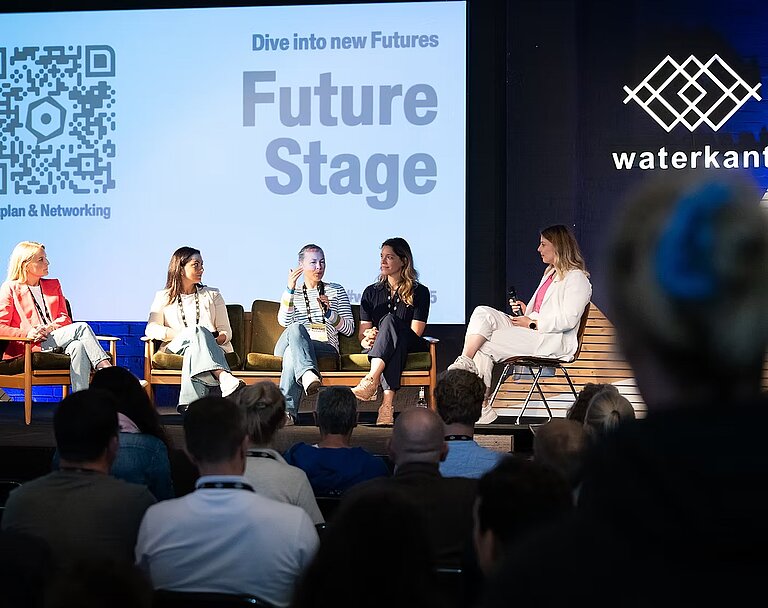
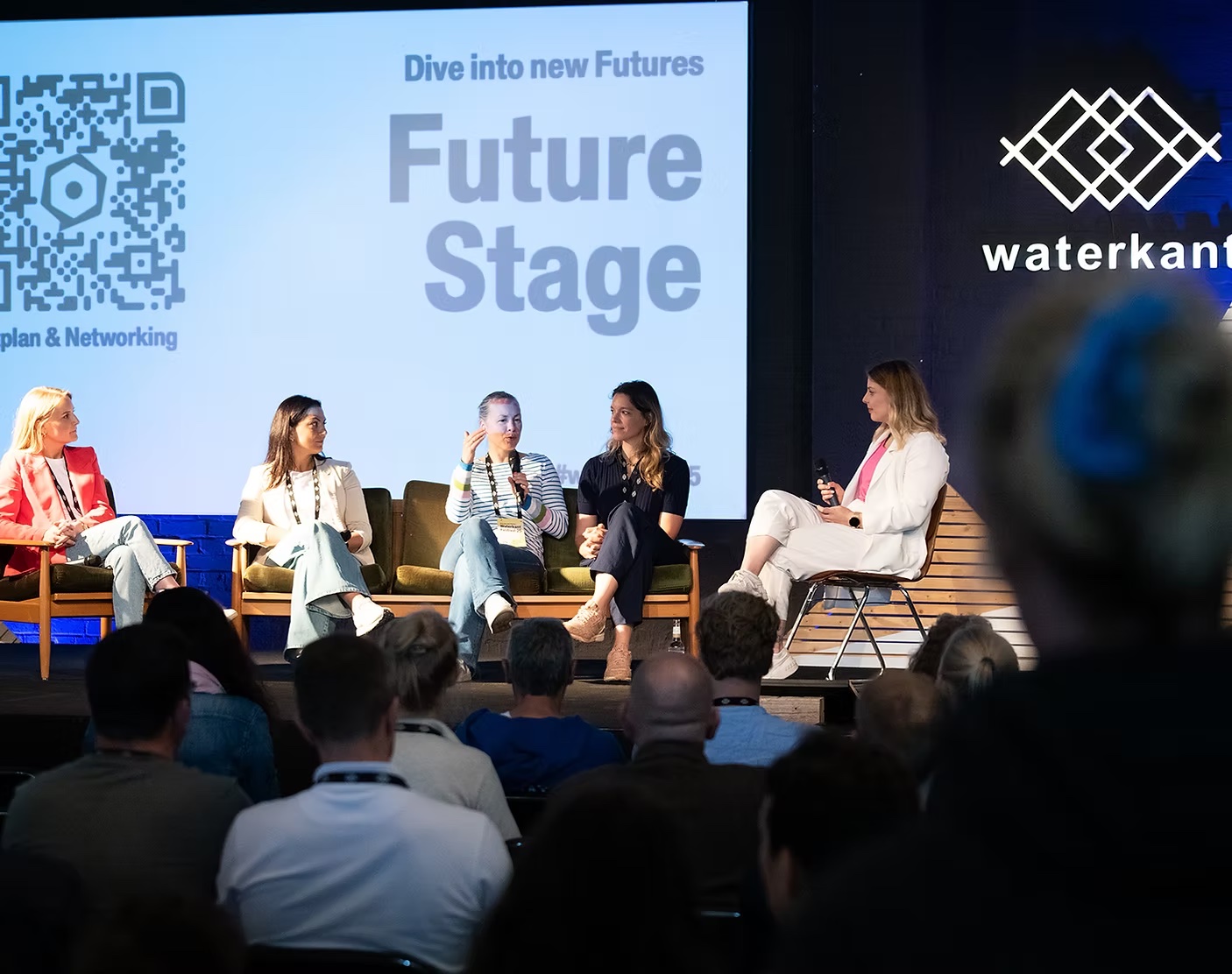
In this session, Keats is joined by Prof. Dr. Stephan Juricke from GEOMAR Helmholtz Centre for Ocean Research Kiel, who brings the science of what tides actually tell us — and why their shifting patterns are among the most precise and honest indicators of ocean change we have. The Kiel Fjord is not a backdrop. It is a measuring instrument. Tim Logan from the City of Kiel's Science Comes to Town initiative asks the essential urban question: where does a project like this land in a city, and how do you turn a philosophical provocation into a public landmark that changes how residents relate to time, water, and their own coastline?
Together, the three explore whether a clock built for millennia can do what policy papers and data dashboards cannot — make a city feel the climate changing beneath its feet, one tide at a time. And whether the sister city relationship between Kiel and San Francisco might become the foundation for something genuinely new: a shared temporal commons between two port cities learning to think in deep time.
Info und Anmeldung
19.06.2026, 12:00 - 12:45 MESZ
Science Comes to Robot Stage
www.waterkant.sh/programmWaterkant Festival Gelände
MFG5 Gelände, Halle 51
Schusterkrug 25
24159 Kiel