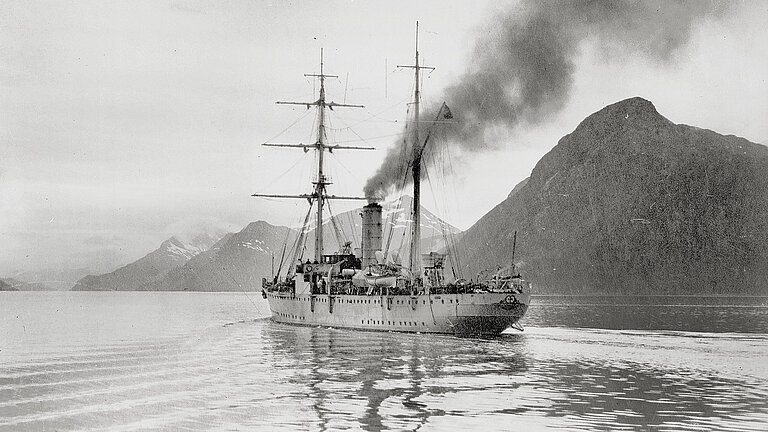
Key Data of the German Atlantic Expedition
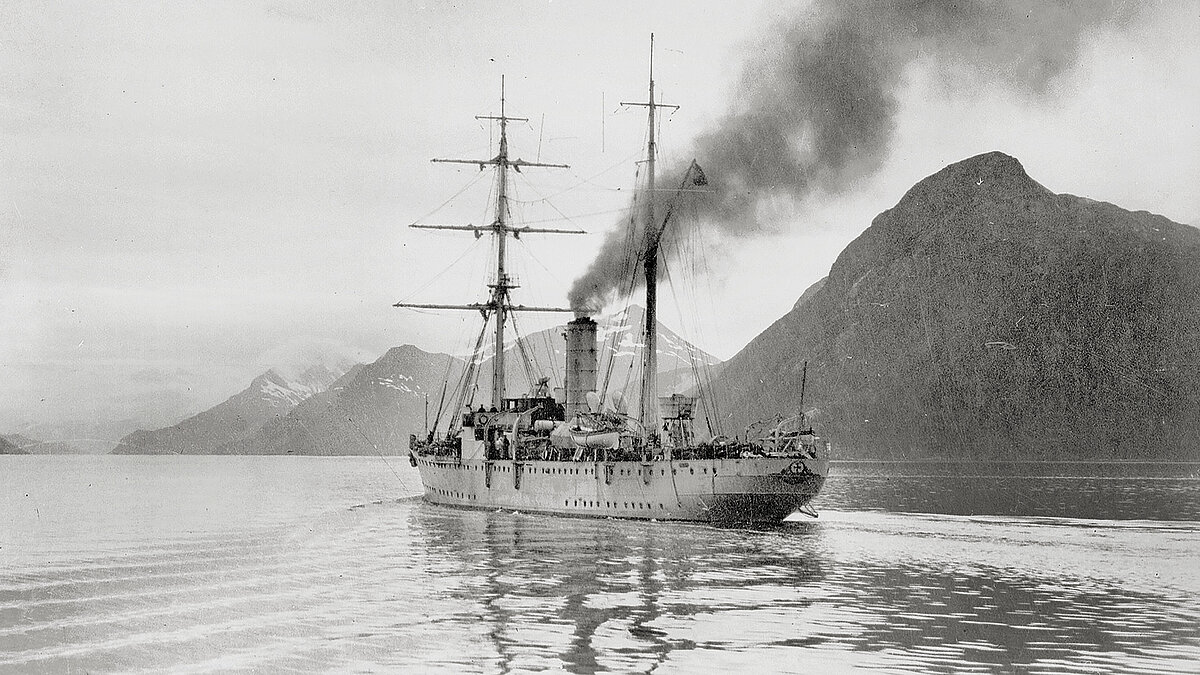
Photo: Archive DSM
- Expedition lead: Prof. Alfred Merz until his death on 16 August 1925, then Captain Fritz Spieß until the end of the voyage
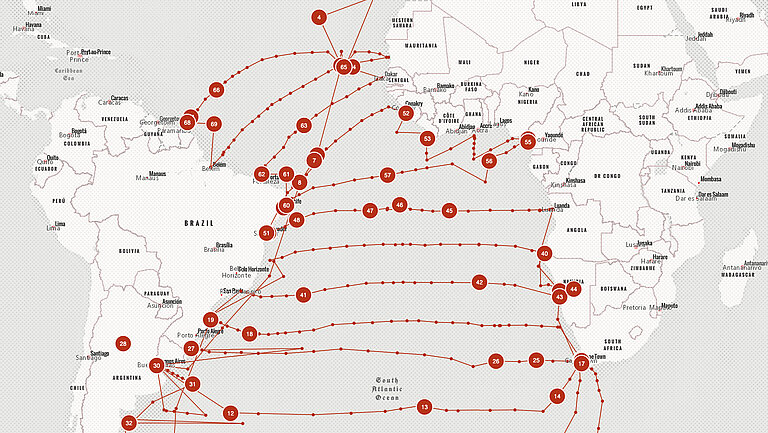
- Duration: 16 April 1925 to 2 June 1927 (from/to Wilhelmshaven)
- Travel time: 777 days
- Number of days at sea: 512 days
- Distance covered: 67,535 nautical miles (about three times around the earth)
- Atlantic crossings: 14
- Northernmost stations: 20°N
- Southernmost stations: 64°S
- Soundings: 14 cross-sections across the Atlantic Ocean
- Echo soundings: about 67,000
Specifications Meteor
- Length: 71.15 metres
- Width: 10.9 metres
- Draught: 3.2-4.3 metres
- Propulsion: steam engine, coal-fired, additional sails
- Coal supply: 383 tonnes below deck, 50 tonnes on deck
- Sails: 226 square metres at the front, 237 square metres at the rear
- Maximum speed: 11.6 knots, with sails approximately 2 knots more
- Winches: Lukas sounding machine with 10,000 metres of piano wire, two series machines with 8,000 metres of wire rope
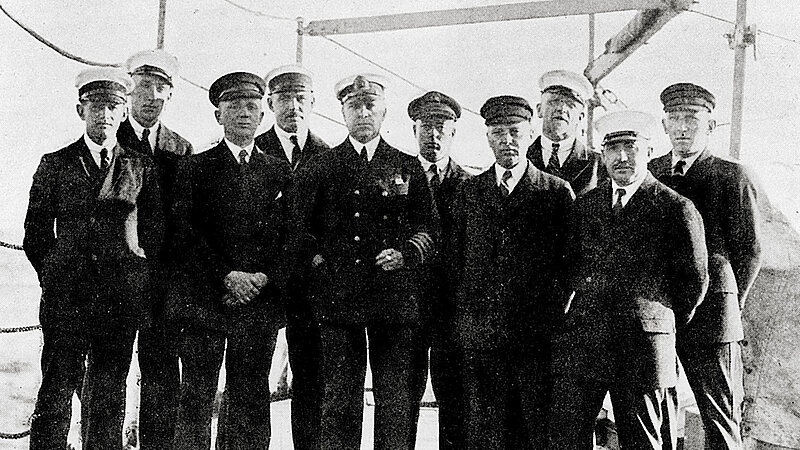
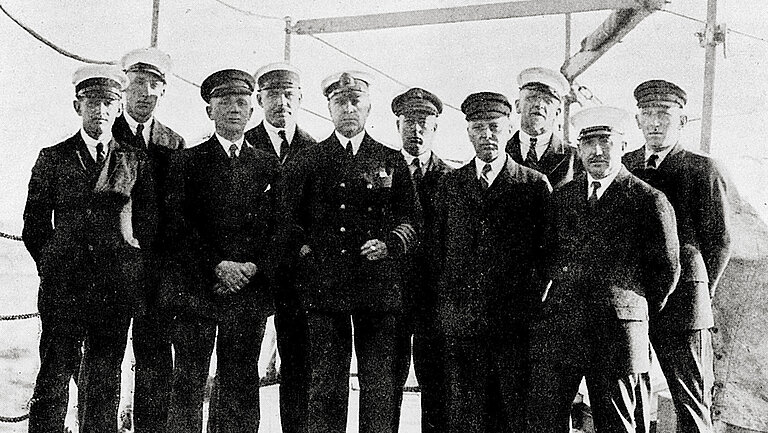
- Crew: 118 military personnel, 6 civilian employees, 9 scientists
The Scientific Staff
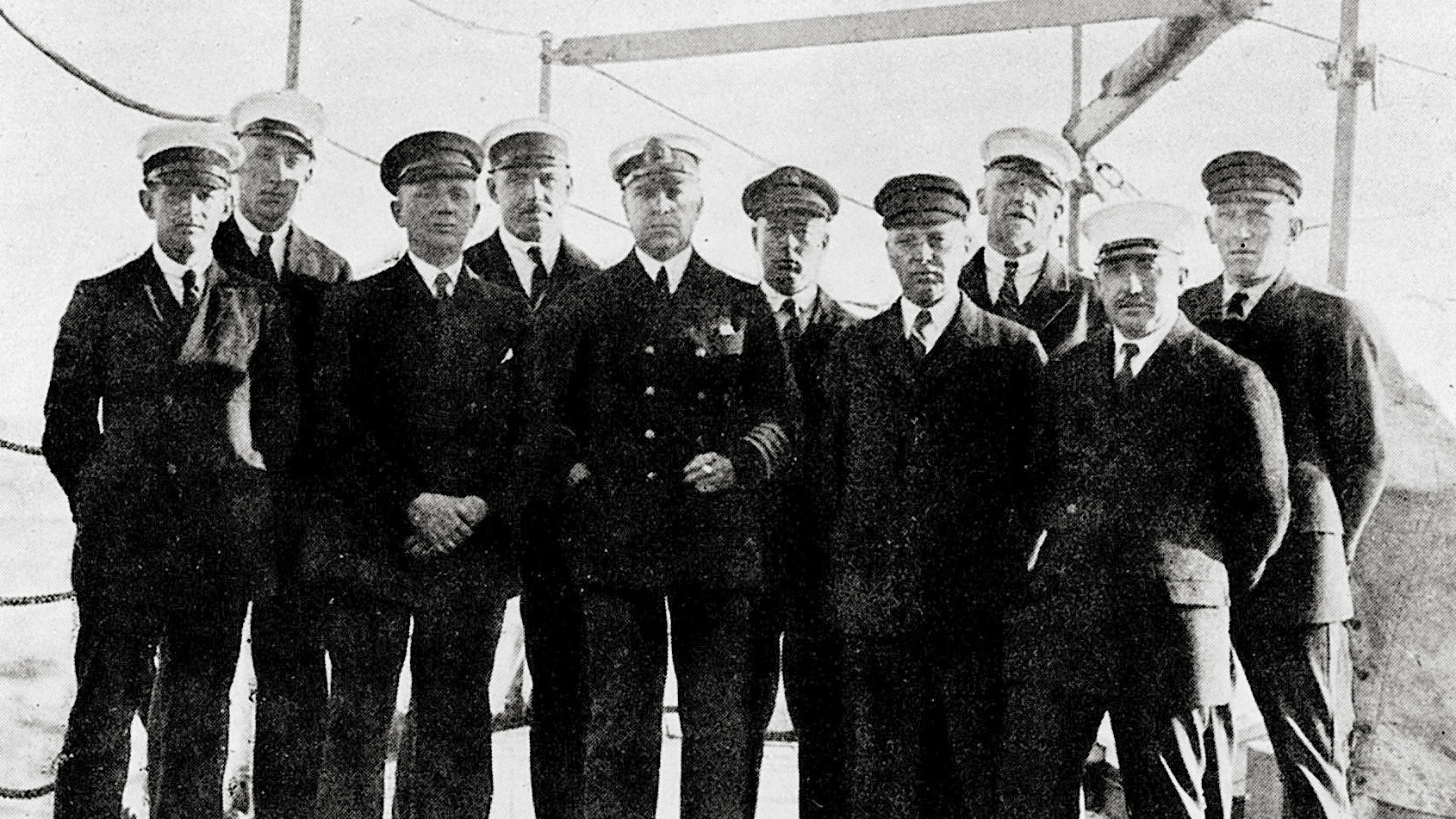
Oceanography:
Professor Alfred Merz, Institut für Meereskunde (Institute of Oceanography), University of Berlin, scientific director (died during the expedition)
Professor Albert Defant, scientific director
Dr Georg Wüst, Institut für Meereskunde (Institute of Oceanography), University of Berlin, oceanographic director
Dr Arnold Schumacher, Deutsche Seewarte Hamburg (German Naval Observatory Hamburg), serial measurements
Dr Günther Böhnecke, Institut für Meereskunde (Institute of Oceanography), University of Berlin, serial measurements
Dr ? Meyer, Institut für Meereskunde (Institute of Oceanography), University of Berlin, serial measurements
Biologist:
Professor Ernst Hentschel, Zoologisches Staatsmuseum Hamburg (State Zoological Museum Hamburg), plankton counts
Geology:
Professor Carl Wilhelm Correns, Geologische Landesanstalt Berlin (Geological Survey Berlin), mineralogical investigations
Dr Otto Pratje, Geologisches Institut (Geological Institute), University of Königsberg, geological investigations
Chemistry:
Dr Hermann Wattenberg, Kaiser-Wilhelm-Institut für physikalische und Elektrochemie Berlin-Dahlem (Kaiser Wilhelm Institute for Physical and Electrochemistry Berlin-Dahlem), chemical investigations
Dr Kurt Quasebarth, chemical investigations
Meteorology:
Professor Josef Reger, kite and balloon ascents
Dr Erich Kuhlbrodt, Aeronautisches Observatorium Lindenberg (Lindenberg Aeronautical Observatory), kite and balloon ascents
Dr Fritz Löwe
The Background to the Expedition
In 1919, the idea arose to use a navy research vessel to show German presence in a relatively civilised manner on the world's ocean. Apart from the scientific motivation, the expedition was intended to strengthen Germany's role in the world after losing the First World War, together with its colonies and fleet. Numerous visits on land, especially in the former German colonies, were therefore integrated into the voyage.
For the voyage, the Meteor was considered. The ship was designed in 1913 as a gunboat for the German Navy, launched in Danzig in 1915, but not completed due to the war. In November 1920, conversion work began in Wilhelmshaven.
Alfred Merz was responsible for planning the expedition. After completing his studies in 1910, the historian and geographer was appointed to the Institute of Oceanography in Berlin, where he devoted himself to physical oceanography. In 1921, he became director of the institute. He was able to draw on his experience from several research expeditions to the South Atlantic and the Mediterranean and shaped the DAE in line with his scientific interests. He initially planned a three-year voyage to the Pacific for the Meteor, during which the temperature and water balance and ocean circulation as well as tidal currents were to be investigated, the geological composition of the ocean basins explored, and further biological, marine chemical and meteorological measurements taken.
However, due to the currency collapse, the Reich Ministry of Finance initially rejected Merz's proposal in November 1921. It was no longer possible to find sufficient private supporters either. The Meteor was now to be built as a simple survey ship – but this work also stalled due to the economic situation.
At a meeting of the German “Notgemeinschaft der deutschen Wissenschaft” (Science Emergency Association) in January 1924, Merz seized a surprising opportunity to once again solicit support for an expedition – with success: he was promised 100,000 marks at short notice. Since no suitable ship was available for fundamental research in the Pacific or Indian Oceans, he focused on deepening knowledge of the Atlantic. He saw ocean circulation as the focus of the work, which he also considered to be the basis for research on chemical and biological questions. He also considered meteorological measurements and sounding and testing of the new Behm sounding device (Behmlot), as well as sampling of the sea floor, to be feasible.
Merz now estimated a duration of one and a half years and total costs of 815,000 marks. The emergency association ultimately raised 335,000 marks, with the navy covering the rest. On 15 November 1924, the Meteor was officially commissioned and trial runs began.
The “Notgemeinschaft” was founded in 1920 specifically to rebuild science after the war and to direct available funds to where they could achieve the greatest possible social benefit. Funding came from industry. In 1929, the name was changed to the German Association for the Preservation and Promotion of Research (Research Association). In 1951, it merged with the German Research Council, founded in 1949, to form the German Research Association (DFG).
The Scientific Programme
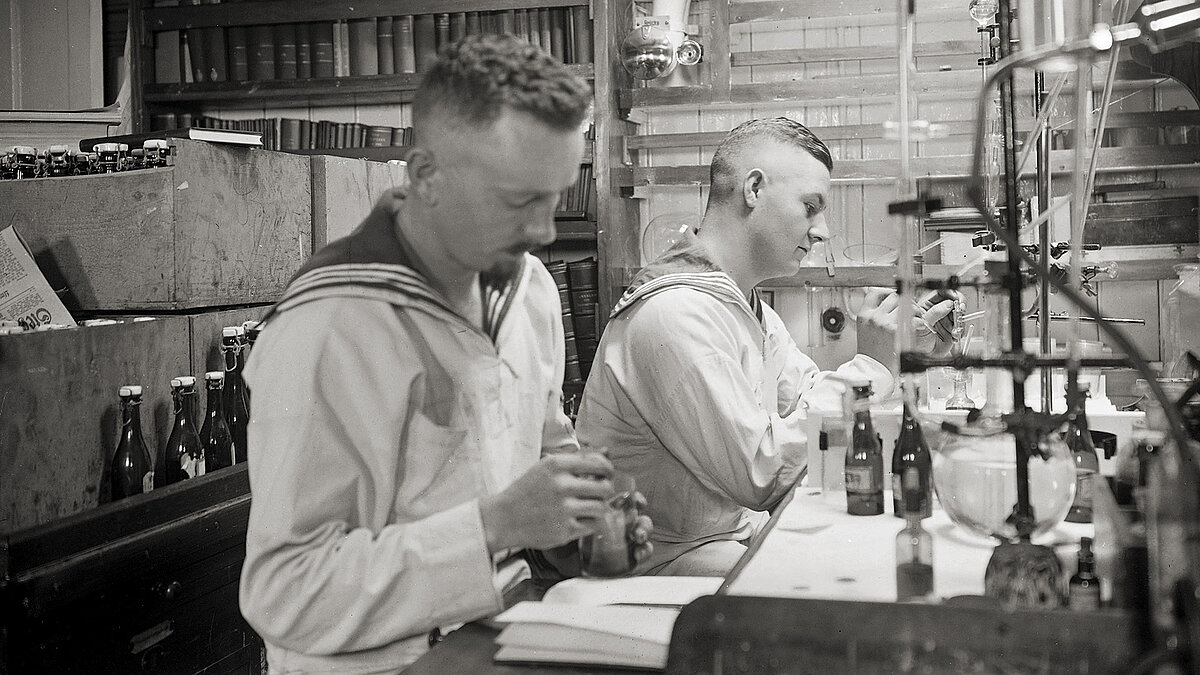
Photo: Dr. Georg Wüst, Archive DSM
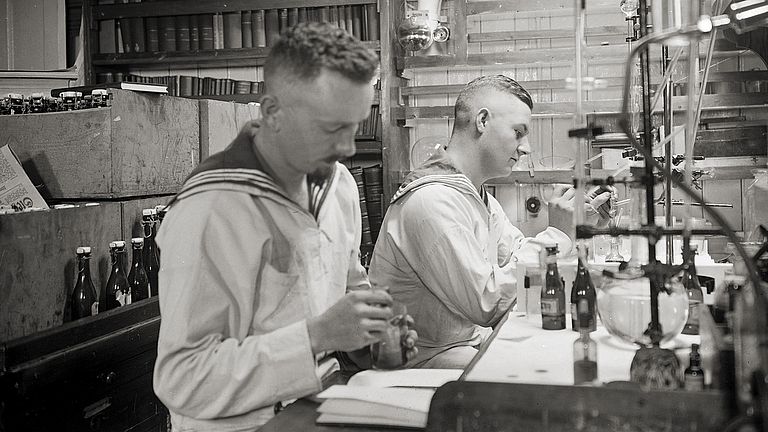
The German Atlantic Expedition (Deutsche Atlantische Expedition, DAE) produced impressive scientific results. More than 67,000 echo sounder measurements that were collected systematically greatly improved knowledge of the depths of the South Atlantic. The resulting higher-resolution image of the sea floor clearly showed the Mid-Atlantic Ridge for the first time. New shallows were discovered and, in some cases, named for the first time. At more than 300 stations, the researchers carried out chemical, physical and biological investigations, accompanied by atmospheric measurement series. This comprehensive research method marked the transition from purely descriptive marine science to analytical oceanography as it is practised today. Among other aspects, it enabled the detection of water exchange between the current systems of the northern and southern hemispheres. ►more
Port Stays and Shore Leave
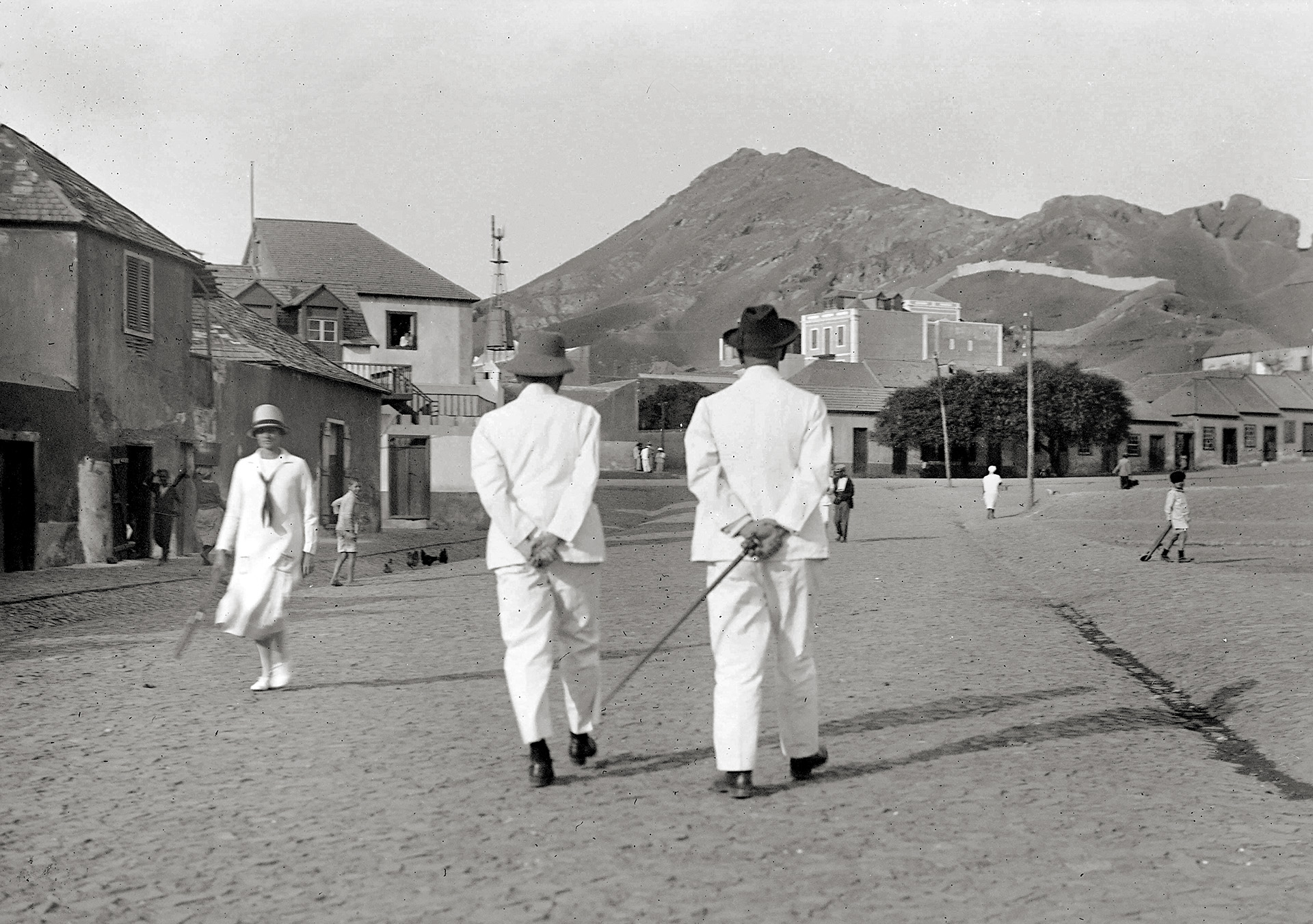
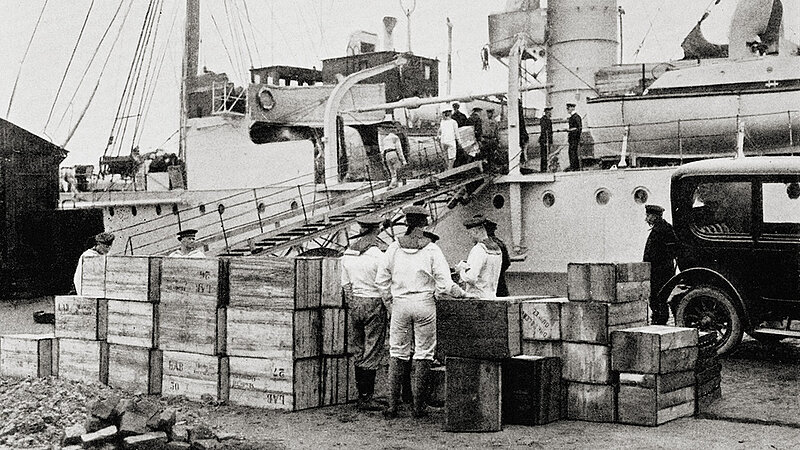
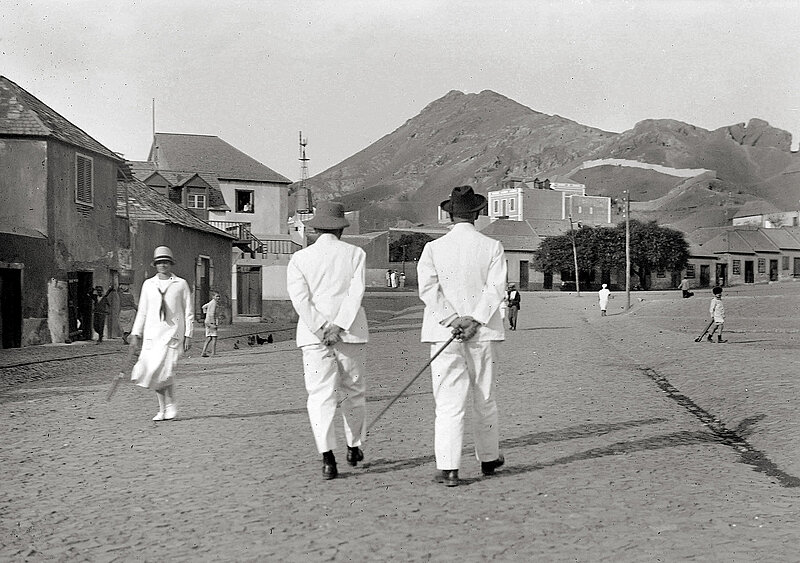
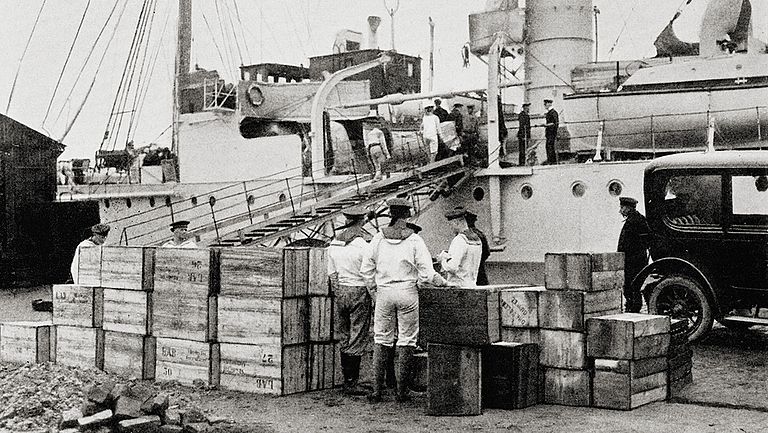
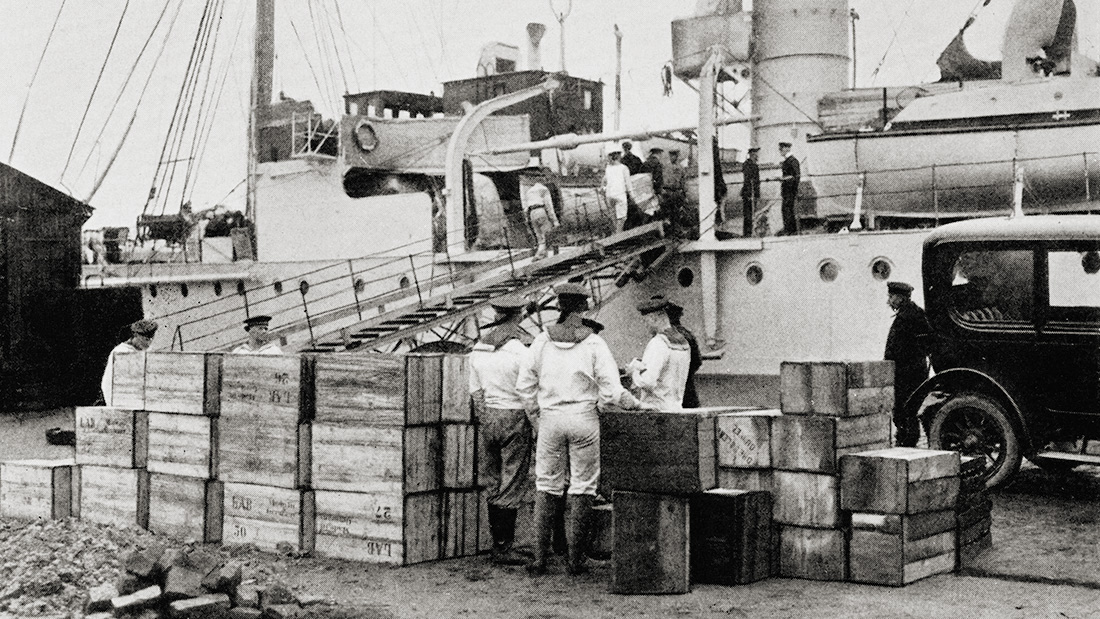
The port stays took up about a third of the total expedition time. They were used to repair the ship, replenish supplies of coal and other goods, and pursue leisure activities. Contacts were established with local political, military and scientific authorities, and events were attended. Another task of the Meteor crew was to cultivate specific contacts with German groups or communities in order to strengthen their ties to Germany. This political task, as well as the photographic and descriptive documentation of indigenous groups, clearly showed how much the expedition was influenced by colonialist views and interpretations.