Marine Ecosystems and Biogeochemical Cycles
The challenge
The ocean encompasses some of the last pristine ecosystems on earth, yet humans are increasingly disturbing even remote systems such as polar regions and the deep sea. Global climate change alongside direct resource exploitation, habitat destruction, and pollution are threatening marine biodiversity and the basic life services they provide. As a consequence, important ecosystem processes such as primary productivity, trophic transfer - the propagation of food and energy through the system - as well as the biological carbon pump are at risk of being permanently and adversely affected by human activities.
This is a critical development as ocean ecosystems sustain many services for humankind, including the provisioning of food and feed, the uptake of atmospheric carbon dioxide, and the protection of coastline communities through coastal ecosystems. A comprehensive understanding of key ocean processes is needed at the level of both direct and indirect interactions and their projection into the future. This is critical for identifying potential tipping points so that we can collectively optimize interventions that mitigate the ongoing deterioration of ecosystem processes.
A solid understanding of basic biological processes including the gene, cell and organismal level will help to unravel the underlying mechanisms for community and ecosystem level responses. A major challenge is integration of such nested levels of biological organization across spatial and temporal scales. We know very little about the diversity of marine pathogens ranging from viruses, prokaryotes to parasites. Consequently, processes controlling health and disease of the diverse life forms in the oceans remain largely elusive.
Another major knowledge gap is the association between macroscopic and microbial life, a balance that is essential for ecosystems to maintain the functions and productivity that support a hospitable earth biome. The novel discovery that all free-living species harbor complex microbiomes of largely unknown functions adds to this complexity. Changes in so-called microbiomes, along with evolutionary adaptation forced by accelerated change, are predicted to alter the responses of key species. Ultimately, these changes impact the resilience of entire ocean ecosystems and global biogeochemical cycles. Fundamental knowledge of species and ecosystem resilience, as well as how to maintain and enhance it are central to efforts devoted to ocean-based solutions and the conservation of marine biodiversity.
Our aim
Our central aim is to integrate biological processes such as adaptation and re-organisation into a biogeochemical setting and to improve modeling of biogeochemical cycles. Processes related to health and disease of marine species may be increasingly triggered by marine extremes. Therefore, we integrate related risks in our models in collaboration with physical oceanographers and meteorologists. We will scale up adaptation processes at the gene and population level to address evolutionary modulation of interactions at the ecosystem level. We further fully embrace methodological revolutions in the life sciences by using omics, systems biology and gene editing tools. Moreover, we will decipher the impacts of a changing ocean on biogeochemical cycles and processes. Our continued efforts will pave the way to identify and maintain vital ocean processes. This includes important issues such as the provisioning of food to humankind and evidence-based approaches to active conservation and restoration of marine habitats in collaboration with diverse partners and stakeholders. Our on-going work towards a healthy ocean provides the scientific foundation to the Sustainable Development Goal (SDG) of the United Nations 14 “Life under Water” and contributes to SDG 2 “Zero Hunger”, SDG 13 “Climate Action”, and to the United Nations Decade of Ocean Science for Sustainable Development.
Our expertise
Since GEOMAR studies the ocean in all aspects of natural science, we are in an ideal position to embed marine ecological processes into developing models for predicting future ocean physics and biogeochemical cycling. We are poised to take leadership on this level of interdisciplinary integration due to the existing strengths and deep commitment and our global vision and outreach to other societal sectors.
Our ambition is to strengthen already existing connections with other world-leading institutions and promote new collaborations. In this manner, we can develop a comprehensive understanding of physical, biological, and biogeochemical ocean processes. GEOMAR scientists have long-standing experience in studying the complex organizational levels in biology, from genes to ecosystems, using state-of the art approaches.
In order to simulate future ocean conditions, GEOMAR has developed a range of experimental instrumentation, for example large outdoor pelagic and benthic facilities that allow for whole-community manipulation. These are complemented by highly controlled experimentation with species and populations in climate chambers, and the capacity to interrogate interactions occurring between individual microbes, their viruses, and other cells.
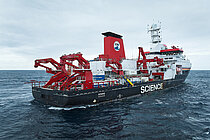
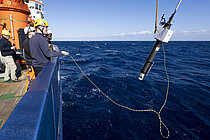
Our experimental work is firmly integrated into ship-based expeditions that describe new species, species interactions (macroscopic, microbial and chemical), and biogeochemical processes. In addition, long-term data series provide critical insights into temporal changes that otherwise cannot be detected. This provides the opportunity to identify the natural and anthropogenic drivers that underpin changes in biological communities and biogeochemical cycles, as well as exploring responses to extreme events and uncovering possible tipping points. We increasingly promote the co-design of ecosystem assessments and restoration projects together with stakeholders and seek dialogue with society. Our combined efforts will in the long run contribute to a better understanding of the processes furthering biological and biogeochemical responses to a changing ocean.
Core Theme News