
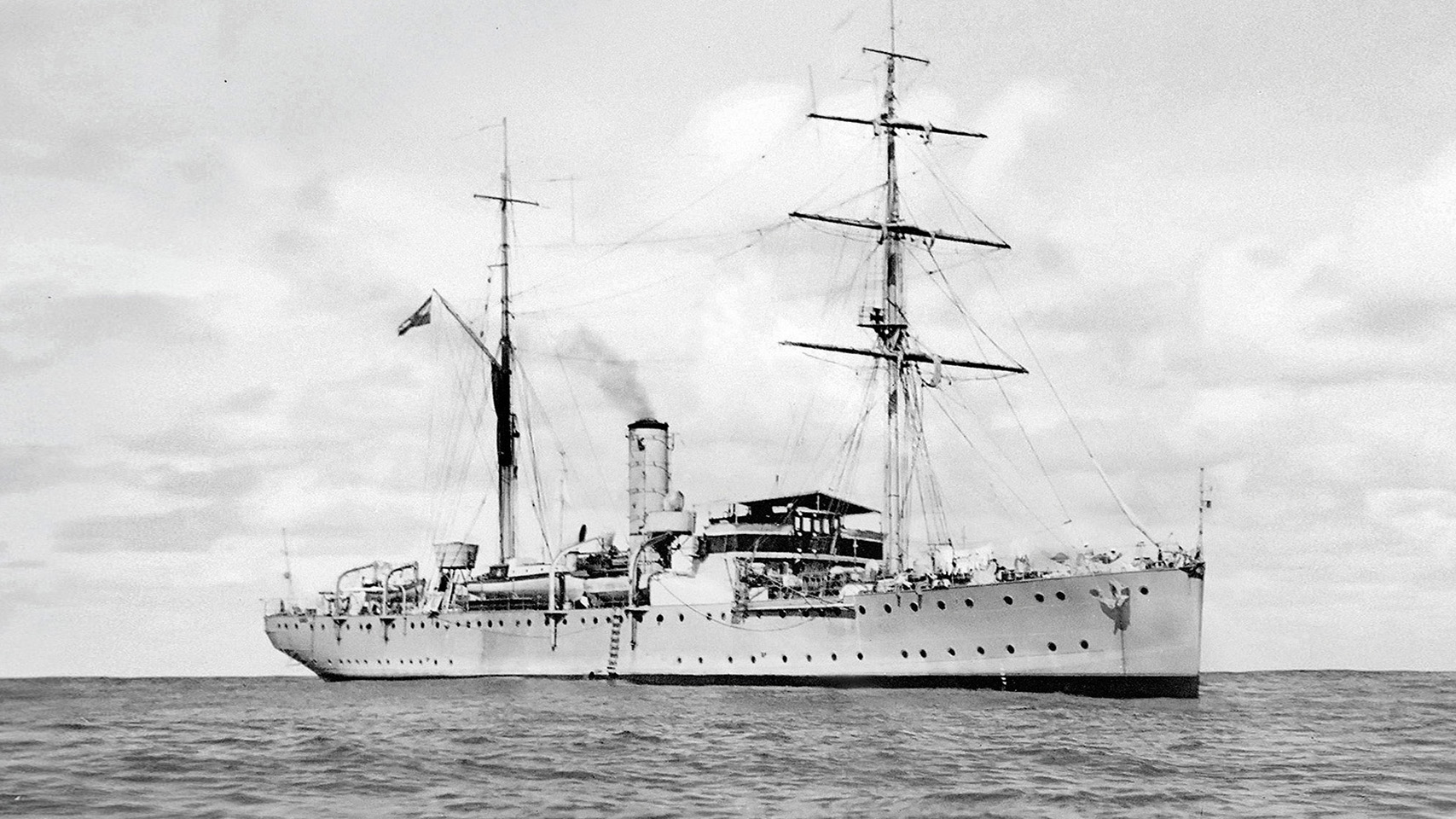
Research vessel Meteor I viewed from the front at an angle, photographed in 1926 during the German Atlantic Expedition. Collection of the German Maritime Museum.
Photo: Otto Freiherr von Recum
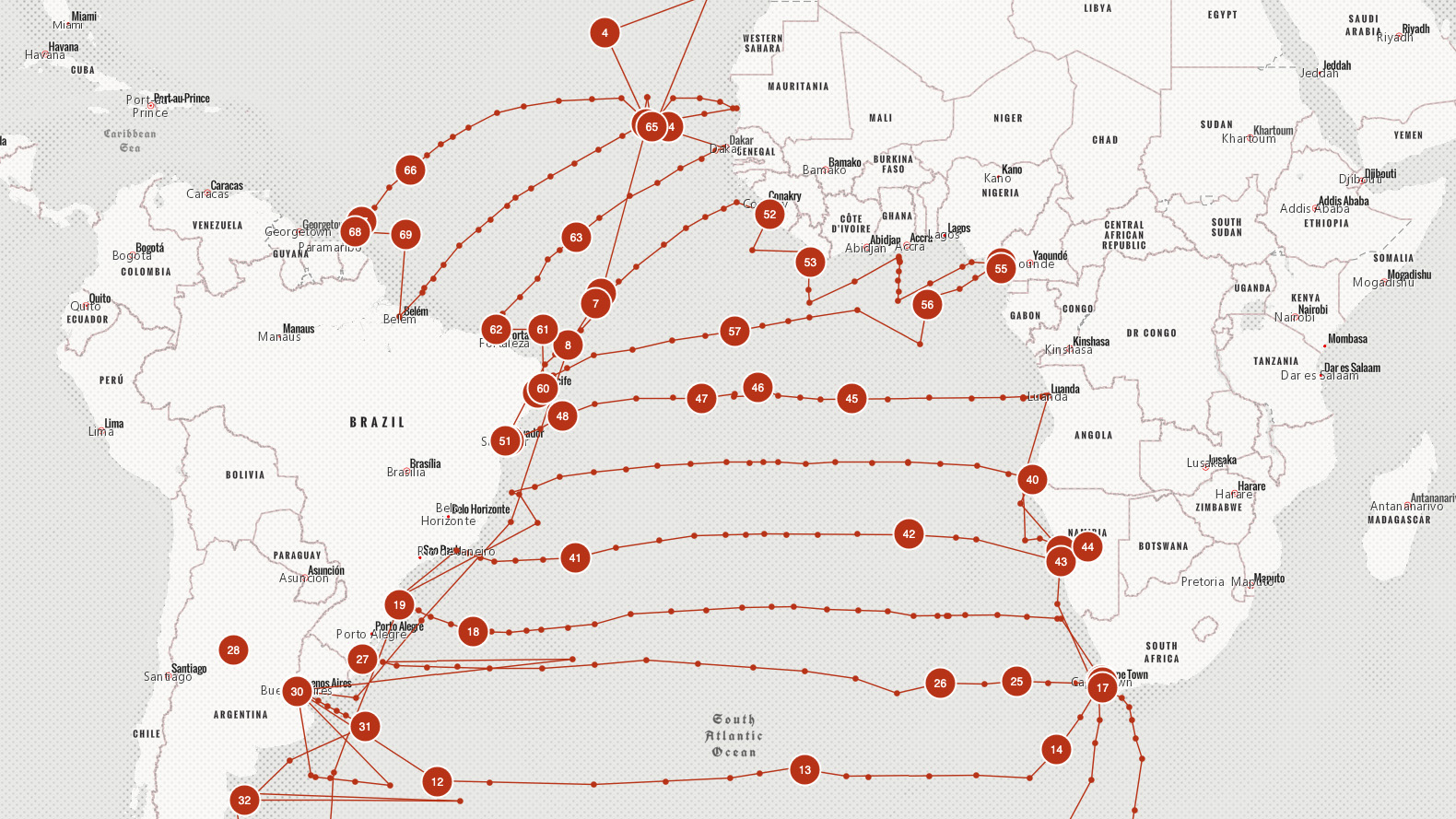
In the spring of 1925, the Meteor (I) set sail and covered 67,535 nautical miles across the Atlantic within two years – equivalent to around three circumnavigations of the globe. The ship crossed the South Atlantic 14 times during this period.
Graphic: GEOMAR/DSM
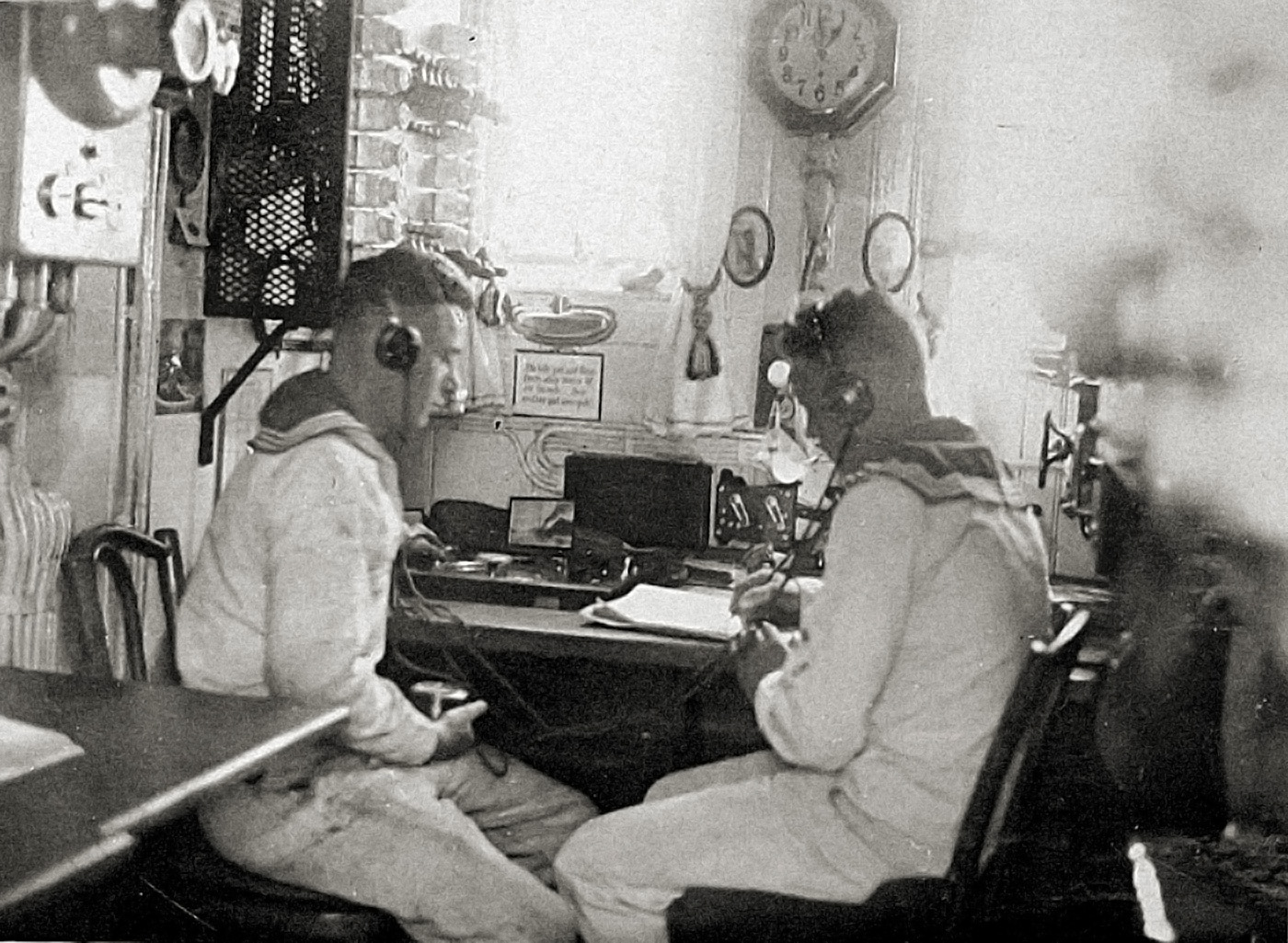
echo sounder operators sounding with the Behm echo sounder.
Source: F. Spieß, Die Meteor-Fahrt, 1928, fig. 86
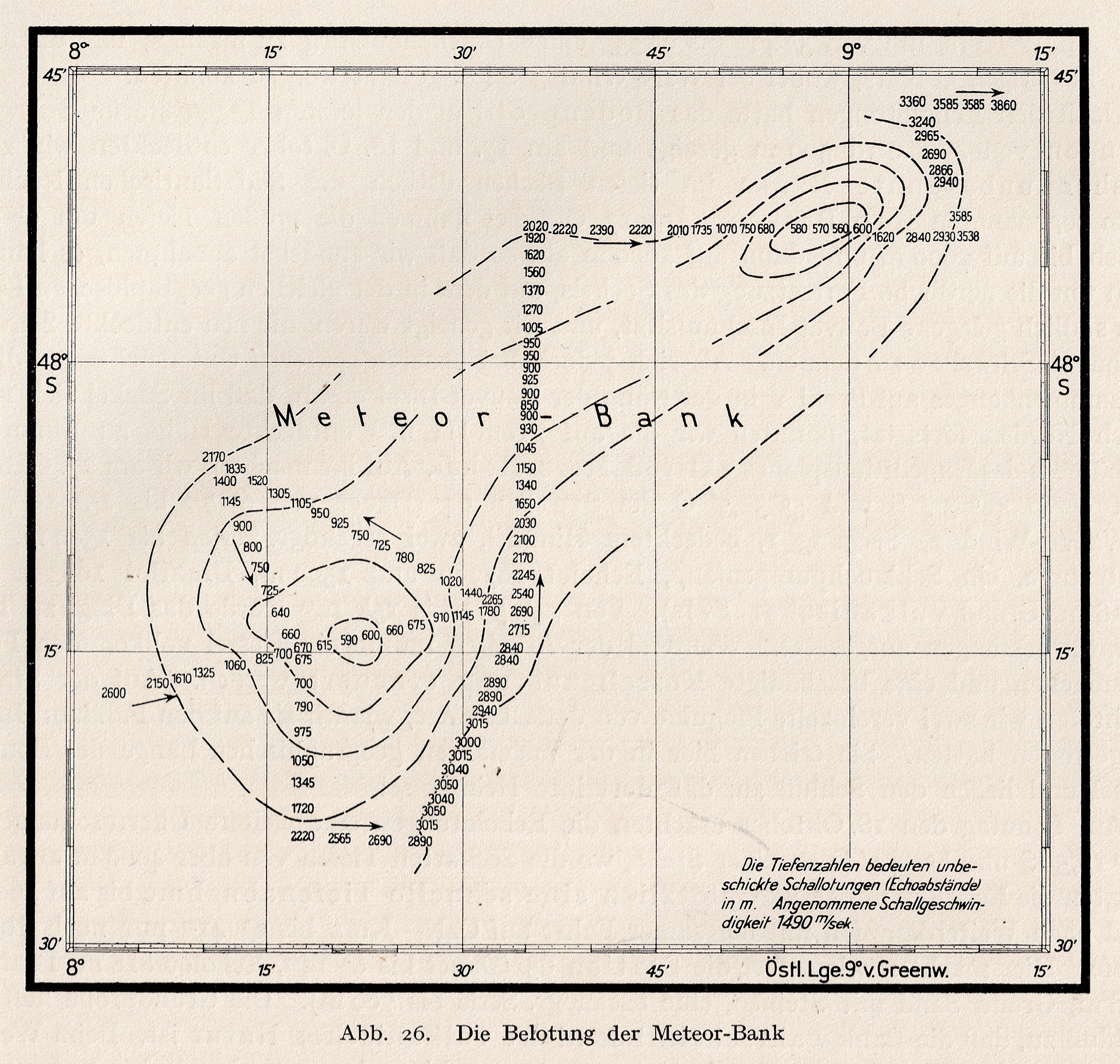
One hundred years ago today, on 18 October 1925, the crew used their echo sounder to discover a formation on the seabed, which they named the “Meteor” Bank.
Source: DAE Bd. I, S. 138
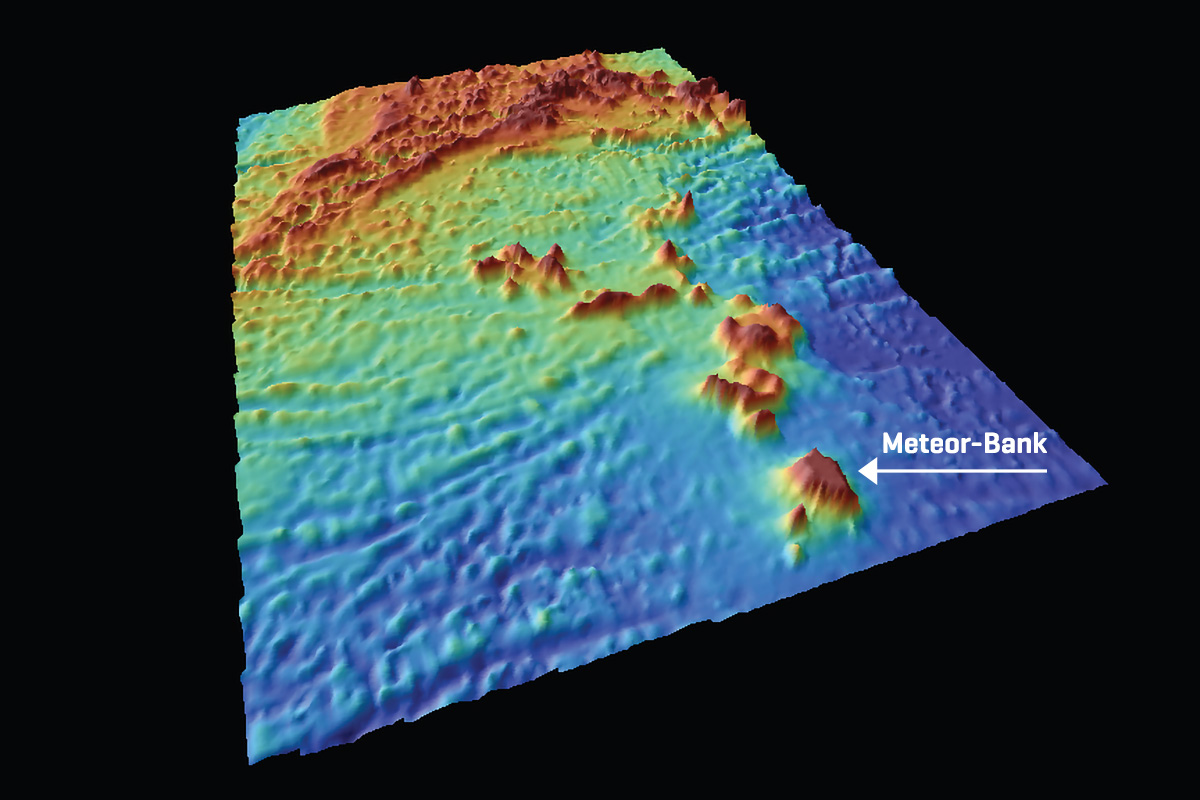
3D visualisation of the Meteor Bank and other seamounts of the Atlantis-Meteor Seamount Complex.
Source: Pimvantend, CC BY 3.0
100 Years of Meteor: Explore the Expedition Interactively
Interactive Storymap by GEOMAR and the German Maritime Museum
In the spring of 1925, Meteor (I) set sail and covered 67,535 nautical miles across the Atlantic within two years – roughly the equivalent of three circumnavigations of the globe. During this time, the ship crossed the South Atlantic 14 times. Using innovative measuring methods, the researchers mapped the seafloor, analyzed currents, and even attempted to extract gold from the ocean. The voyage marked the transition from purely descriptive oceanography to the analytical oceanography practiced today.
The Meteor Expedition from Today’s Perspective
In 2023, GEOMAR handed over original photographs of the Meteor expedition to the DSM/Leibniz Institute for Maritime History in Bremerhaven. The images presumably came to the then Institute of Marine Science – a predecessor of GEOMAR – during the Second World War. They are now part of the exhibition “Land gewinnen – Die Deutsche Atlantische Expedition von 1925 bis 1927” at the German Maritime Museum in Bremerhaven, which opened in the summer of 2025 to mark the centenary of the Meteor expedition. In addition to donating the glass plate negatives, GEOMAR is supporting the exhibition with numerous loans. Moreover, GEOMAR scientists provide short interviews to contextualize the research from today’s perspective. An interactive map tells the story of the voyage through original texts, photographs, and current commentary.
Interactive Storymap
To accompany the exhibition at the German Maritime Museum/Leibniz Institute for Maritime History, GEOMAR and DSM have developed an interactive storymap that is now available online. It links the ship’s route with diary entries by Captain Fritz Spieß, original photographs, and present-day scientific commentary. In this way, the Meteor voyage is brought to life in a modern context 100 years later. In addition to its scientific aims, the expedition also pursued a political goal: it was a means to strengthen Germany’s international presence after the First World War. Numerous stopovers, especially in former German colonies, were therefore integrated into the voyage. DSM historians provide critical commentary on this aspect.
Marine Research 100 Years Ago
During the two-year expedition, the researchers carried out around 67,000 echo soundings. The resulting higher-resolution image of the seafloor revealed the Mid-Atlantic Ridge clearly for the first time. At over 300 stations, the scientists conducted chemical, physical, and biological investigations, accompanied by atmospheric measurements. Their work made it possible, among other things, to demonstrate the exchange of water between the current systems of the Northern and Southern Hemispheres.
18 October 1925: Discovery of the Meteor Bank
Exactly 100 years ago today, on 18 October 1925, the crew detected a formation on the seafloor with the echo sounder, which they named the “Meteor Bank.” It was not entirely unknown at the time – but previously unnamed. Captain Spieß wrote in his diary:
„Morgens finden wir mit Echolot eine Bank, wir machen auf 800 Meter Lotung und Station 65. Danach wird die Bank, die wir ,Meteorbank‘ oder ,Meteorschwelle‘ taufen wollen in sinniger Anlehnung an die gestrige Bouvet Schwelle (Getauft Meteor – Bouvet 1870). Wir loten die Bank ab, sie ist ein vollkommener Kegel, der bis zu 590 Meter aufsteigt. In der Messe wird die Bank und Meiers Geburtstag nachträglich gefeiert. Nachmittags und nachts loten wir die Bank ab. […]“
Further discoveries, insights into life on board, and commentary from a contemporary perspective can be explored in the storymap “100 Jahre Meteor-Expedition.”
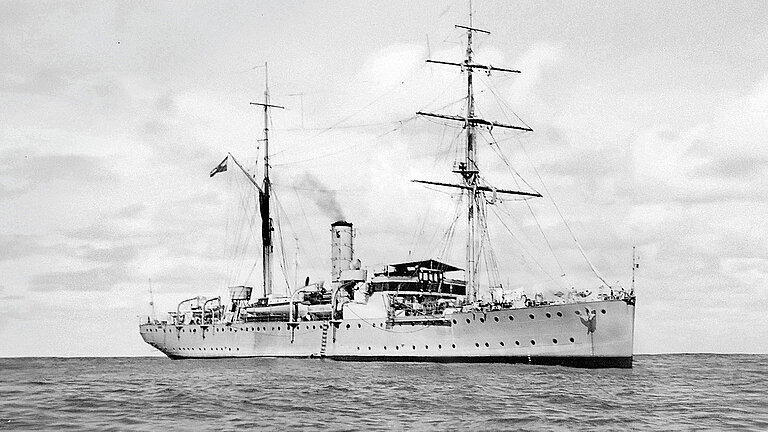
Research vessel Meteor I viewed from the front at an angle, photographed in 1926 during the German Atlantic Expedition. Collection of the German Maritime Museum.
Photo: Otto Freiherr von Recum
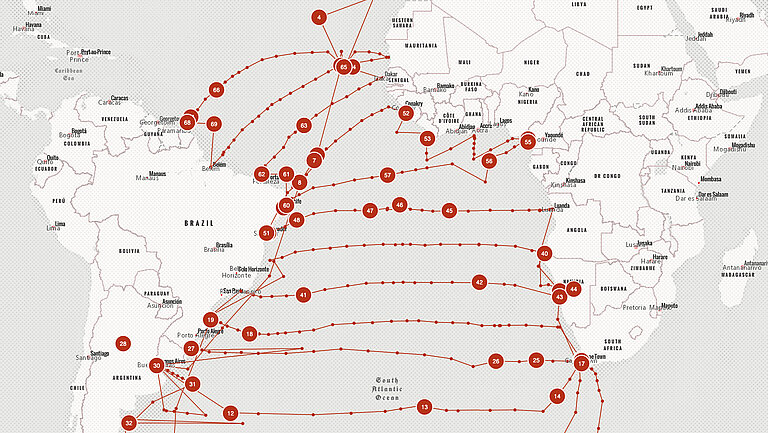
In the spring of 1925, the Meteor (I) set sail and covered 67,535 nautical miles across the Atlantic within two years – equivalent to around three circumnavigations of the globe. The ship crossed the South Atlantic 14 times during this period.
Graphic: GEOMAR/DSM
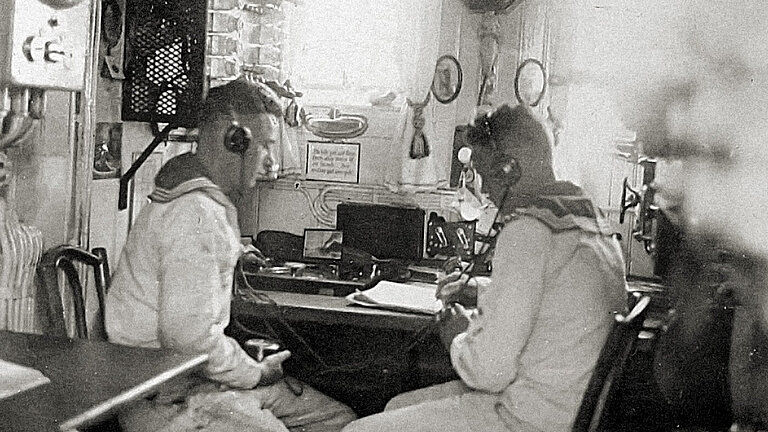
echo sounder operators sounding with the Behm echo sounder.
Source: F. Spieß, Die Meteor-Fahrt, 1928, fig. 86
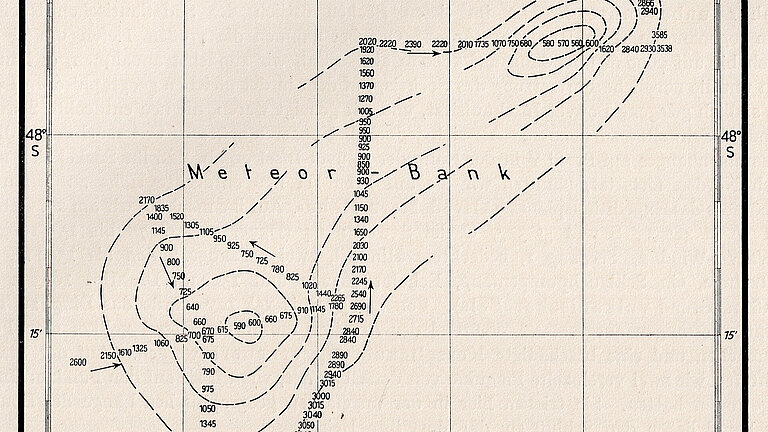
One hundred years ago today, on 18 October 1925, the crew used their echo sounder to discover a formation on the seabed, which they named the “Meteor” Bank.
Source: DAE Bd. I, S. 138
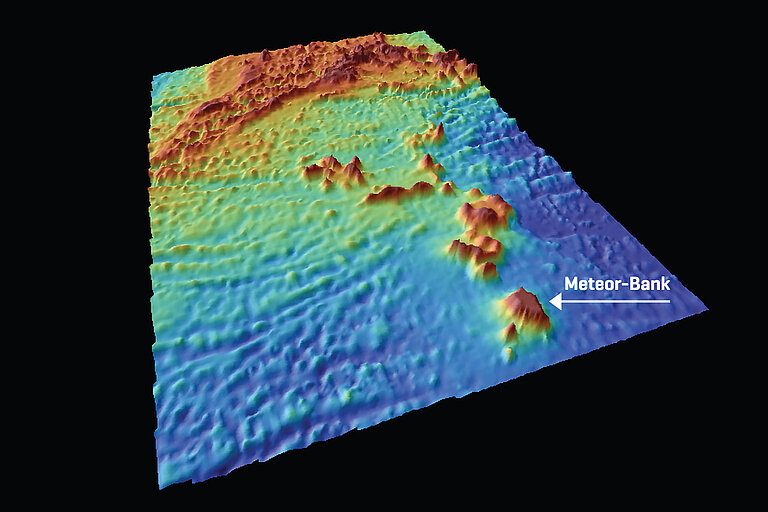
3D visualisation of the Meteor Bank and other seamounts of the Atlantis-Meteor Seamount Complex.
Source: Pimvantend, CC BY 3.0