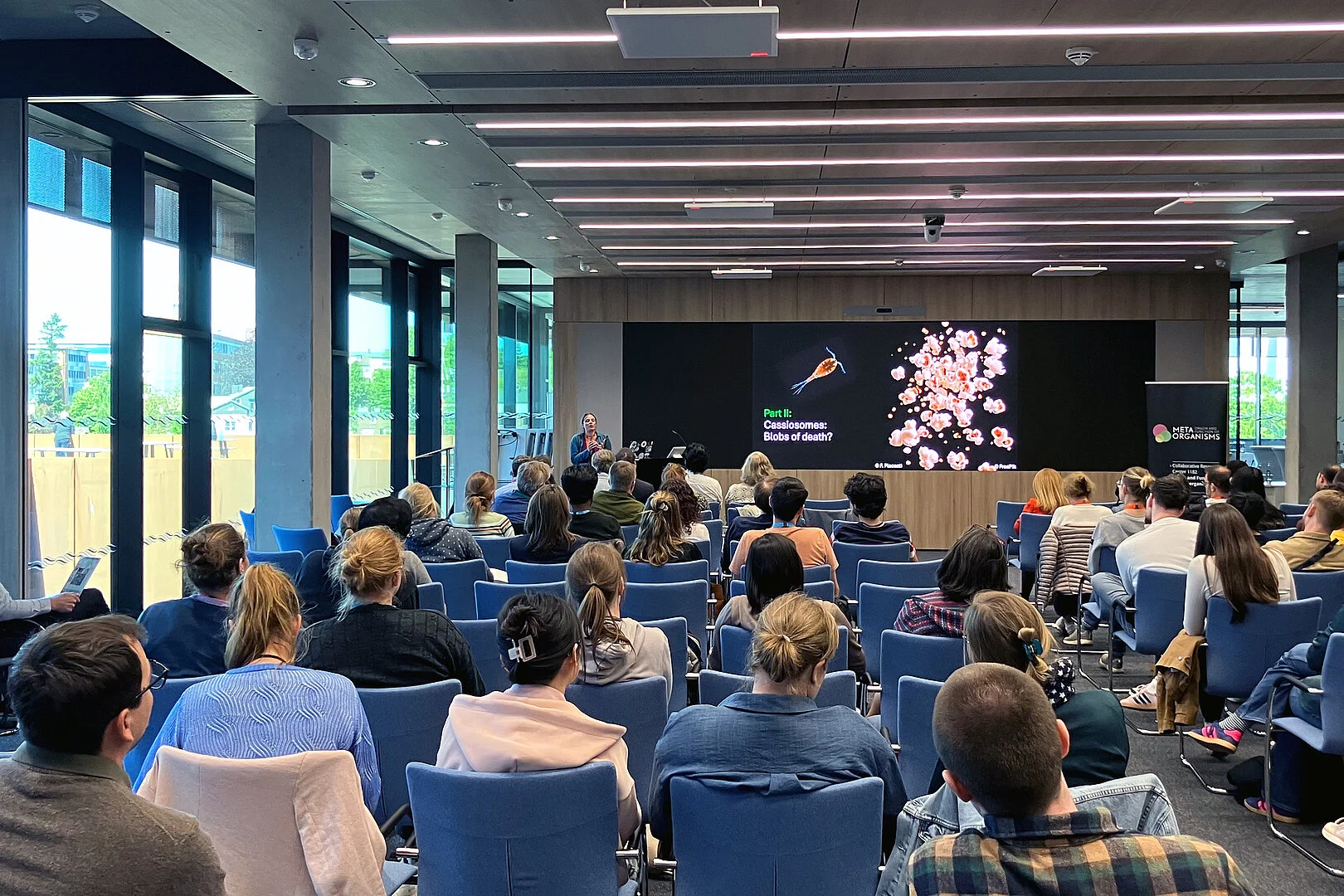
Around 100 researchers come together at GEOMAR to discuss the principles of communication between host organisms and microorganisms at the cellular level. Photo: Christian Urban / Kiel University
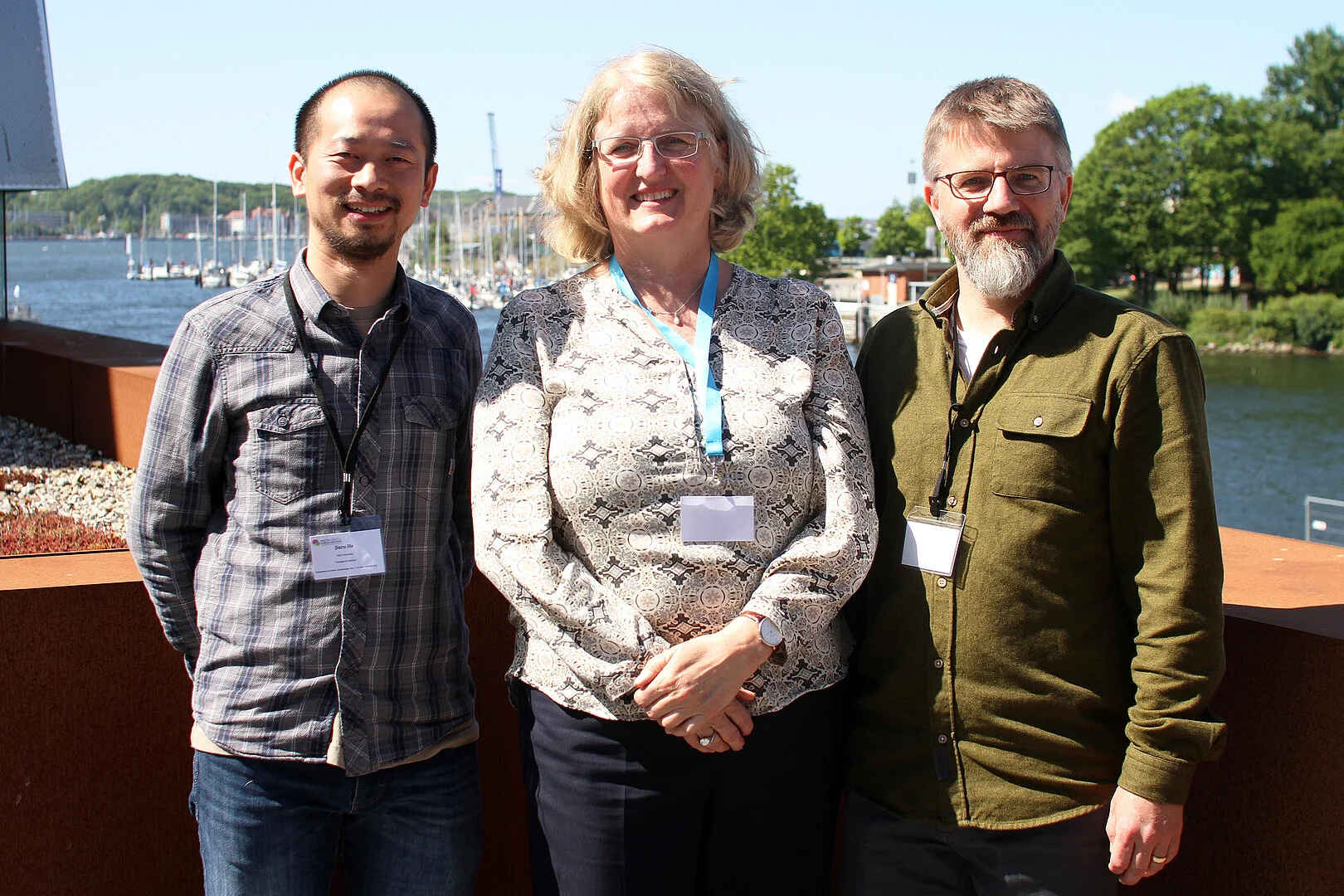
Dr Jinru He (Kiel University), Prof Ute Hentschel Humeida (GEOMAR) and Sebastian Fraune (HHU Düsseldorf, from left to right) were responsible for the scientific programme of the conference. Photo: Christian Urban / Kiel University
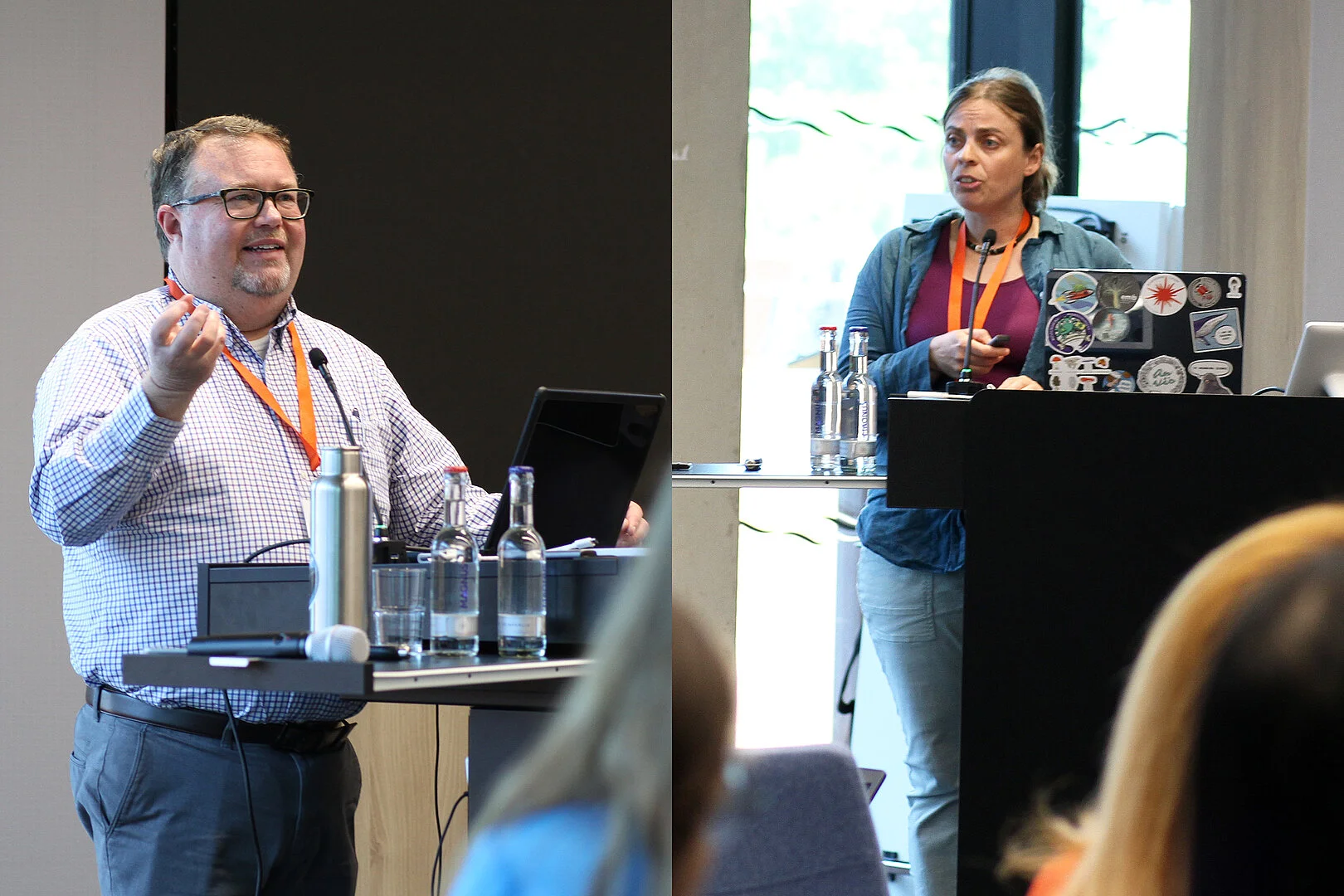
Among the international guests of the CRC 1182 are Prof Spencer Nyholm (University of Connecticut) and Dr Claudia Pogoreutz (University of Perpignan). Photo: Christian Urban / Kiel University
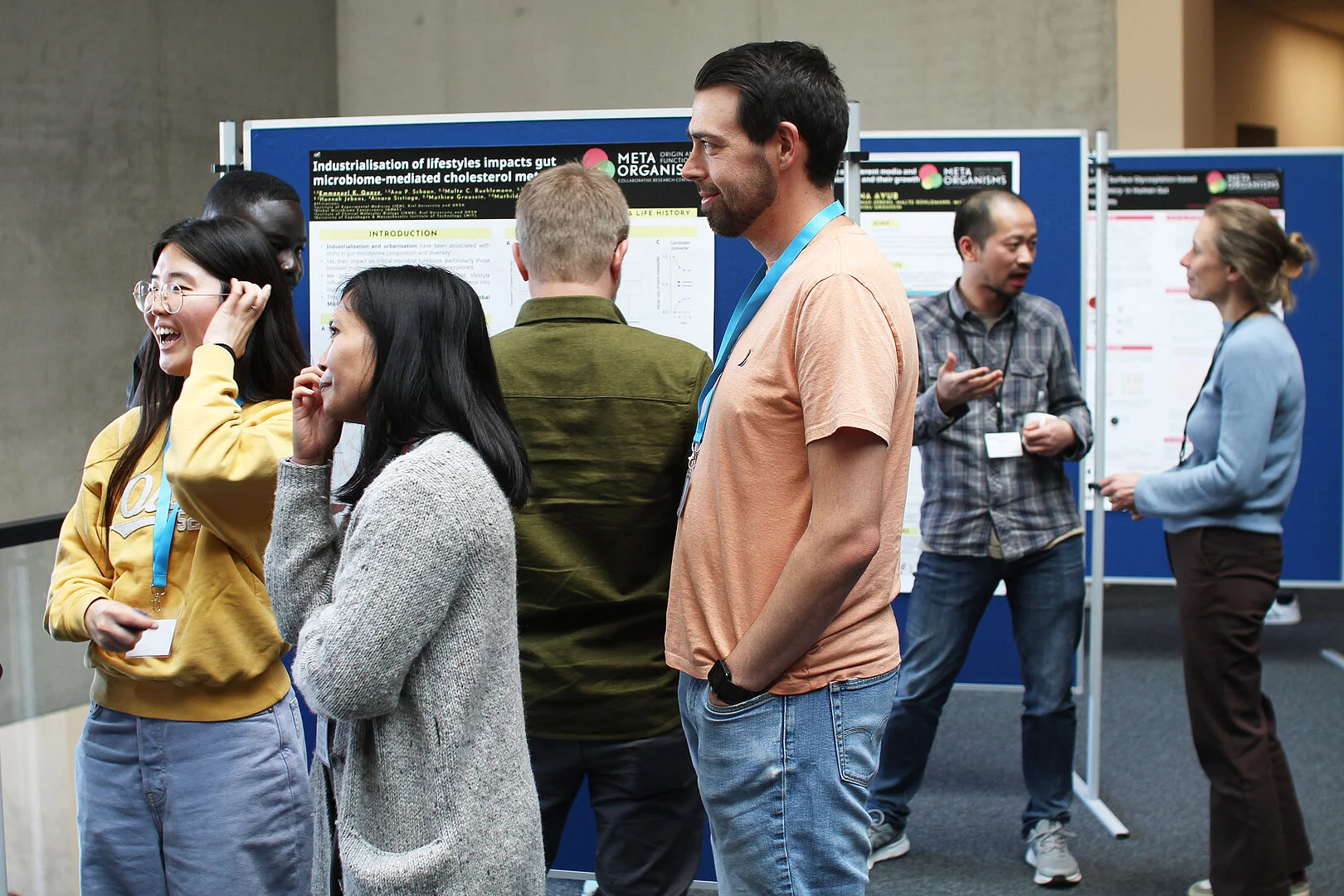
Especially young researchers from different disciplines and international locations exchange ideas during the CRC 1182 conference at GEOMAR, working on topics and relevant methods of cellular metaorganism research. Photo: Christian Urban / Kiel University
Cellular foundations of symbioses
CRC 1182 international symposium
The Collaborative Research Centre (CRC) 1182 “Origin and Function of Metaorganisms” at Kiel University hosts the international symposium “Cellular Underpinnings of Host-Microbe-Crosstalk” since yesterday. Around 100 scientists from Kiel and their international guests come together at the GEOMAR Helmholtz Centre for Ocean Research Kiel to discuss the principles of communication between host organisms and microorganisms at the cellular level. Among the international experts taking part in the Kiel conference are Professor Spencer Nyholm from the University of Connecticut, Dr Liz Hambleton from the University of Vienna and Dr Claudia Pogoreutz from Perpignan University.
The CRC 1182 is part of Kiel University’s priority research area Kiel Life Science (KLS) and since 2016 has been investigating why and how microbial communities enter into long-term relationships with their host organisms and which functional consequences this interaction has for health and disease. In addition to the molecular and organismic levels of symbioses, an important aspect of this research field that has received little attention to date are the processes that take place in individual cells during the communication of multicellular host organisms with the multitude of colonising microorganisms such as bacteria, viruses and fungi.
Cellular processes: An overlooked aspect of host-microbe research?
“The complicated dynamics at this central interface have not yet been sufficiently researched,” says Professor Tal Dagan, vice-spokesperson of the CRC 1182, emphasising the current importance of the topic. The symposium therefore aims to reduce this significant knowledge gap in metaorganism research. During the meeting, the participants will discuss numerous details of these cellular processes, e.g.: How does the innate immune system of the host influence the interactions between the cells of the host organism and microorganisms? How do these interactions take place at the level of individual cells and how can they be visualised?
“Host cells and their surfaces are crucial for initial contact, adhesion and selection of microorganisms and play a central role in maintaining the balance in the interactions between hosts and microbes. These tissue surfaces of host organisms therefore form a crucial interface that determines the assembly of a specific microbiota and thus ultimately the establishment of symbioses,” explains Professor Ute Hentschel Humeida from GEOMAR, who organised the conference.
In the CRC 1182 and at many other research centres around the world, scientists are working on improving or developing completely new methods for investigating this interface. These include so-called single-cell atlases, improved single-cell proteomics and high-resolution spatial imaging methods, which promise unprecedented insights into cellular processes in the future. “The aim of our symposium is to bring together researchers from different disciplines who are working on such topics and the relevant methods. Through international exchange, we will learn more about the cellular mechanisms that underlie the interactions of hosts and microbes and thus contribute to the function of metaorganisms,” emphasises CRC 1182 spokesperson Professor Hinrich Schulenburg from Kiel University.
About the CRC 1182:
The Collaborative Research Centre "Origin and Function of Metaorganisms" is an interdisciplinary network involving around 80 researchers that investigates the interactions of specific microbial communities with multicellular host organisms. It is supported by the German Research Foundation (DFG) and deals with the question of how plants and animals including humans form functional units (metaorganisms) together with highly specific communities of microbes. The aim of the CRC 1182 is to understand why and how microbial communities enter into these long-term associations with their host organisms and what functional consequences these interactions have. The CRC 1182 brings together scientists from five faculties at Kiel University, the GEOMAR Helmholtz-Centre for Ocean Research Kiel, the Max-Planck-Institute for Evolutionary Biology Plön, the Heinrich-Heine-University Düsseldorf, the Leibniz Institute for Science and Mathematics Education and the Muthesius University of Fine Arts and Design.
Contact:
Prof. Hinrich Schulenburg
Spokesperson CRC 1182 „Origin and Function of Metaorganisms“, Kiel University
Phone: +49 431-880-4141
Email: hschulenburg(at)zoologie.uni-kiel.de
Prof. Ute Hentschel Humeida
Research Unit - Marine Symbioses
Research Division 3 - Marine Ecology
GEOMAR Helmholtz Centre for Ocean Research Kiel
Phone +49 431 600-4480
Email: uhentschel(at)geomar.de
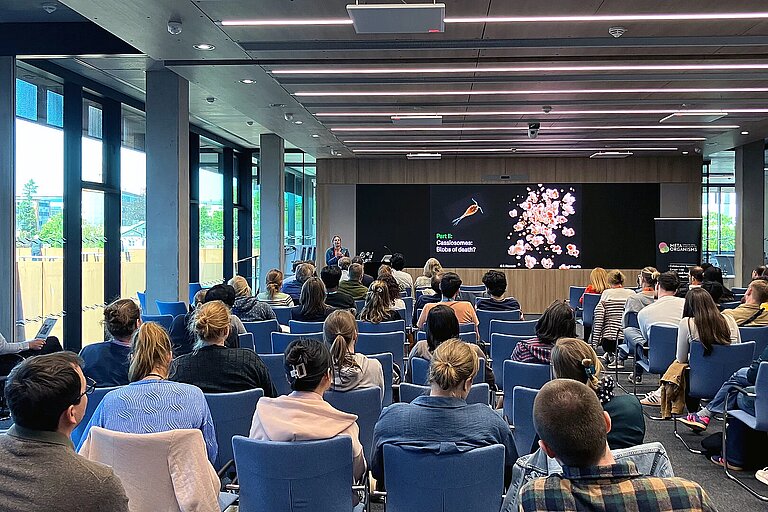
Around 100 researchers come together at GEOMAR to discuss the principles of communication between host organisms and microorganisms at the cellular level. Photo: Christian Urban / Kiel University
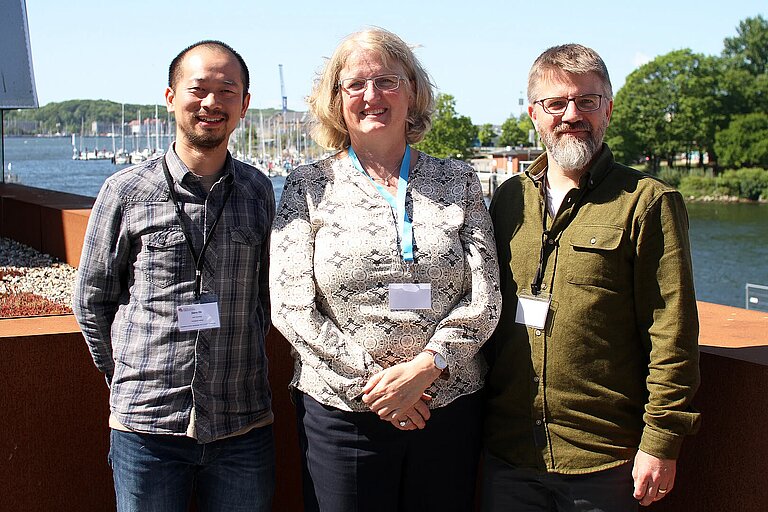
Dr Jinru He (Kiel University), Prof Ute Hentschel Humeida (GEOMAR) and Sebastian Fraune (HHU Düsseldorf, from left to right) were responsible for the scientific programme of the conference. Photo: Christian Urban / Kiel University

Among the international guests of the CRC 1182 are Prof Spencer Nyholm (University of Connecticut) and Dr Claudia Pogoreutz (University of Perpignan). Photo: Christian Urban / Kiel University
Especially young researchers from different disciplines and international locations exchange ideas during the CRC 1182 conference at GEOMAR, working on topics and relevant methods of cellular metaorganism research. Photo: Christian Urban / Kiel University