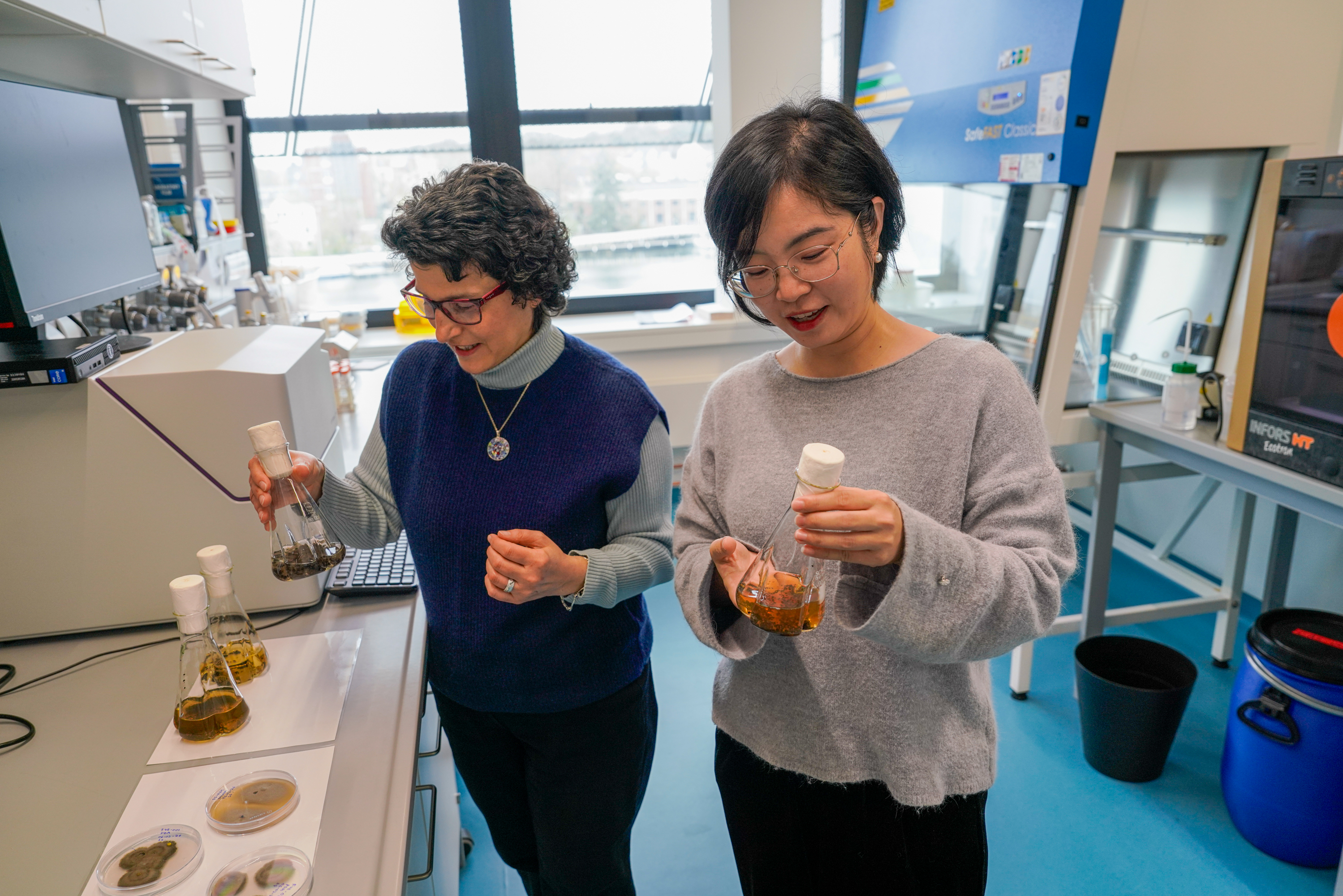
Prof. Dr Xi Yu (right) from Shanghai Ocean University visited GEOMAR as a guest researcher. Working with Prof. Dr Deniz Tasdemir’s research group, she combined microbiological approaches with modern marine natural product chemistry.
Photo: Lauren Peck, GEOMAR
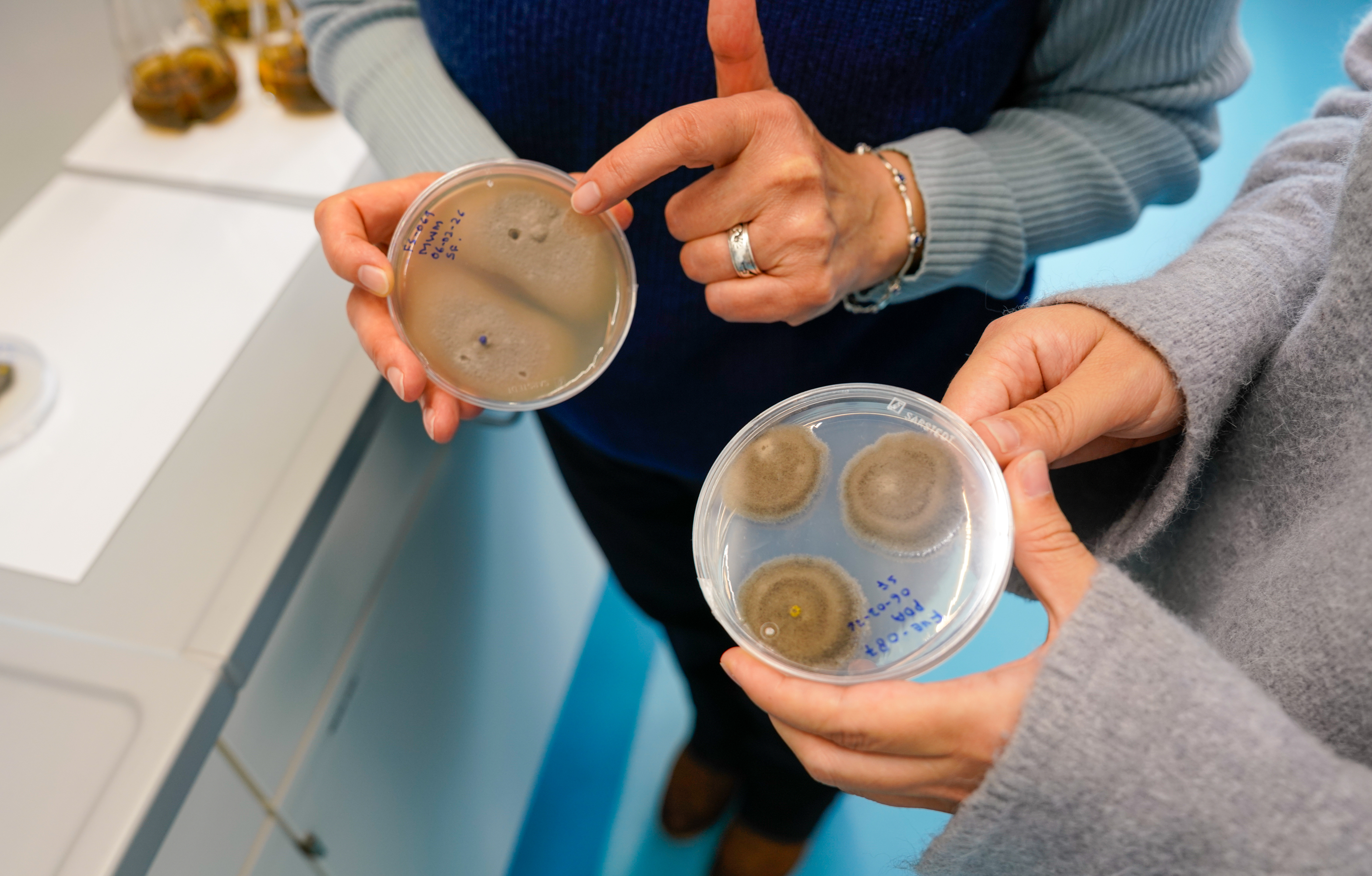
Prof. Dr. Xi Yu studies fungi from marine environments, particularly from the deep sea. These microorganisms are considered a still largely unexplored source of chemical diversity.
Photo: Lauren Peck, GEOMAR
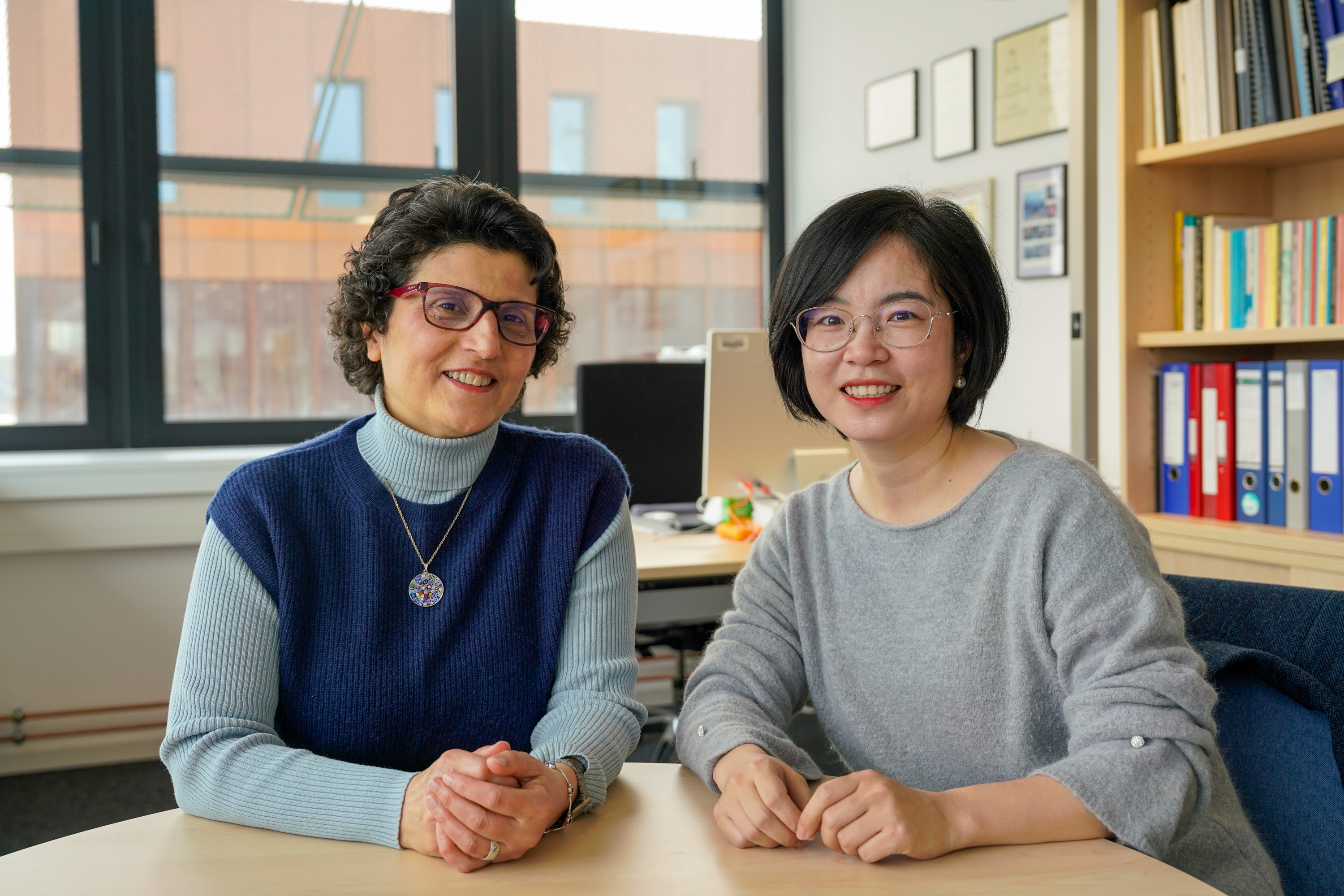
Marine microbiologist Prof. Dr Xi Yu (right) and natural products chemist Prof. Dr Deniz Tasdemir combine their expertise in microbiology, genomics and marine natural products chemistry. Together, they aim to unlock the biotechnological potential of marine fungi.
Photo: Lauren Peck, GEOMAR
Exploring the Genetic Potential of Marine Fungi for Biodiscovery
Marine microbiologist Prof. Dr Xi Yu is joining GEOMAR as a guest scientist
Prof. Dr Xi Yu is hosted by Prof. Dr Deniz Tasdemir, who heads the Marine Natural Product Chemistry Research Unit. She is a full professor at Shanghai Ocean University in China, also serving as Associate Dean of the College of Oceanography and Ecological Science, as well as Director of the Deep Ocean Microbiomes and Ecosystems (DOME). At heart, Yu is a marine microbiologist. Here at GEOMAR, her collaboration with Tasdemir bridges microbiology and chemistry. “We combine genomic and transcriptomic insights with chemical analysis to better understand what these organisms are capable of producing and in which conditions,” explains Tasdemir. Yu’s expertise in microbial genomics complements Tasdemir’s research in natural product chemistry extremely well.
“We want to unlock the chemical potential of the ocean’s invisible resources,” says Yu.
Her work focuses on marine-derived fungi – microscopic life forms that play a fundamental role in ocean and ecosystems and represent a largely untapped source of chemical diversity. By studying their genes and metabolic pathways, she aims to better understand how these organisms produce compounds that could one day be used as life-saving antibiotics, anti-cancer agents, or other valuable products. Yu’s knowledge of the microbiome enables the team to link biosynthetic gene clusters to a wide range of potential compounds and estimate what a given fungus contains and is capable of. By integrating chemistry and biology, the fungus can be screened and the most important components can be accurately identified and obtained in a pure form.
From China to international research – and now to Kiel
Prof. Dr Yu studied microbiology in China and earned her PhD at Nankai University, including research training at Yale University. She later performed post-doctoral research at Karlsruhe Institute of Technology (KIT) in Karlsruhe, Baden-Württemberg, Germany where she studied how secondary metabolites mediate interkingdom communication. Then she joined Shanghai Ocean University as a full professor. Yu explains that in addition to Prof. Tasdemir’s reputation and chemical expertise in marine fungal chemistry, she was also attracted to GEOMAR because of its internationally recognized leadership and excellence in marine science.
“We hope this exchange marks the beginning of a long-term collaboration, as we work together to explore and better understand the ocean,” says Yu.
Small Microbes, Big Possibilities
Prof. Dr Yu’s research focuses on the discovery of biologically active compounds from marine microbial sources – especially fungi thriving in deep-sea environments. Fungi are especially promising organisms because of their large genomes, which allow them to produce a diverse array of chemical compounds in high yields. This makes them ideal starting material for Yu’s research, especially compared to smaller organisms where limited biomass can make analysis and compound isolation more challenging. While other chemists on the team specialise in isolating and characterising compounds, Yu provides insight into the genetic basis of their production. This collaboration enables a more integrated approach: not only identifying useful compounds, but also understanding how organisms produce them at a genetic level and what physiological roles they play. This knowledge ultimately supports more efficient discovery, targeted exploration of organisms and the production of valuable bioactive substances.
The Future of Marine Natural Product Research
The collaboration between Prof. Dr Yu and Prof. Dr Tasdemir ultimately points to a much larger vision for the future of marine biodiscovery and biotechnology research at GEOMAR. By linking genomic insights with advanced computational chemical analysis, Yu and Tasdemir are not only improving the efficiency of discovering new drugs and agrochemicals, but also reshaping how these discoveries are made – moving toward approaches that are both more targeted, rapid and sustainable. Instead of harvesting and destroying fragile marine organisms, the focus on microbes offers a way to unlock the ocean’s biochemical potential without damaging the ecosystem. At the same time, this research highlights how much remains unknown: marine microorganisms biosynthesise a vast, largely unexplored “library” of compounds, deeply intertwined with ocean health and global environmental change. Protecting this invisible biodiversity is not separate from discovery – it is a prerequisite for it.
Tasdemir explains, “It’s not just about discovering a new medicine or agrochemical, but also about contributing to the protection of microbes so that we can explore their potential for the discovery of new medicines. We should protect not only marine animals and plants, but also ocean microbes. They are disappearing too, and they are so crucial for all processes in the ocean.” Visiting Professor Xi Yu adds: “This also reflects the core aim of DOME, rephrased as: ‘The Delicate Ocean is Mankind’s Eden’.”
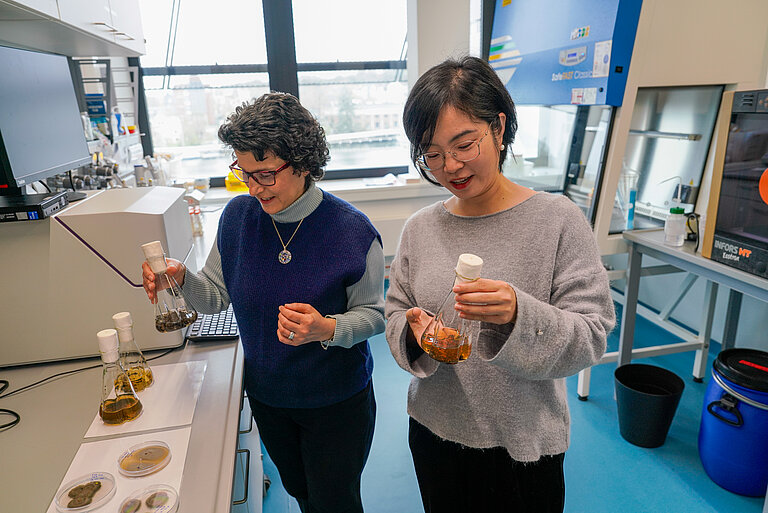
Prof. Dr Xi Yu (right) from Shanghai Ocean University visited GEOMAR as a guest researcher. Working with Prof. Dr Deniz Tasdemir’s research group, she combined microbiological approaches with modern marine natural product chemistry.
Photo: Lauren Peck, GEOMAR
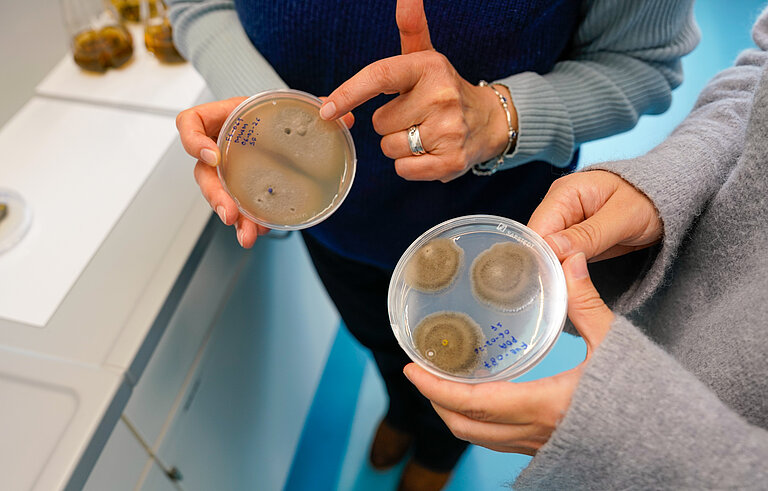
Prof. Dr. Xi Yu studies fungi from marine environments, particularly from the deep sea. These microorganisms are considered a still largely unexplored source of chemical diversity.
Photo: Lauren Peck, GEOMAR
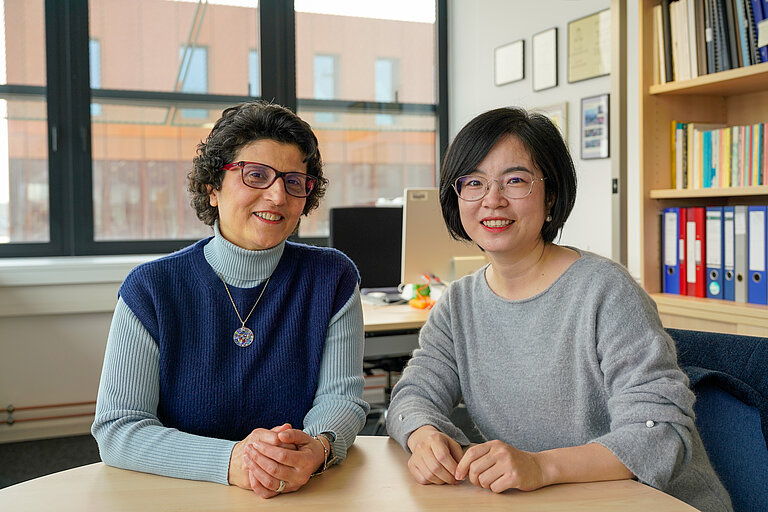
Marine microbiologist Prof. Dr Xi Yu (right) and natural products chemist Prof. Dr Deniz Tasdemir combine their expertise in microbiology, genomics and marine natural products chemistry. Together, they aim to unlock the biotechnological potential of marine fungi.
Photo: Lauren Peck, GEOMAR