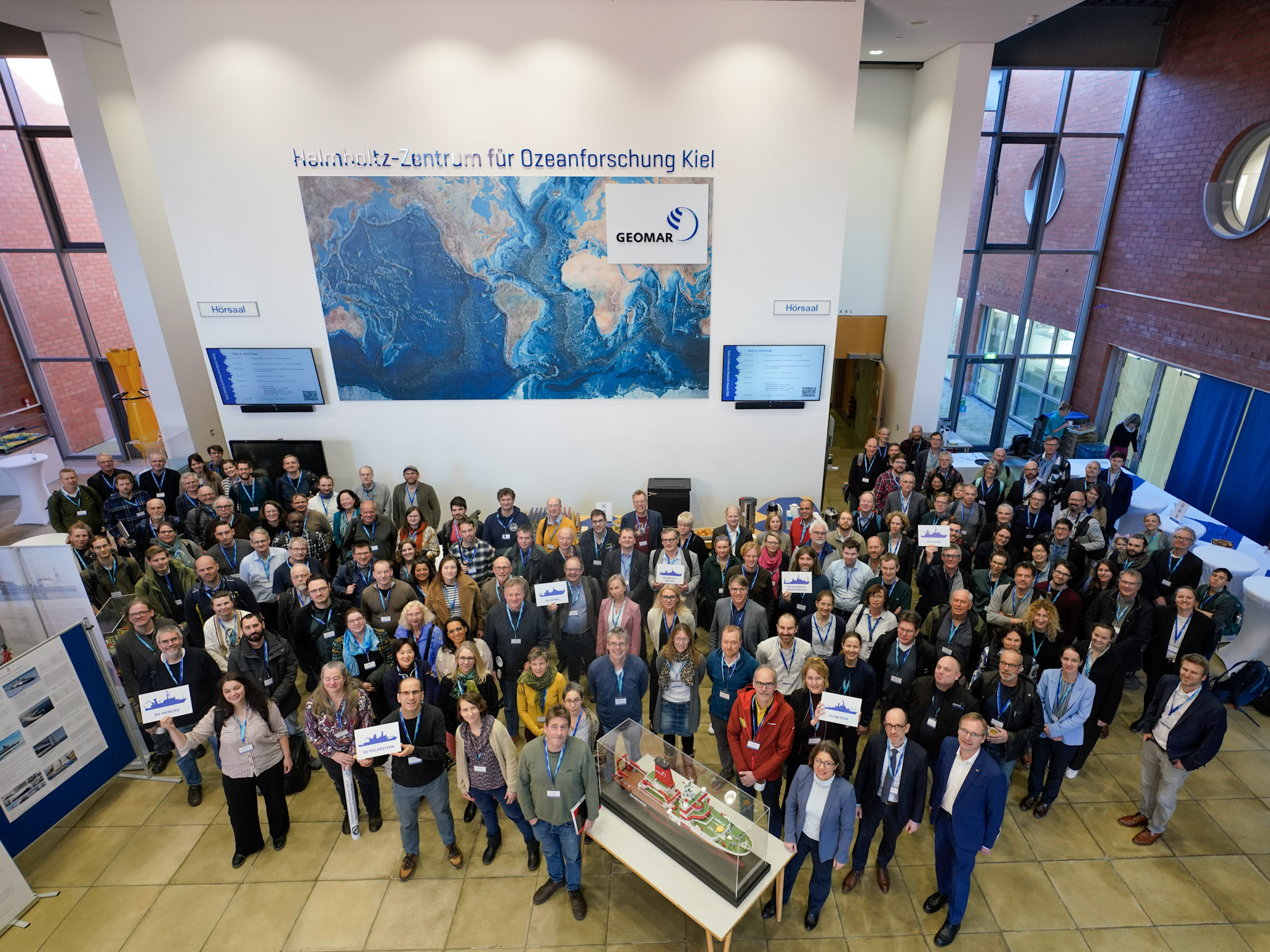
The Status Conference Research Vessels brings together researchers, sponsors and shipping companies at GEOMAR in Kiel. During this biennial event, scientists present and discuss the results of their expeditions.
Photo: Sarah Uphoff, GEOMAR
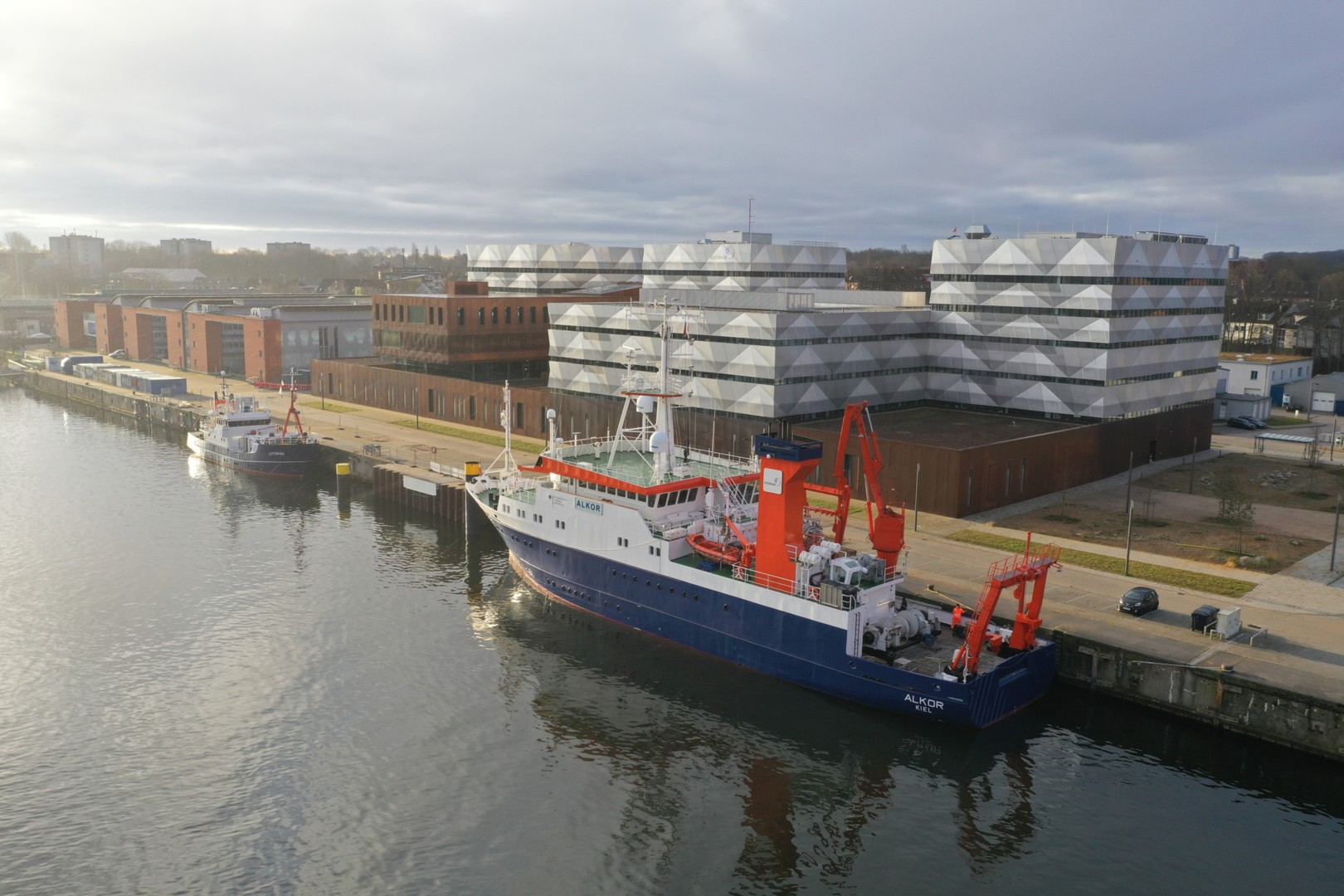
This year's Status Conference Research Vessels is being hosted by GEOMAR. Over the course of two days, all expeditions undertaken by the German research fleet over the past two years will be presented in Kiel.
Photo: Sarah Uphoff, GEOMAR
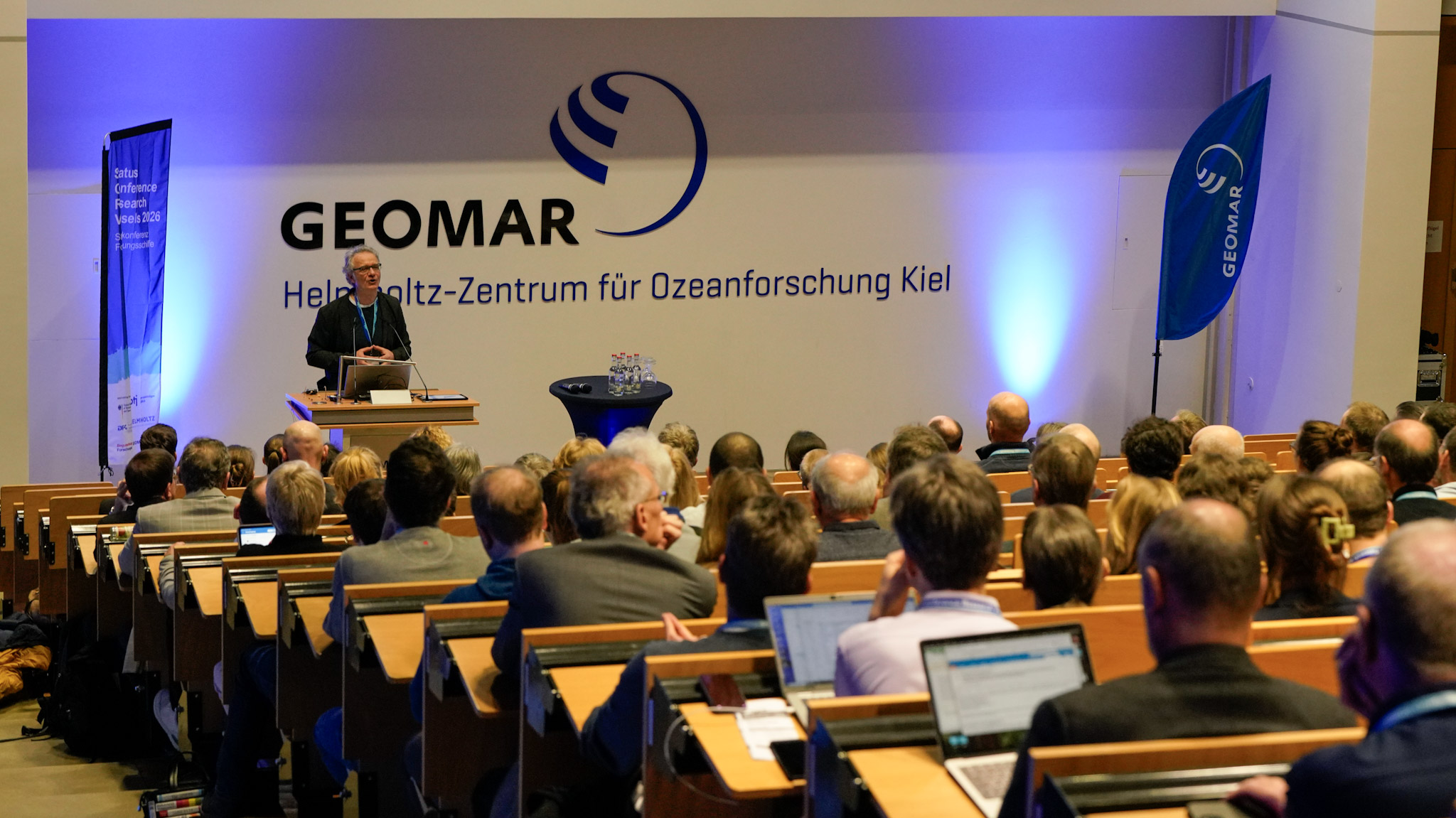
There will be more than 100 lectures presenting the scientific findings of the 130 expeditions.
Photo: Sarah Uphoff
Insights from Expeditions
Status Conference Research Vessels 2026 at GEOMAR Helmholtz Centre for Ocean Research Kiel
Germany operates one of the world’s most modern research fleets. Seven ocean-going, multi-purpose vessels enable marine research to be conducted at the highest scientific level. Funded by the Federal Ministry of Research, Technology and Space (BMFTR), the German Research Foundation (DFG) and the northern German federal states, the vessels are deployed worldwide on a permanent basis: ALKOR, ELISABETH MANN BORGESE, HEINCKE, MARIA S. MERIAN, METEOR, POLARSTERN and SONNE.
Researchers wishing to embark on an expedition aboard one of these specialist vessels can find all the necessary information on ship-time applications via the German Research Vessels Portal. There, they submit a cruise proposal outlining their scientific objectives and the planned course of the expedition. These proposals are then scientifically evaluated by the Review Panel for Research Vessels (GPF). After completing the expedition, researchers must document the data collected and samples gathered during the cruise in a cruise report.
At the Status Conference on Research Vessels, scientific results are being presented in the form of more than 100 lectures covering around 130 expeditions. A total of 260 participants are expected to attend. In addition, updates will be provided on the new vessels METEOR IV and POLARSTERN II, which are currently under construction, and on notable research campaigns and advances in seagoing technology.
The conference is hosted every two years by a marine science institution with the support of the GPF office and Project Management Jülich, on behalf of the BMFTR. It brings together leading representatives from research, research funding, politics, and shipping companies and it is an integral part of the process for allocating ship time on Germany’s research vessels.
This year, participants will meet at the GEOMAR Helmholtz Centre for Ocean Research Kiel. On 4 and 5 March, scientists will present and discuss the results of their expeditions in parallel specialist sessions, all in English. Topics covered will include marine biology, oceanography, marine biogeochemistry, marine geology, marine geophysics, glaciology and meteorology.
“From the coasts of the Baltic Sea and the North Sea, our German research vessels explore the oceans, providing insights and data that shape decisions around the world regarding the protection of our seas. Schleswig-Holstein is a key hub in this regard – it is here that innovations, collaborations, and solutions to global challenges such as climate change and sustainability are developed. What begins in Kiel has a global impact,” says Guido Wendt, State Secretary at the Ministry of General Education and Vocational Training, Science, Research and Culture of the State of Schleswig-Holstein.
Germany’s research vessels are interdisciplinary platforms that give scientists direct access to data and samples from the ocean surface to the deep sea. Data obtained during expeditions is essential for improving our understanding of global processes, such as climate change, changes in marine biodiversity and ecosystems, and seabed dynamics and hazards.
The research vessels are based at research institutions in the northern German coastal states. The German Research Fleet Coordination Centre at the University of Hamburg (Leitstelle Deutsche Forschungsschiffe, LDF) coordinates the cruises in collaboration with the vessel-operating institutions. Routes are optimised to minimise transit time between research areas. In particular, the large, globally operating vessels, such as POLARSTERN, SONNE and METEOR are used by international, interdisciplinary research groups and are in operation almost continuously.
“Research vessels are indispensable to our work. I am therefore very much looking forward to operating the new METEOR IV soon and deploying her off the coast of West Africa for one year as part of the FUTURO research programme. This is a prime example of how research vessels help to fill data gaps and provide the basis for informed decisions on how we use and protect the ocean,” says Prof. Dr Katja Matthes, Director of the GEOMAR Helmholtz Centre for Ocean Research Kiel.
The last Status Conference on Research Vessels was held at the University of Bremen in 2024. By hosting the 2026 conference, GEOMAR is providing a central platform for the exchange of ideas, networking, and presenting current research findings in ocean science.
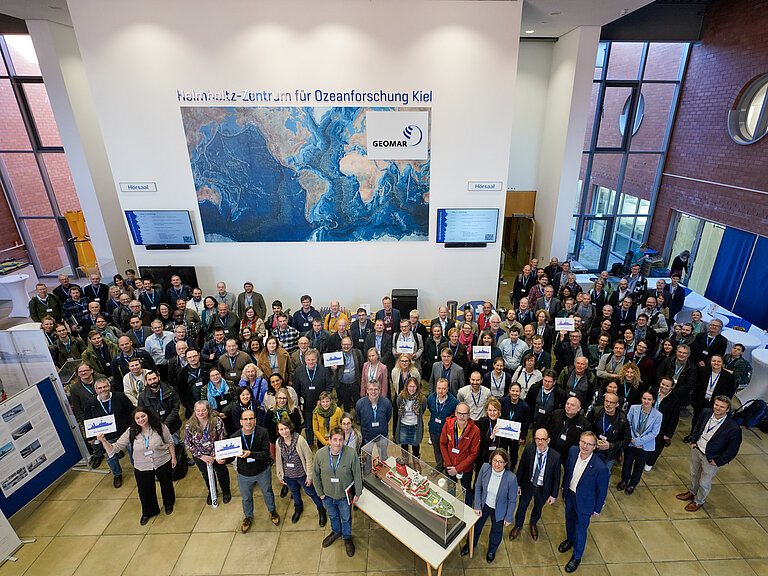
The Status Conference Research Vessels brings together researchers, sponsors and shipping companies at GEOMAR in Kiel. During this biennial event, scientists present and discuss the results of their expeditions.
Photo: Sarah Uphoff, GEOMAR
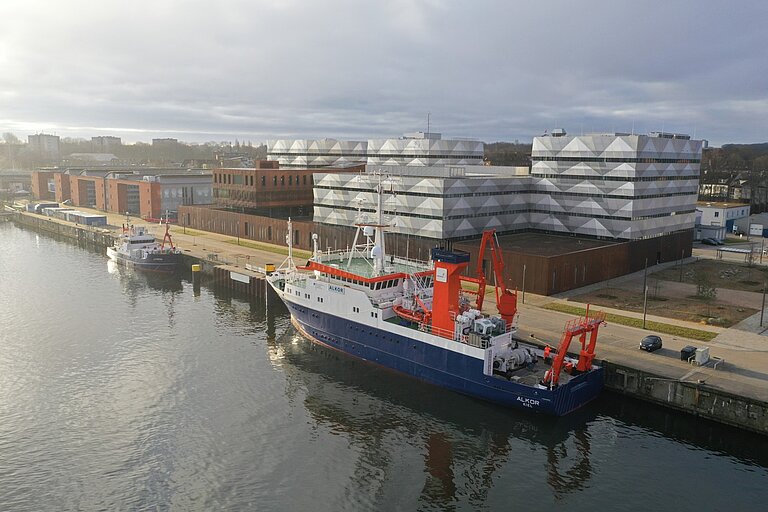
This year's Status Conference Research Vessels is being hosted by GEOMAR. Over the course of two days, all expeditions undertaken by the German research fleet over the past two years will be presented in Kiel.
Photo: Sarah Uphoff, GEOMAR
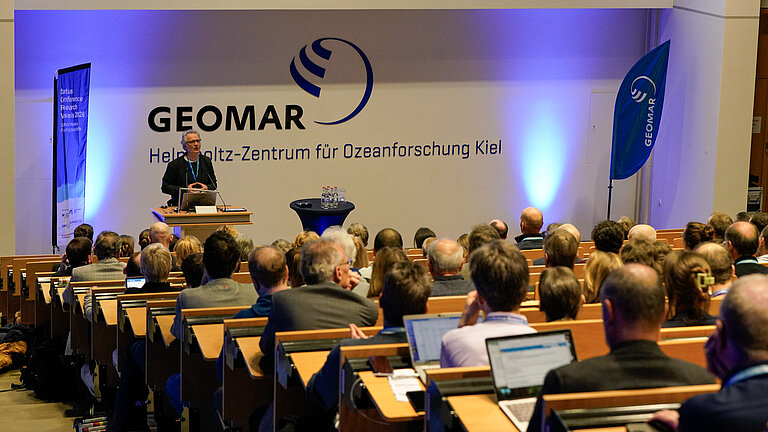
There will be more than 100 lectures presenting the scientific findings of the 130 expeditions.
Photo: Sarah Uphoff