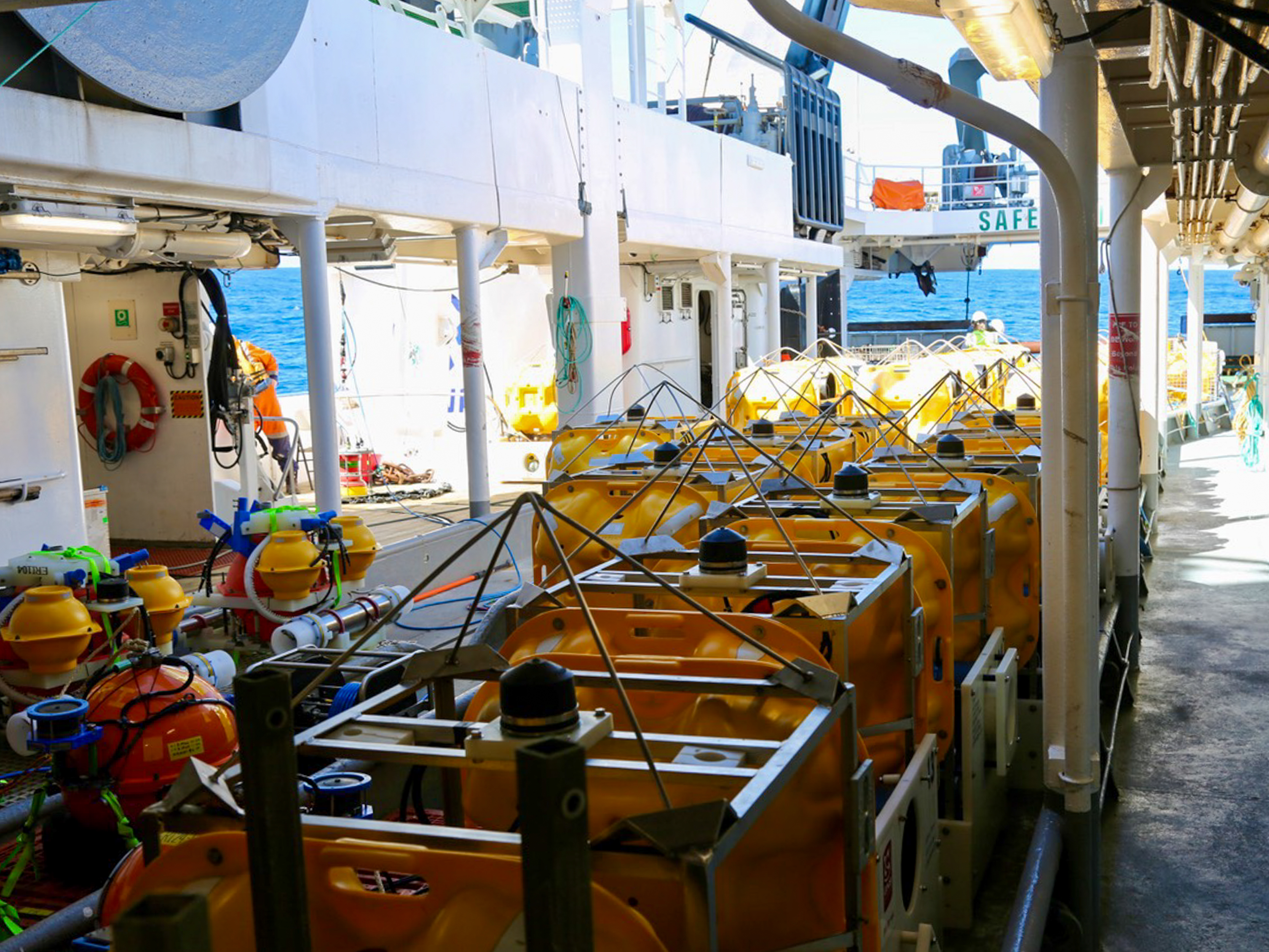
Ocean bottom seismometers aboard the TANGAROA: After three years of seafloor measurements, the instruments have been retrieved. This marks a significant milestone to better understand the earthquake and tsunami risk posed by subduction zones in New Zealand and around the world.
Photo: Magnolia Lowe
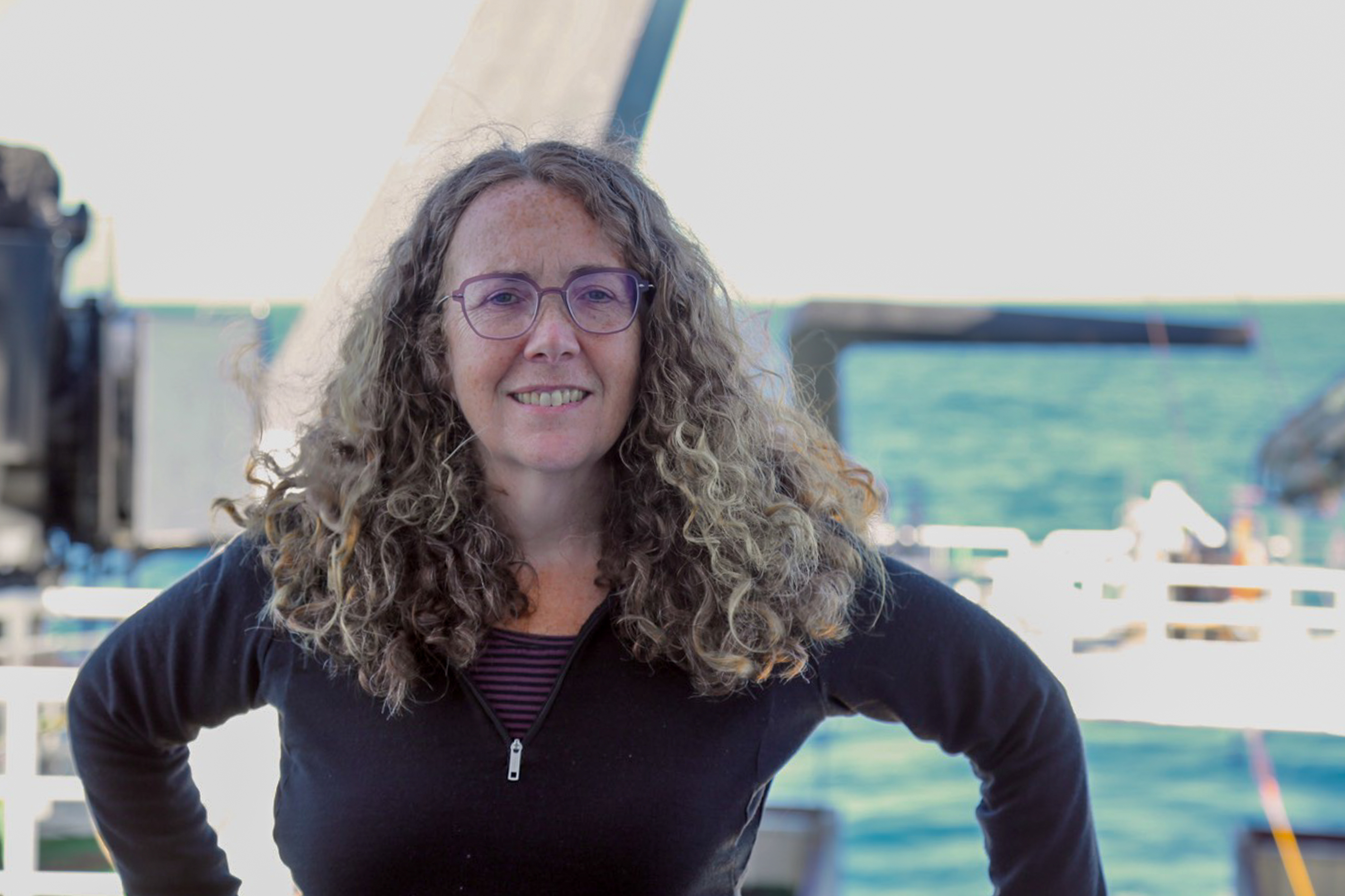
Led the world's largest multidisciplinary offshore experiment on slow-slip events to date: Prof. Dr. Laura Wallace, Helmholtz Distinguished Professor of Geodynamics at GEOMAR.
Photo: Magnolia Lowe
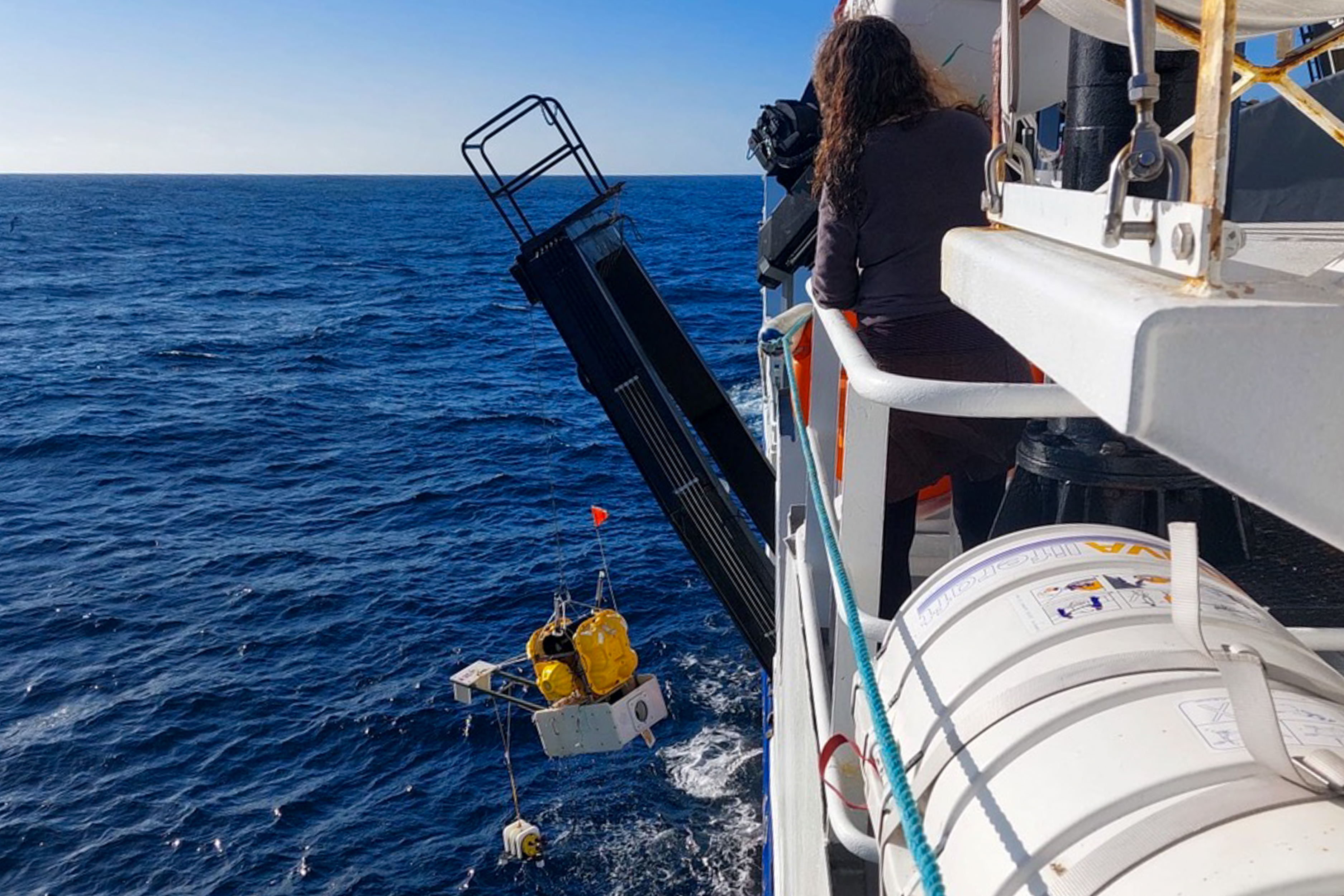
From late 2022 onwards, scientists from New Zealand, Japan, the USA and Germany deployed a dense network of measuring devices on the seabed off Gisborne. These devices recorded both rapid (seismic) and slow (lasting from weeks to months) movements at the plate boundary.
Photo: Katie Jacobs, Earth Sciences New Zealand
New Insights into Earthquake and Tsunami Risks
Major offshore earthquake observation project at Hikurangi subduction zone successfully completed
Subduction zones are where one tectonic plate “dives” or subducts beneath another. These dangerous fault lines produce the world’s largest earthquakes and tsunamis, such as the 8.8 magnitude earthquake offshore Kamchatka earlier this year.
Beginning in late 2022, an international group of scientists from New Zealand, Japan, the United States, and Germany deployed a dense network of seafloor instruments offshore Gisborne to monitor both fast (seismic) and slow motion (lasting weeks to months) fault activity. The instruments that have been retrieved over the last two weeks will enable unprecedented, detailed understanding of “slow slip events”, a type of slow-motion earthquake that lasts days to months. These "slow-slip" earthquakes are crucial for understanding how stress builds up and is released along subduction zones, and the relationship of “slow slip” earthquakes to damaging “seismic” earthquakes.
Three years of seafloor measurements off Gisborne
Voyage leader Laura Wallace from GEOMAR in Germany says “This deployment represents the largest multi-disciplinary experiment ever undertaken worldwide to probe offshore slow slip events, with more than 50 instruments in place on the seabed for 3 years.” The large network of seafloor instruments captured two major slow slip earthquakes that took place offshore the North Island’s east coast in 2024 and 2025. 40 of the instruments are recording ocean bottom pressure to resolve centimeter-level vertical movement of the seabed during the slow-motion earthquakes — making it the densest and largest ever deployment of seafloor pressure sensors conducted globally.
The seafloor instruments have also recorded signals from distant seismic events, including tsunami waves generated by the recent M8.8 offshore Kamchatka subduction earthquake. Katie Jacobs of Earth Sciences New Zealand, who is a co-leader of the project, says “It’s exciting to record multiple slow slip events and be able to start testing earthquake and slow slip models developed from previous offshore observations here.”
Recording distant earthquakes and tsunamis
The Hikurangi plate boundary is located off the East Coast of the North Island, where the Pacific tectonic plate dives beneath the Australian plate—forming New Zealand’s largest and most hazardous earthquake and tsunami source. The Hikurangi subduction zone has received major attention from international earthquake scientists over the last 15 years, in part due to the close proximity of the plate boundary to New Zealand’s Geonet, Aotearoa New Zealand’s onshore monitoring network.
Next deployment scheduled for November 2025
The success of this project sets the stage for a new phase of research, with another major deployment of instruments planned for November 2025—this time focusing on the Hawke’s Bay region, a different portion of the Hikurangi plate boundary where slow slip earthquakes are also observed. This internationally collaborative effort is a major step forward to understanding where and how earthquakes and slow slip events are generated on undersea plate boundaries, where the deadliest tsunami are generated.
Project Partners and Funding:
Earth Sciences New Zealand, GEOMAR, University of Tokyo, Kyōto University, Tōhoku University, Lamont-Doherty Earth Observatory, and the University of Rhode Island are the research partners on this project. Scientific research funding for this project has come from New Zealand's Ministry for Business, Innovation and Employment, Germany’s Helmholtz Association, the United States National Science Foundation, and Japanese government science funding.

Ocean bottom seismometers aboard the TANGAROA: After three years of seafloor measurements, the instruments have been retrieved. This marks a significant milestone to better understand the earthquake and tsunami risk posed by subduction zones in New Zealand and around the world.
Photo: Magnolia Lowe
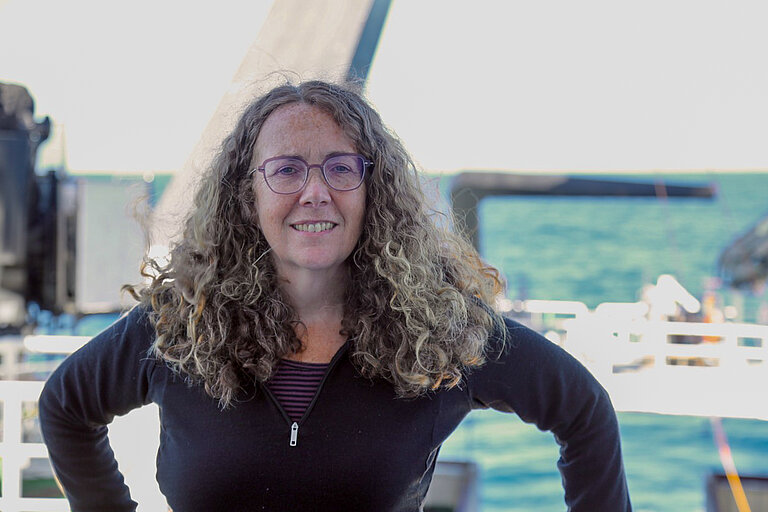
Led the world's largest multidisciplinary offshore experiment on slow-slip events to date: Prof. Dr. Laura Wallace, Helmholtz Distinguished Professor of Geodynamics at GEOMAR.
Photo: Magnolia Lowe
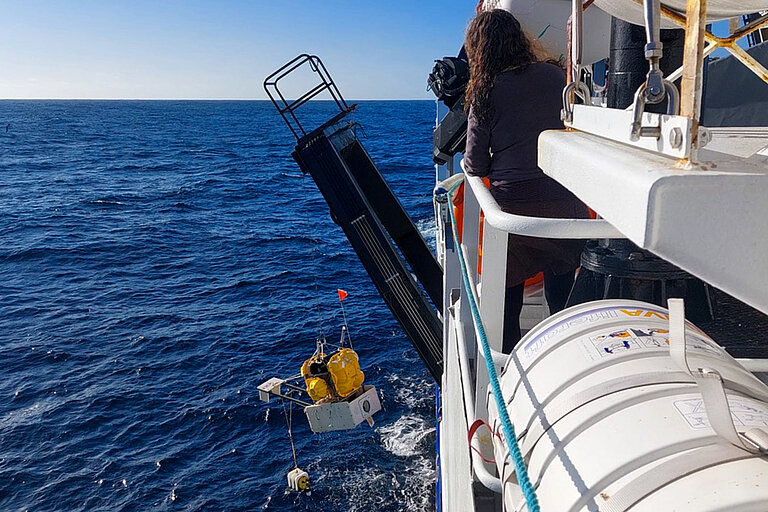
From late 2022 onwards, scientists from New Zealand, Japan, the USA and Germany deployed a dense network of measuring devices on the seabed off Gisborne. These devices recorded both rapid (seismic) and slow (lasting from weeks to months) movements at the plate boundary.
Photo: Katie Jacobs, Earth Sciences New Zealand