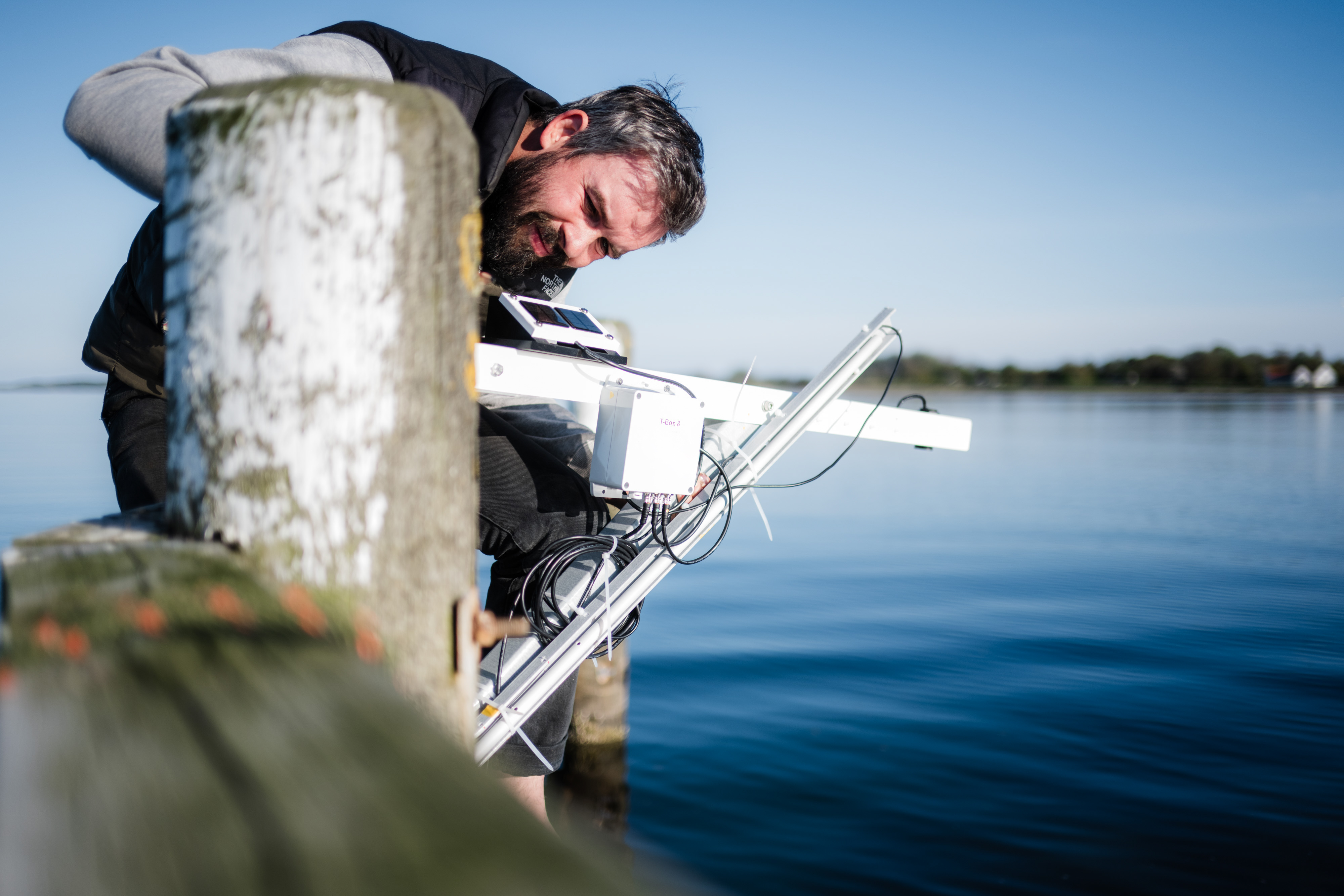
A GEOMAR sensor package is being installed on the island of Avernakø to collect real-time data on water temperature, wave height, and water level. This data, along with data from other harbours, is available free of charge in digital format via the MARLIN ('Maritime Live Information') platform.
Photo: Valentin Rühl, GEOMAR
Smart Marinas: Data from the Harbour Basin
New sensor technology provides real-time information for sailors
The sailing season is beginning, and in many ports along the German Baltic coast, boat owners have been able to access a practical service since last year: data on water temperature, wave height and water level can be accessed free of charge and in real time. The sensor technology for this was developed at the GEOMAR Helmholtz Centre for Ocean Research Kiel by Andreas Pinck, among others; the clear and user-friendly software platform “MARLIN” (“Maritime Live Information”) was created in collaboration with Flensburg University of Applied Sciences as part of a two-semester Master’s project in the Applied Computer Science programme under the supervision of Prof. Dr Simon Olberding.
“We bring measurement data to where it is used directly – to the berth and onto the sailors’ smartphones,” says Dr Esther Rickert, who leads the project at GEOMAR.
The system observes, measures and transmits data in real time. Sailors can therefore see what conditions await them in the next port before setting sail. Port operators also gain helpful insights into water dynamics that they could previously only estimate.
But the data is not only useful for water sports enthusiasts. With the measuring points at the marinas, scientists from GEOMAR and its partner institutions are using the existing maritime infrastructure to collect environmental data across a wide area. With the help of this data, coastal areas can be better understood and protected.
As part of the Interreg project ‘Baltic Ventures Programme’, the long-term aim is to establish a cross-border observation network. A recent milestone in this regard is the installation of sensor technology on the island of Avernakø (Denmark). The first sensor north of the border has now been put into operation here.
For four young people from Flensburg University of Applied Sciences, the smart marinas have a completely different effect: Tarek Almohamad, Krister Goldbeck, Fatih Ergen and Julian Müller, who developed the MARLIN visualisation platform, are setting up their own start-up to further develop the technology from the research project into a marketable product.
“With MARLIN, we want to make maritime environmental data as easily accessible on a smartphone as the weather forecast,” says Tarek Almohamad from the founding team.
“This collaboration has produced many winners,” says Rickert: “Research, coastal protection, everyone who spends time on the water and, of course, the entrepreneurs.” And in the end, the sea could also benefit, as a better understanding of the Baltic Sea is the foundation for its protection.
About “Baltic Ventures Programme”
The “Baltic Ventures Programme” project is co-funded by Interreg Deutschland-Danmark and the European Union. The lead partner is the BlueTech Center / Erhvervshus Fyn. The aim of the project is to create new platforms for knowledge exchange, joint innovation processes and technology development, so that the maritime sector receives the necessary tools to develop sustainable solutions.
The cross-border collaboration includes, among other things, a “Maritime Startup Growth Academy”, which supports start-ups and small and medium-sized enterprises in developing sustainable business models, and the “Maritime Open Data Sandbox”, which makes maritime data accessible to companies, universities and research institutions in Germany and Denmark, as well as access to testing facilities and regulatory sandboxes where new technologies can be tested under realistic conditions.
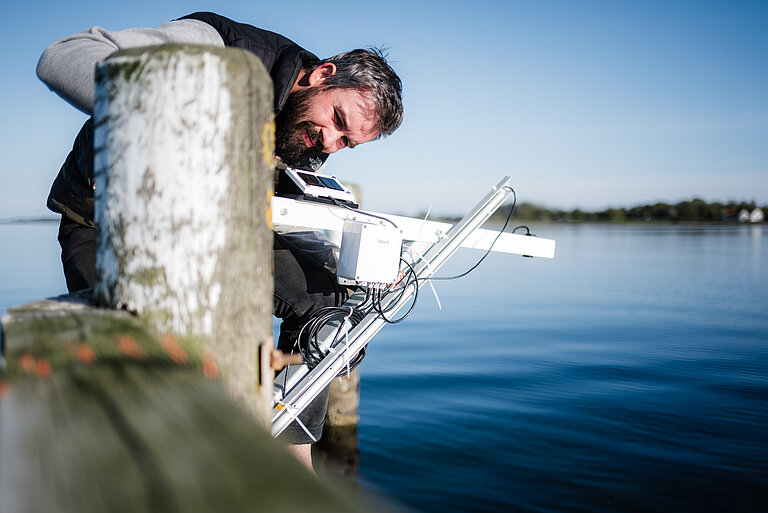
A GEOMAR sensor package is being installed on the island of Avernakø to collect real-time data on water temperature, wave height, and water level. This data, along with data from other harbours, is available free of charge in digital format via the MARLIN ('Maritime Live Information') platform.
Photo: Valentin Rühl, GEOMAR