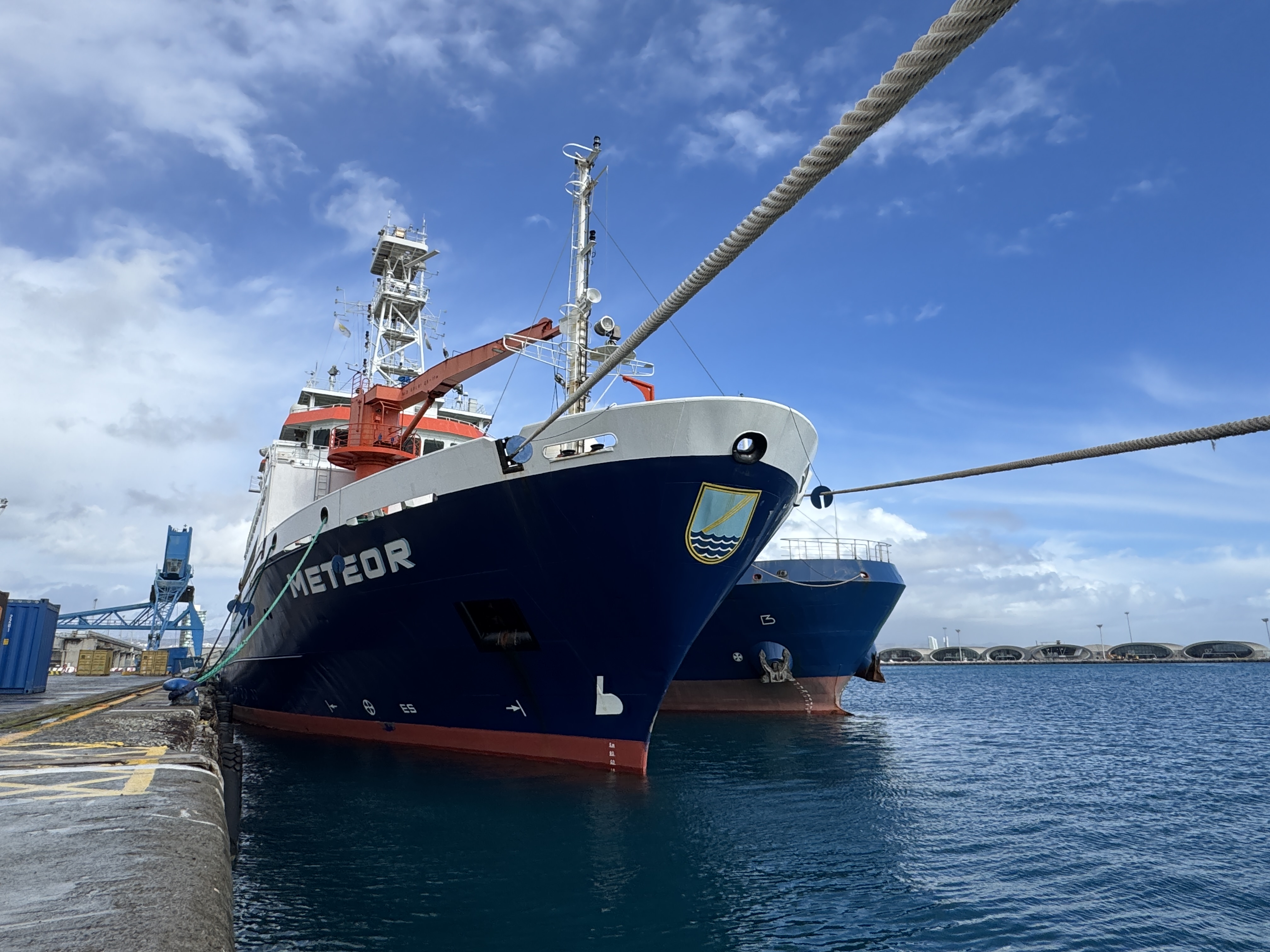
The M216 expedition crosses the Mediterranean Sea and starts today in the port of Limassol (Cyprus).
Photo: Christian Clauwers⎪www.clauwers.com
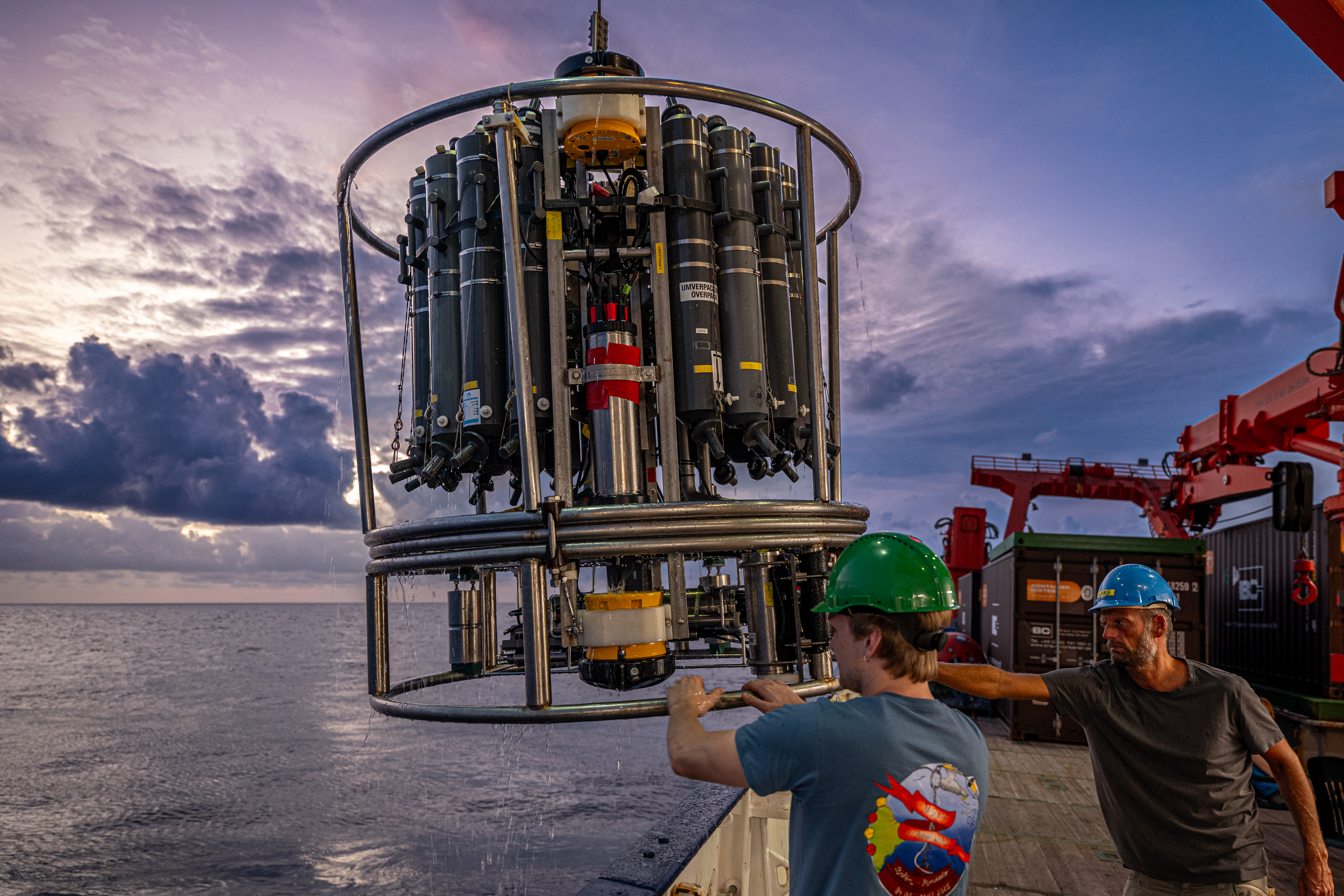
The researchers take water samples at 88 stations using a CTD rosette. The image shows the deployment of a CTD instrument during the M207 expedition in the tropical Atlantic.
Photo: David Menzel, GEOMAR
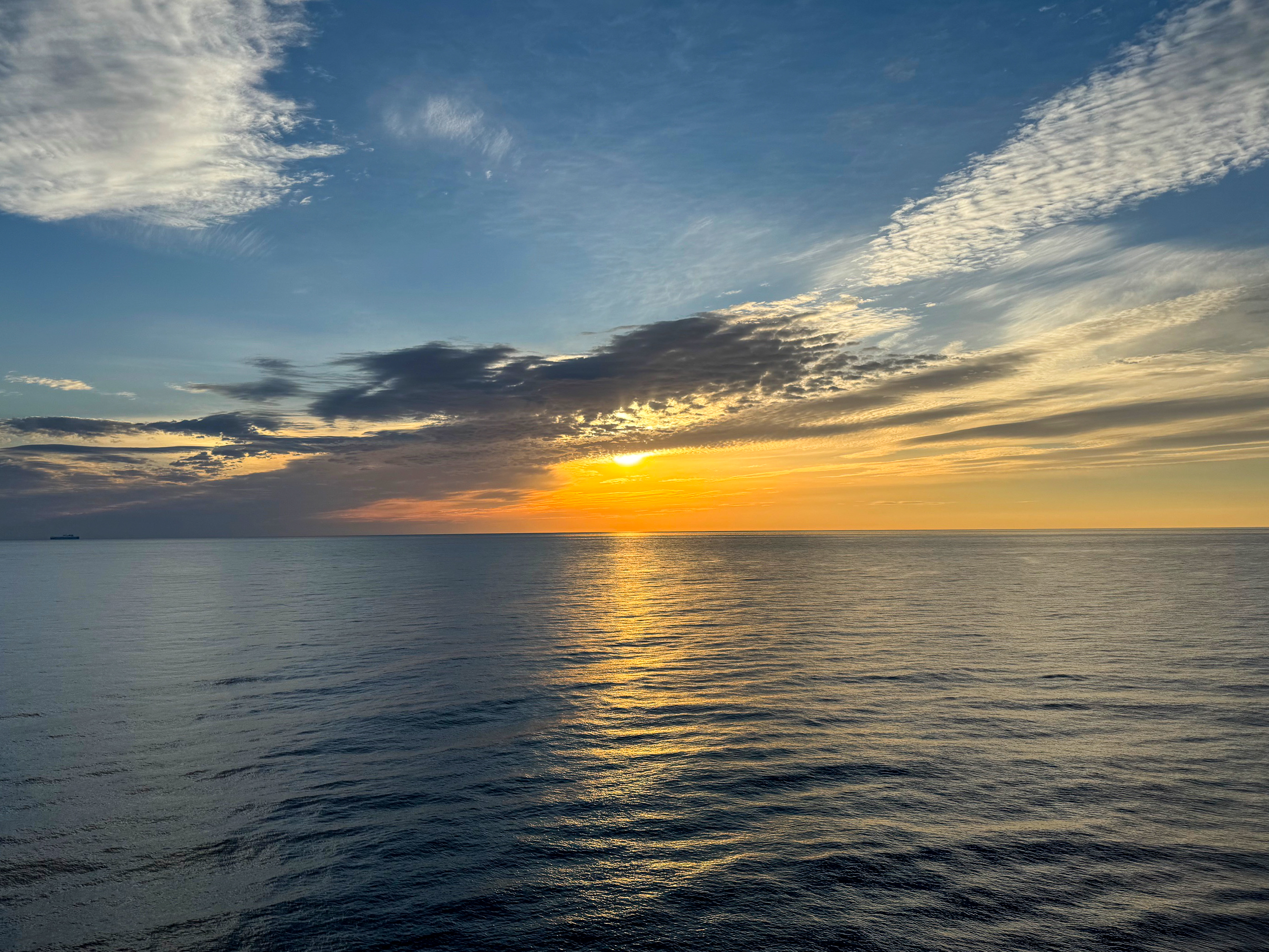
The researchers' measurements cover the entire water column, i.e. all layers of the Mediterranean Sea from the surface to the sea floor. At its deepest point, the Mediterranean Sea is over five thousand metres deep.
Photo: Katja Matthes, GEOMAR
Time series in the Mediterranean Sea
Expedition M216 investigates changes in the Mediterranean
Like the Baltic Sea and the Black Sea, the Mediterranean Sea is an inland sea connected to the global ocean only by the Strait of Gibraltar. As a result, it responds more quickly to changes. It warms more rapidly, absorbs more carbon dioxide and acidifies more strongly than the open ocean. At the same time, through its connection with the Atlantic, the Mediterranean Sea also influences the global ocean and additionally plays an important role for the regional climate, fisheries and tourism.
Time series to provide information about changes in the Mediterranean
An international research group led by the GEOMAR Helmholtz Centre for Ocean Research Kiel set out today aboard the research vessel METEOR to record the state of the Mediterranean Sea as part of a time series. The expedition is part of the Mediterranean Sea Ship-based Hydrographic Investigations Program (Med-SHIP). Med-SHIP is the regional Mediterranean spin-off of the international observation programme Global Ocean Ship-based Hydrographic Investigations Program (GO-SHIP). Researchers are conducting repeated measurements along fixed sections in order to understand long-term developments in the Mediterranean Sea. The last measurements in the time series were carried out in 2010 and 2018. The measuring stations range from Cyprus to Greece, Italy and Spain to the Strait of Gibraltar.
Several factors come together in the Mediterranean Sea: it has a very high salinity and pronounced water circulation. The high salt concentration and temperature promotes the uptake of anthropogenic CO2. At the same time, surface water is transported relatively quickly to the depth, where it remains at a temperature of around 12 to 13°C. In addition, the circulation ensures that deep water reaches the surface, which can again absorb CO2. This creates a dynamic cycle that enables the Mediterranean Sea to bind a comparatively large amount of CO2 from the atmosphere," explains Dr Toste Tanhua, expedition leader and chemical oceanographer at GEOMAR.
Measurements from the surface to the sea floor
The measurements cover the entire water column, i. e. all layers of the Mediterranean Sea from the surface to the sea floor. At its deepest point, the Mediterranean Sea is over five thousand metres deep. “The unique topography of the Mediterranean Sea is challenging for us. There are several basins with different conditions and water depths,” says Toste Tanhua. The expedition focuses on measuring nutrients, salinity, oxygen, alkalinity, dissolved inorganic carbon, organic carbon, CO2 and the degree of ocean acidification. This enables the researchers to deduce how the Mediterranean Sea is faring under the influence of climate change and to estimate further changes. They are also investigating the distribution of water masses, currents and the exchange between surface water and the deep ocean.
"The Med-SHIP programme gives us the opportunity to take a very close look at the individual components of the entire water column. Among other things, we will be investigating inorganic carbon. This refers to carbon that is not found in living organisms, but in rocks, water or in the atmosphere as CO2. Among other things, it is responsible for transporting CO2 between the atmosphere, the surface and deep water. As the water masses in the Mediterranean are in contact with the atmosphere relatively frequent, this is particularly interesting for us," explains Toste Tanhua.
Over 80 measuring stations
The researchers mainly use so called CTD rosettes to collect water samples. CTD stands for conductivity, temperature and depth – the basic components of ocean observation. The water sample bottles on the CTD rosette can be opened and closed at different water depths using an acoustic signal. A total of 88 CTD stations are planned along the Mediterranean coast. The easternmost station is located south of Cyprus, the westernmost at the Strait of Gibraltar. This covers all the important basins of the Mediterranean and records the main currents in the Mediterranean.
“Our goal is to gain a holistic understanding of the Mediterranean. We want to decipher the complex dynamics and investigate the connections and interactions with neighbouring regions,” says Toste Tanhua.
Expedition at a glance:
Name: M216 (Med-SHIP01-2026)
Chief Scientist: Dr Toste Tanhua
Dates: 13 January 2026 – 9 February 2026
Departure: Limassol (Cyprus)
Arrival: Las Palmas (Spain)
Working Area: Mediterranean Sea

The M216 expedition crosses the Mediterranean Sea and starts today in the port of Limassol (Cyprus).
Photo: Christian Clauwers⎪www.clauwers.com
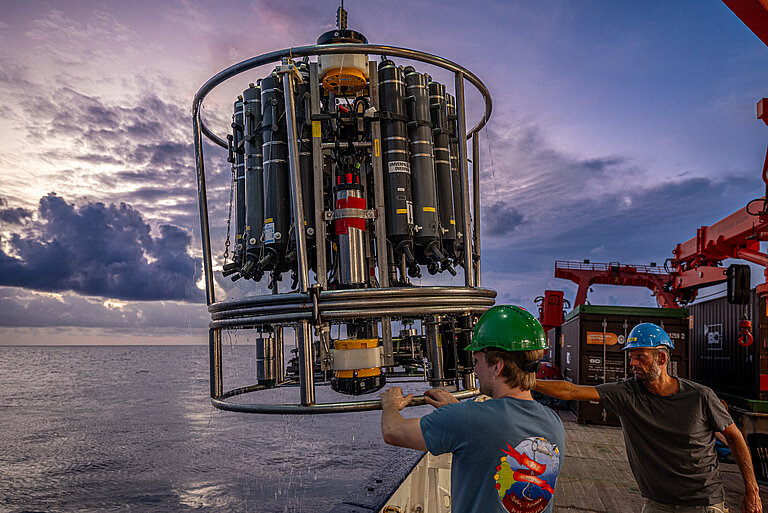
The researchers take water samples at 88 stations using a CTD rosette. The image shows the deployment of a CTD instrument during the M207 expedition in the tropical Atlantic.
Photo: David Menzel, GEOMAR
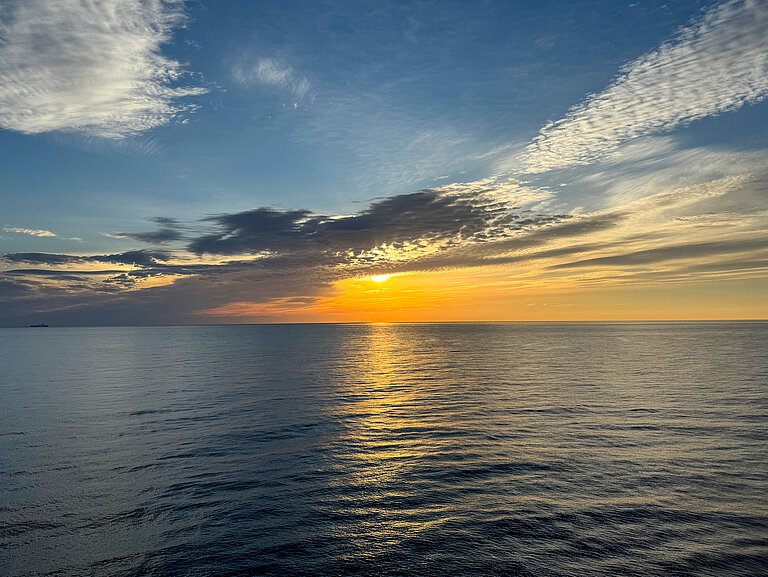
The researchers' measurements cover the entire water column, i.e. all layers of the Mediterranean Sea from the surface to the sea floor. At its deepest point, the Mediterranean Sea is over five thousand metres deep.
Photo: Katja Matthes, GEOMAR