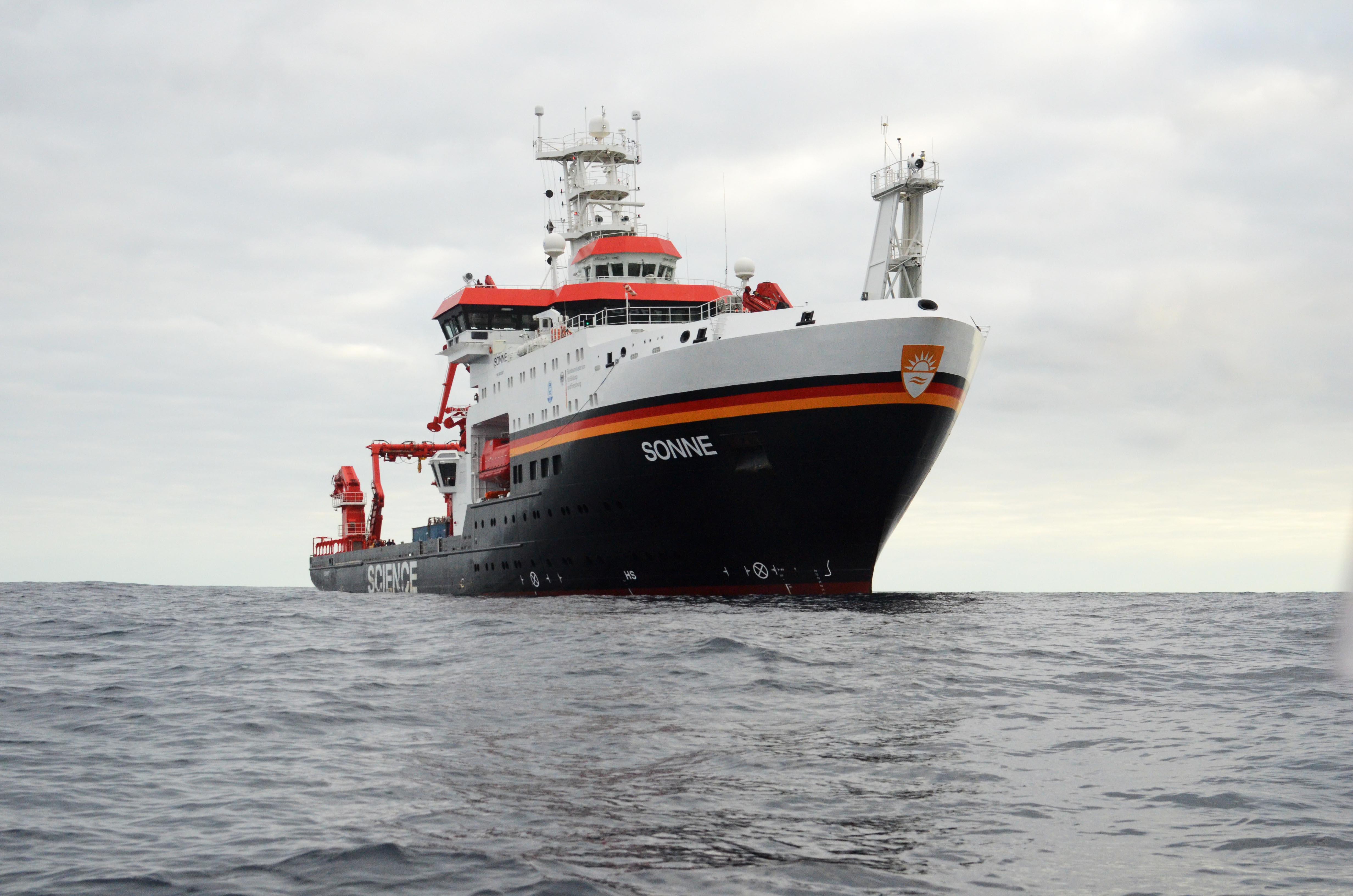
The research vessel SONNE is currently sailing in the Pacific Ocean off the coast of Central America. School classes from Year 5 upwards will have the opportunity to connect digitally to the ship on 18 December and talk to the researchers there.
Photo: Jan Steffen, GEOMAR
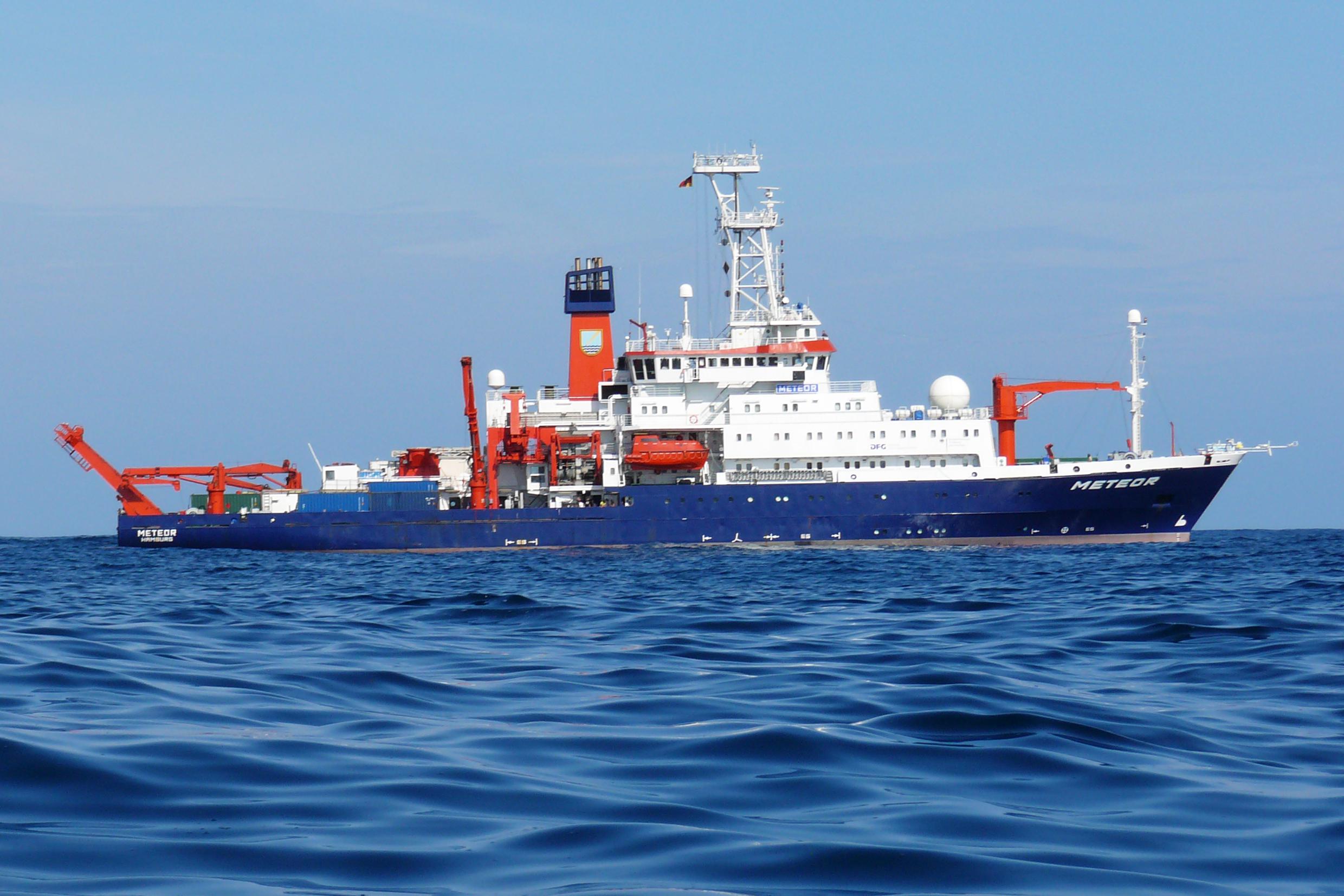
From mid-December, the METEOR will embark on an expedition to the Aegean Sea, where it will test new approaches for monitoring underwater volcanoes, among other things.
Photo: Hermann Bange, GEOMAR
Science for Schools: Live broadcasts from research vessels
Launching with German and Danish participation
Over the next few weeks, there will be three opportunities for school classes from Year 5 upwards to join an interactive live session with one of the major German research vessels. During these sessions, researchers aboard SONNE and METEOR, which will be at sea under the leadership of the GEOMAR Helmholtz Centre for Ocean Research Kiel, will talk about their expedition objectives and scientific questions, as well as life and work aboard a research vessel. Pupils will be able to ask questions directly.
Led by PD Dr Steffen Kutterolf (GEOMAR) and Prof. Dr Sebastian Krastel (Kiel Marine Science, Kiel University), the research vessel SONNE is currently on a six-week expedition in the Pacific Ocean off the coasts of Central America and Mexico. The expedition's aim is to investigate possible links between climate change and volcanic ash deposits on the seafloor. As part of the live broadcast, volcanologist Dr Julie Belo (GEOMAR) and geophysicist Emma Hadré (CAU) will offer insights into life on board the research vessel.
In January, the METEOR will conduct detailed research on the Santorini-Kolumbo volcanic system in the Aegean Sea under the direction of Prof. Dr Heidrun Kopp (GEOMAR). Santorini made headlines in early 2025 due to a series of earthquakes. During the live broadcast, GEOMAR researchers will report on their work on board alongside experts from Greece. The pupils will have the opportunity to take a virtual tour of the ship and explore the laboratories. This will provide them with a vivid insight into how scientific research is conducted at sea and the ways in which modern marine research contributes to our understanding of the environment.
Today's English-language event marks the beginning of the series of interactive live sessions, as well as being the first activity undertaken by GEOMAR within the new Interreg joint project, MYREcross. Over the next three years, young people will engage with future technologies in various ways through this collaboration between academic institutions and vocational schools in Schleswig-Holstein and southern Denmark.
The following two video conferences with the research vessels will be conducted in German. Secondary school teachers can register their classes for the sessions.
These will take place on 16 December (SONNE) and 7 January (METEOR).
Participation is free of charge.
Further information and registration details for school classes: www.geomar.de/entdecken/schule/kurse-veranstaltungen#c51409 .
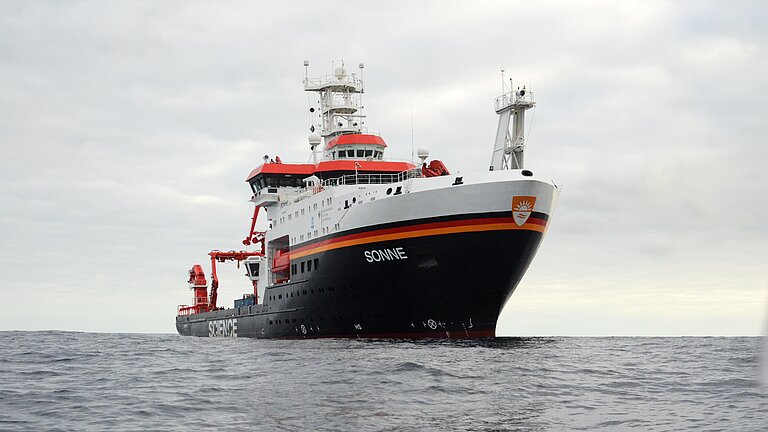
The research vessel SONNE is currently sailing in the Pacific Ocean off the coast of Central America. School classes from Year 5 upwards will have the opportunity to connect digitally to the ship on 18 December and talk to the researchers there.
Photo: Jan Steffen, GEOMAR
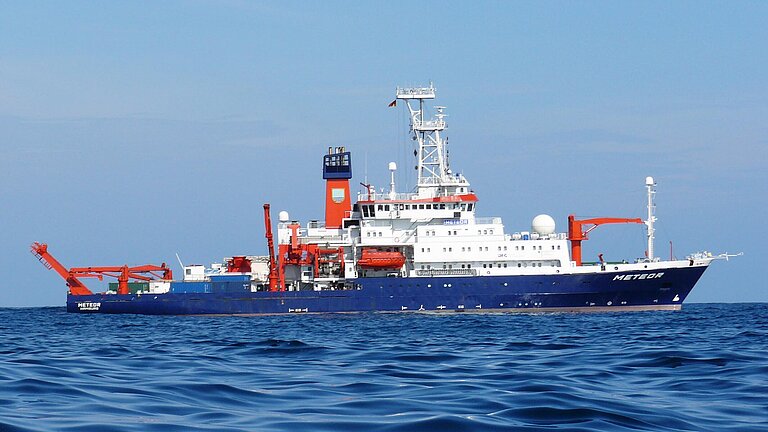
From mid-December, the METEOR will embark on an expedition to the Aegean Sea, where it will test new approaches for monitoring underwater volcanoes, among other things.
Photo: Hermann Bange, GEOMAR