Anna Niewerth
Phone: +49 (0) 431 600 2812
E-Mail: aniewerth(at)geomar.de
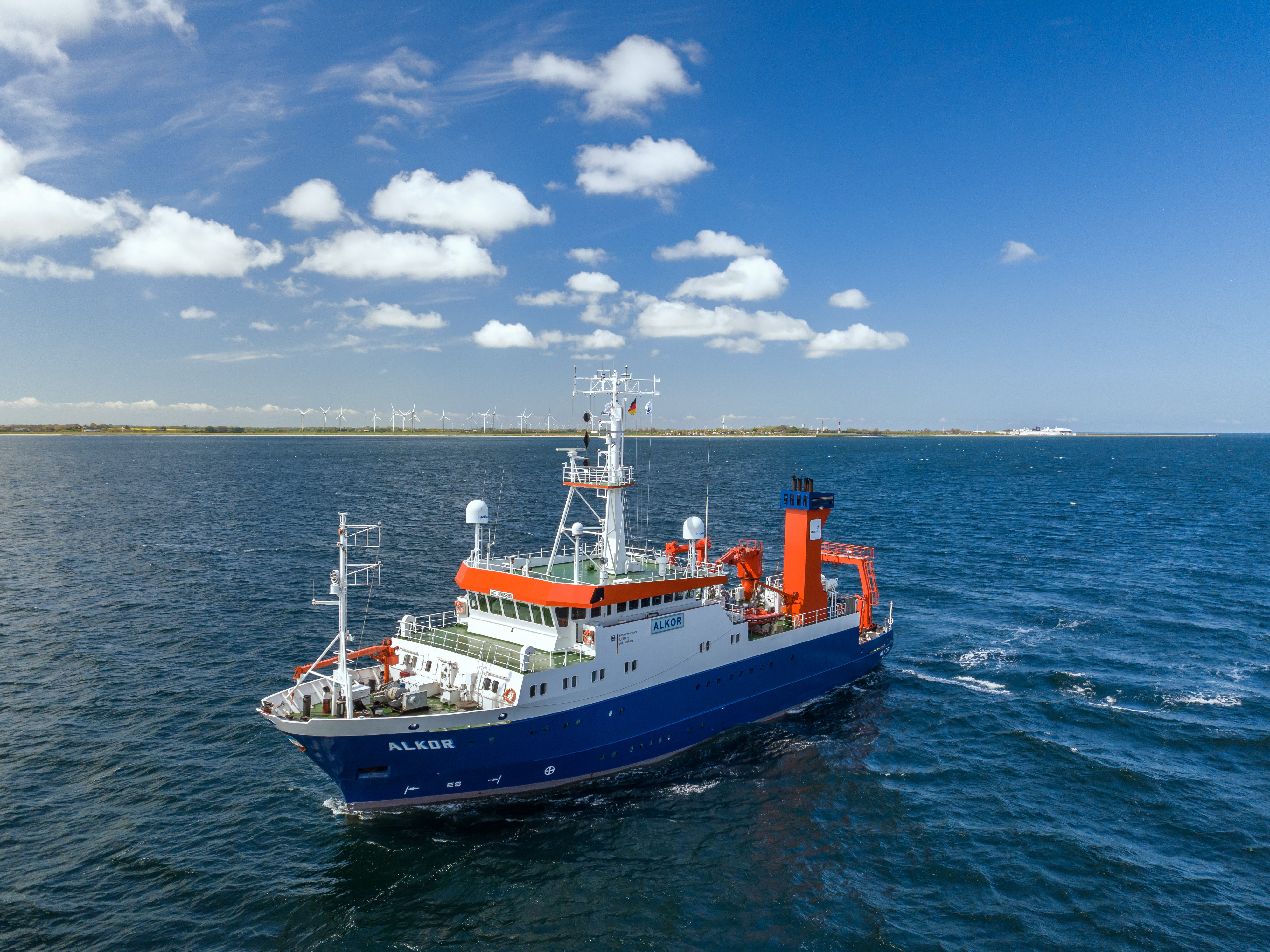
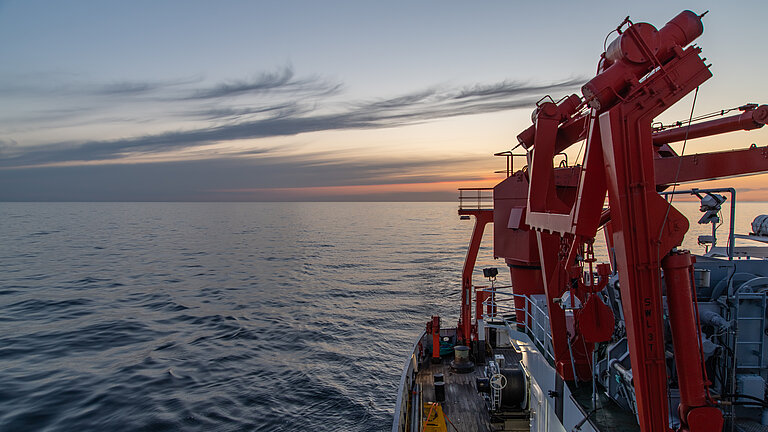
The FS ALKOR sets sail on Expedition AL656: researchers are investigating the impact of extreme events on coastal ecosystems in the Elbe, the Weser and the German Bight.
Photo: Marc Petrikowski
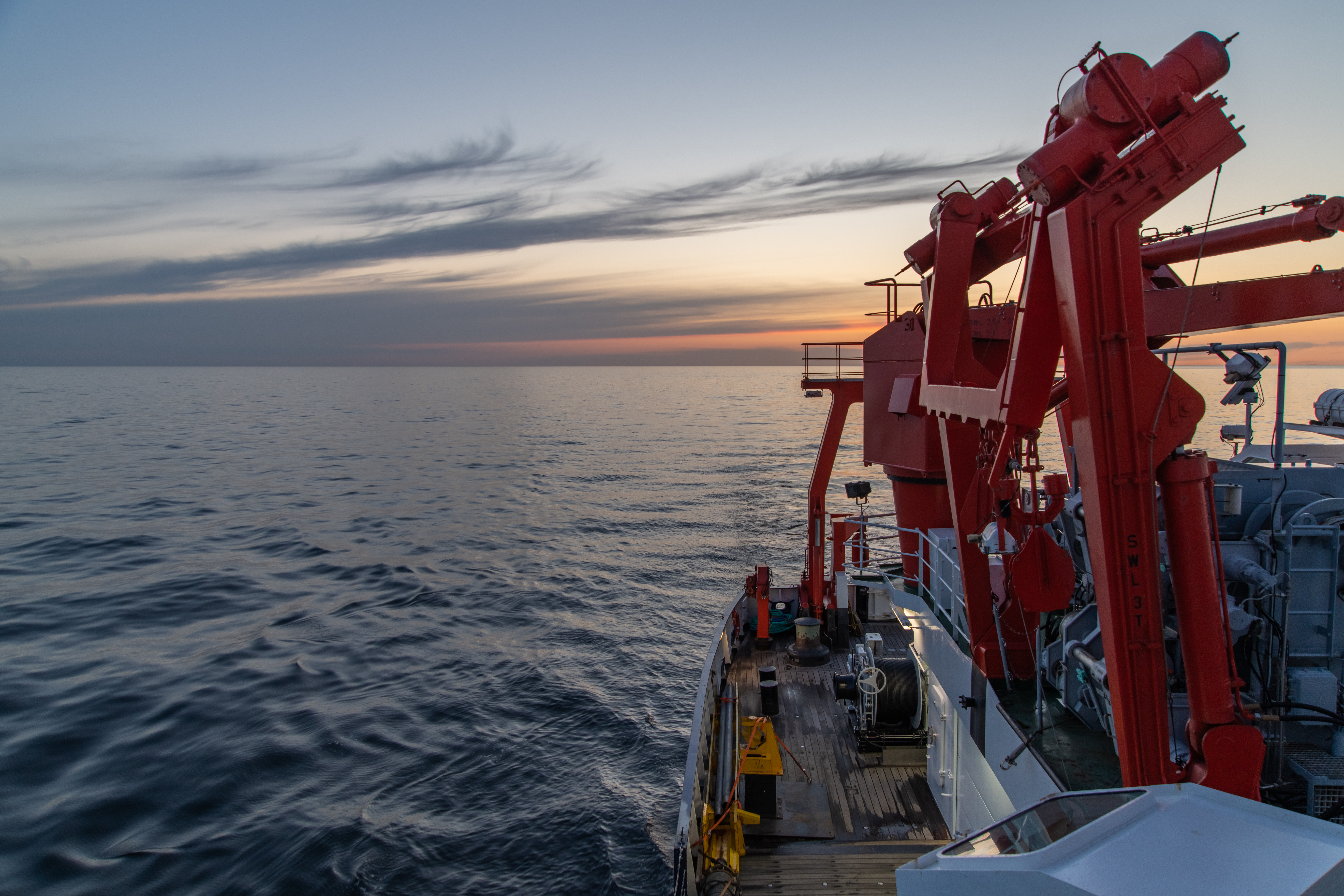
The researchers aim to investigate the impact of extreme events on material cycles, water quality and biodiversity in the estuaries of the Elbe and Weser rivers, as well as in the German Bight.
Photo: Marc Petrikowski
When Extreme Events Become Visible on the Coast
ALKOR expedition investigates the effects of extreme events in the Elbe estuary and German Bight
The Elbe connects land and sea – transporting nutrients, sediments and carbon, as well as pollutants and microplastics, into the German Bight. At the same time, the region is under growing pressure: alongside increasing population density, floods, storm surges, droughts and heatwaves are having a noticeable impact on the ecosystem. As a result of climate change, such extreme events are becoming more frequent and intense. The events affect the transport of materials as well as chemical and biological processes, and can have far-reaching consequences for water quality, biodiversity and the use of coastal waters. Science, politics and society are therefore faced with the task of better understanding the risks to coastal regions and developing effective adaptation strategies.
From the Elbe to the German Bight
Today, the AL656 expedition, led by the GEOMAR Helmholtz Centre for Ocean Research Kiel, set sail. It is heading for the Elbe estuary, Weser estuary and German Bight to investigate the impact of extreme events on biogeochemistry and ecosystems. It is taking place as part of the ElbeXtreme collaborative project, which is led by GEOMAR and involves 40 researchers from 14 institutions. The project is part of the mareXtreme research mission of the German Alliance for Marine Research (DAM). Besides GEOMAR, researchers from the Alfred Wegener Institute (AWI), the Leibniz Institute for Baltic Sea Research Warnemünde (IOW) and MARUM – Centre for Marine Environmental Sciences at the University of Bremen are also taking part in the expedition.
The Elbe carries nutrients, carbon, metals, microplastics, pharmaceuticals and many other substances from its catchment area via the German Bight into the North Sea. During the expedition, the researchers are investigating the biogeochemical composition of water, sediments and microbial organisms in order to better understand the material flows from the Elbe into the German Bight. “Our aim is to verify observations that we are conducting by sensors and also to detect biodiversity and pollutants for which no sensors are yet available,” says expedition leader Prof. Dr Eric Achterberg, Professor of Chemical Oceanography at GEOMAR Helmholtz Centre for Ocean Research Kiel.
In addition, the researchers are measuring greenhouse gases such as carbon dioxide (CO₂) and methane, the oxygen content and other chemical properties of the seawater, in order to better understand how extreme events affect the exchange of gases between the sea and atmosphere, as well as biogeochemical processes. For example, when heavy rainfall occurs, large quantities of water from the catchment area flow into the River Elbe. This water transports additional organic matter, nutrients and carbon towards the North Sea. Microorganisms break down some of this material, producing CO₂ in the process, and in some cases methane too (particularly in oxygen-poor sediments). At the same time, the high volume of freshwater alters mixing and gas exchange. Measurements taken by the research vessel ALKOR supplement the in-situ data collected year-round by permanently installed sensors. As the research vessel can move flexibly back and forth, this makes it possible to identify areas with increased gas flux in particular.
Observation Based on the Swarm Principle
Another key focus is on the use and development of new observation technologies. “In the ElbeXtreme project, we work according to the swarm principle. This means we use fixed long-term stations, research vessels, small flexible boats, drones and unmanned surface vehicles to continuously record changes in coastal waters as comprehensively as possible. On this expedition, we are testing whether new sensor platforms can be integrated into our swarm concept,” says Eric Achterberg.
In addition, the researchers are using so-called turbulence measurements to investigate how freshwater from the Elbe mixes with the saline water of the North Sea and what effects this has on the stratification of the water column. Furthermore, water and sediment samples are being analysed to determine how mussels and fish react to combinations of elevated temperatures, changes in salinity and pollution. The research team is also analysing the dynamics of sediments and liquid sludge. This is because the stability of the seabed affects not only the ecosystem but also shipping. If large amounts of sludge accumulate in shipping channels or harbour basins, this can affect ships.
In total, the researchers are stopping at 70 stations to take samples. Among the equipment being used are water samplers for water samples, special nets for collecting microplastics, measuring probes and a sediment-sampling devices known as a ‘Van Veen grab’ and ‘multi-corer’.
The expedition takes place this year during a marine heatwave, extreme low flow conditions in the river Elbe, and a pronounced oxygen depletion in the Elbe Estuary near Hamburg. This makes it possible to investigate the combined effects of these three concurrent extreme events on ecosystems.
Expedition at a Glance:
Name: AL656 (ElbeXtreme)
Expedition leader: Prof. Dr Eric Achterberg
Dates: 13 July 2026 – 24 July 2026
Start: Kiel
End: Cuxhaven
Cruise area: North Sea
The FS ALKOR sets sail on Expedition AL656: researchers are investigating the impact of extreme events on coastal ecosystems in the Elbe, the Weser and the German Bight.
Photo: Marc Petrikowski
The researchers aim to investigate the impact of extreme events on material cycles, water quality and biodiversity in the estuaries of the Elbe and Weser rivers, as well as in the German Bight.
Photo: Marc Petrikowski