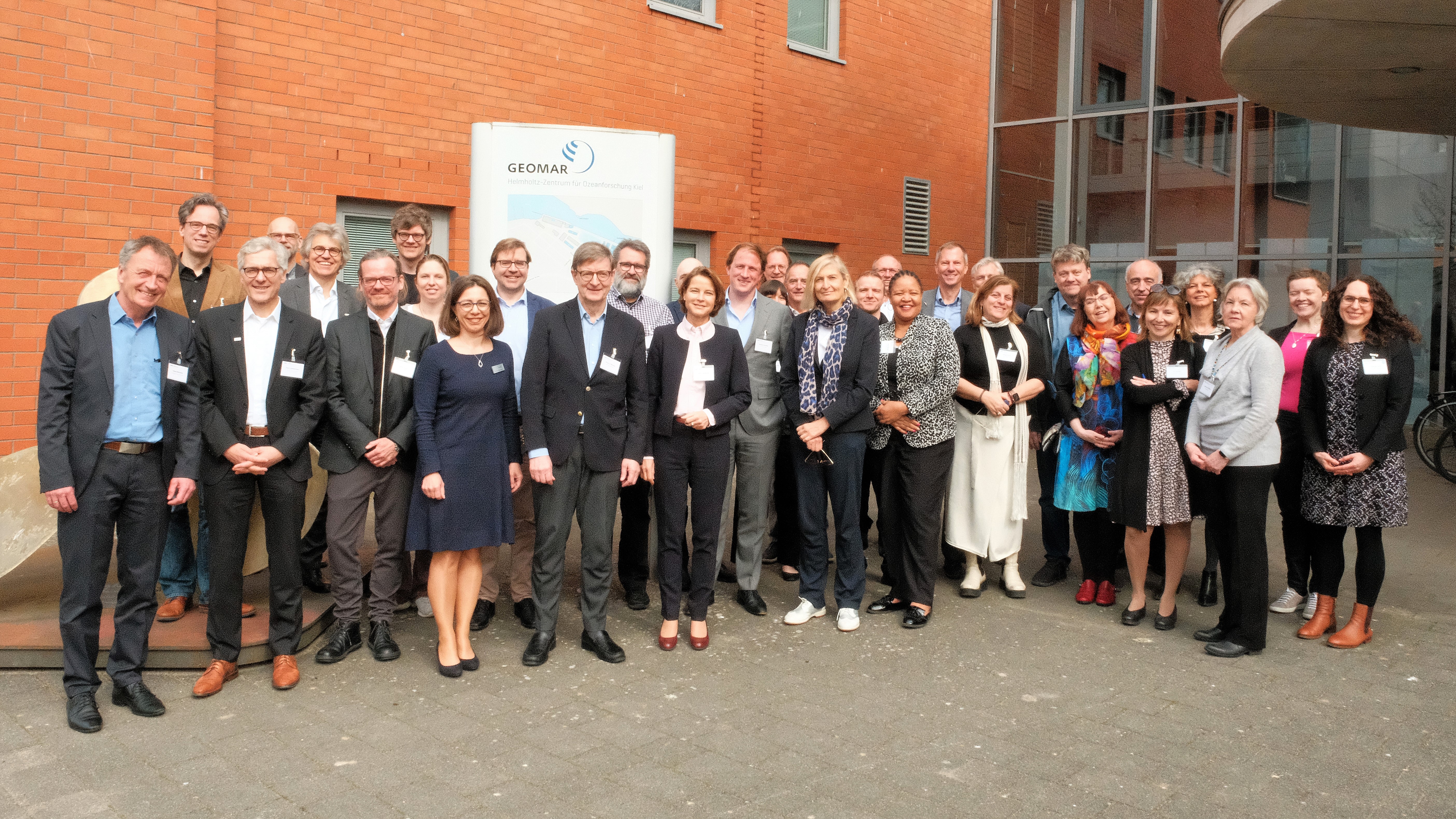
A high-calibre panel: The group of international experts with the members of the HMC Scientific Advisory, Collaboration and Steering Board as well as the directors of the Helmholtz host laboratories, the President of the Helmholtz Association and members of the Strategic Initiatives Division of the Helmholtz Association. Photo: Ann Kristin Montano (GEOMAR)
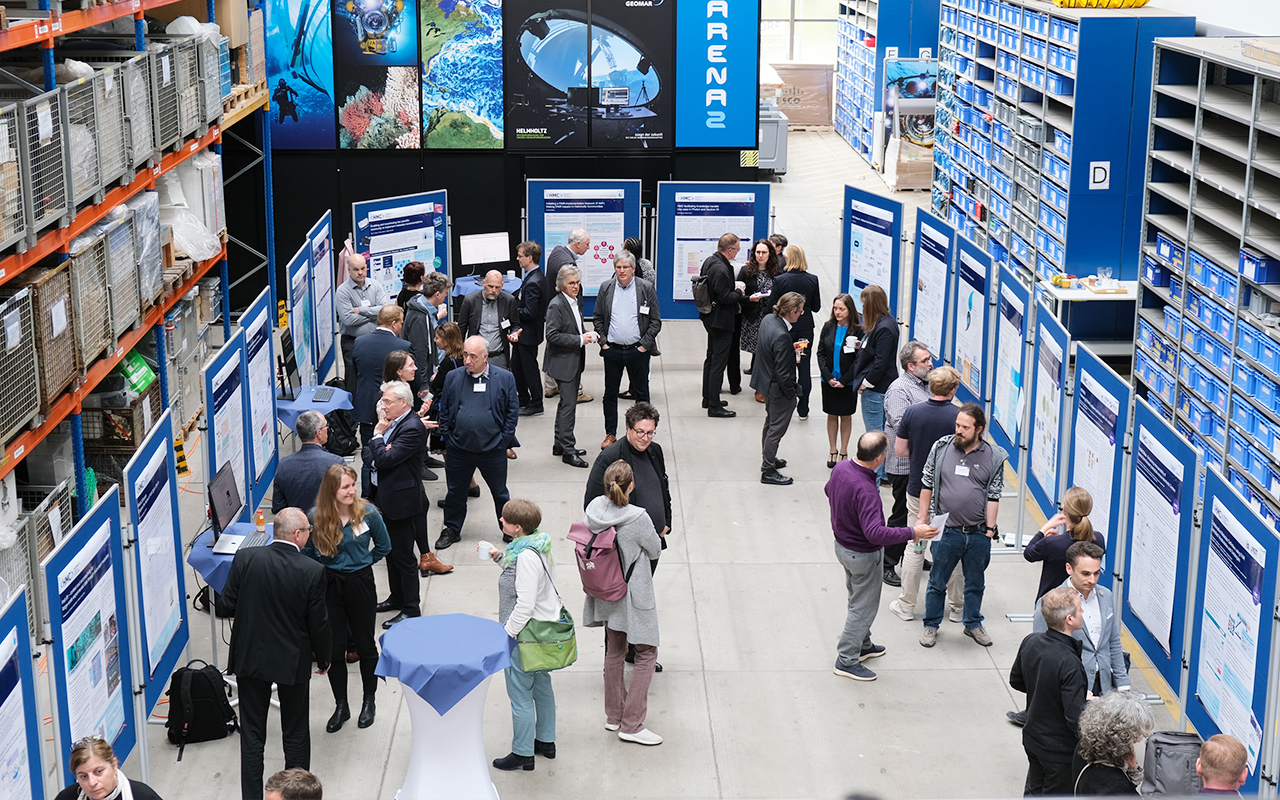
Evaluation visit poster session: The metadata experts present their work and results in the GEOMAR Lithothek. Photo: Lena Heel (GEOMAR)
Better research through better metadata
Good marks for the Helmholtz Metadata Collaboration Platform
Research generates data. Now more than ever, thanks to new technologies and digitisation. In order to make this immensely valuable treasure available to other researchers at any time and for future questions, so-called metadata are needed - additional information linked to the research data. In order to be effectively usable, this metadata must comply with uniform specifications, preferably standards - in short, it must be "FAIR". The acronym stands for Findable, Accessible, Interoperable and Reusable.
With almost 44,000 employees in 18 centres, the Helmholtz Association of German Research Centres is Germany's largest research funding organisation. The aim of the Helmholtz Metadata Collaboration (HMC) is to support them in introducing metadata standards and developing a common framework. The vision is to create a common Helmholtz data space in which data can be easily found, shared, exchanged and seamlessly used.
"In the HMC, we develop solutions to make the research data of the Helmholtz Association visible and usable for humans and machines in the long term by means of metadata," is how HMC spokesperson Sören Lorenz from the GEOMAR Helmholtz Centre for Ocean Research Kiel sums up the task. Three years after its foundation, the platform coordinated by GEOMAR has now been independently evaluated. Participants from ten Helmholtz Centres came to Kiel to present their results to an international panel of nine experts from the fields of research, metadata and open science. The panel was impressed by the ambitious goals as well as by what has already been achieved.
The reviewers were particularly impressed by the developments in the area of community engagement, with various training and workshop formats, the development of tools and services, and the creation of a knowledge graph for structuring accessible research data. New services presented were the HMC Information Portal and the HMC Dashboard on Open and FAIR Data in Helmholtz. The information portal supports the search for metadata and FAIR practices in the Helmholtz Association and beyond. It allows users to view and interactively analyse statistics on open and FAIR data produced by Helmholtz researchers. The evaluators strongly advocated further promotion of the platform. The evaluation report emphasises that, given the size and multidisciplinarity of the Helmholtz Association, HMC can serve as a model for other federated, decentralised research infrastructures. A decision on its continuation will be taken at the Helmholtz Association's General Assembly in the autumn.
The second virtual conference of the HMC "Better Research through Better Metadata" will take place on 10-12 October 2023: https://events.hifis.net/event/891/
In brief: HMC
The Helmholtz Metadata Collaboration (HMC) is a platform that promotes the qualitative enrichment of research data by means of metadata. Its main goal is to make the depth and breadth of research data produced by Helmholtz centres findable, accessible, interoperable and reusable (FAIR) for the entire scientific community (in Helmholtz and beyond). Further, HMC works on a sustainable, distributed, semantically enriched Helmholtz data space that should enable scientists to seamlessly share and re-use their data in new ways.
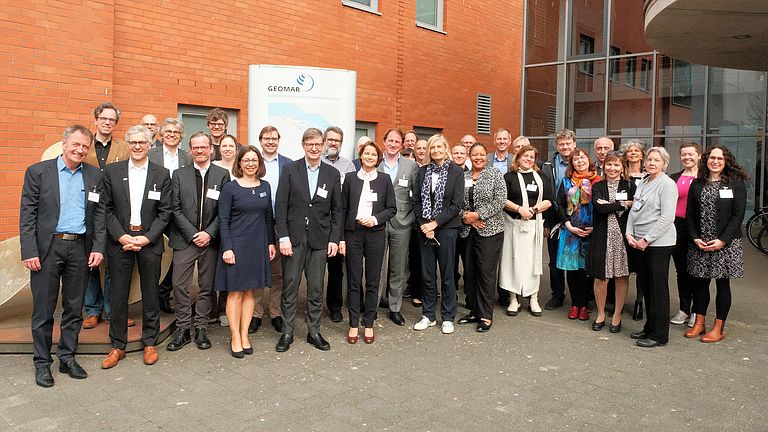
A high-calibre panel: The group of international experts with the members of the HMC Scientific Advisory, Collaboration and Steering Board as well as the directors of the Helmholtz host laboratories, the President of the Helmholtz Association and members of the Strategic Initiatives Division of the Helmholtz Association. Photo: Ann Kristin Montano (GEOMAR)
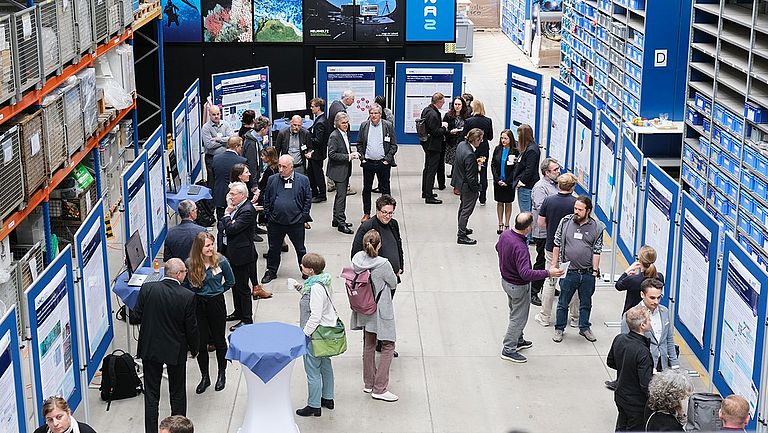
Evaluation visit poster session: The metadata experts present their work and results in the GEOMAR Lithothek. Photo: Lena Heel (GEOMAR)