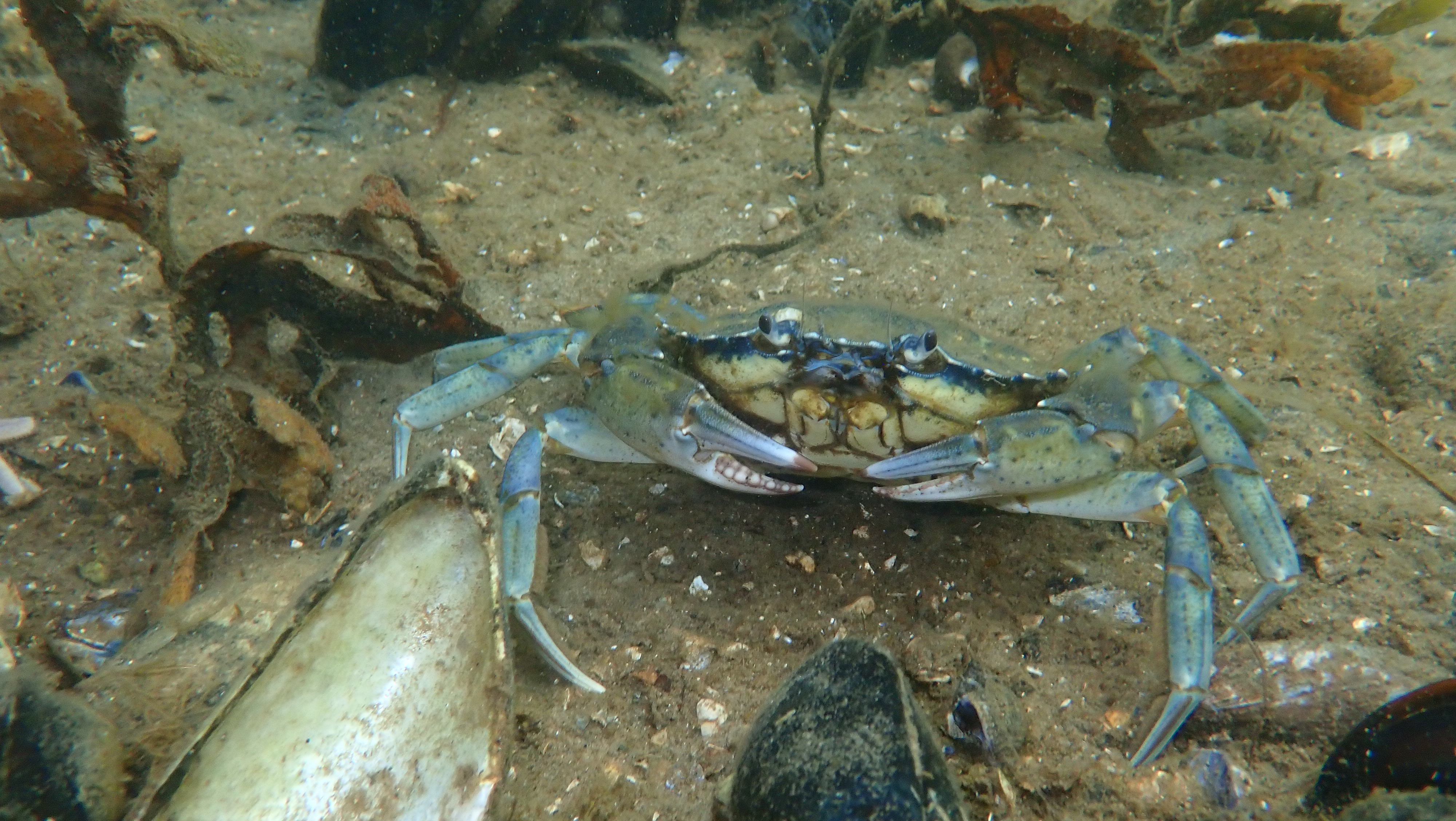
Encounter with a shore crab on the seabed: This year, the 'Snorkeling.City' project is once again giving 25 school classes the opportunity to explore the Baltic Sea up close.
Photo: Snorkeling.City
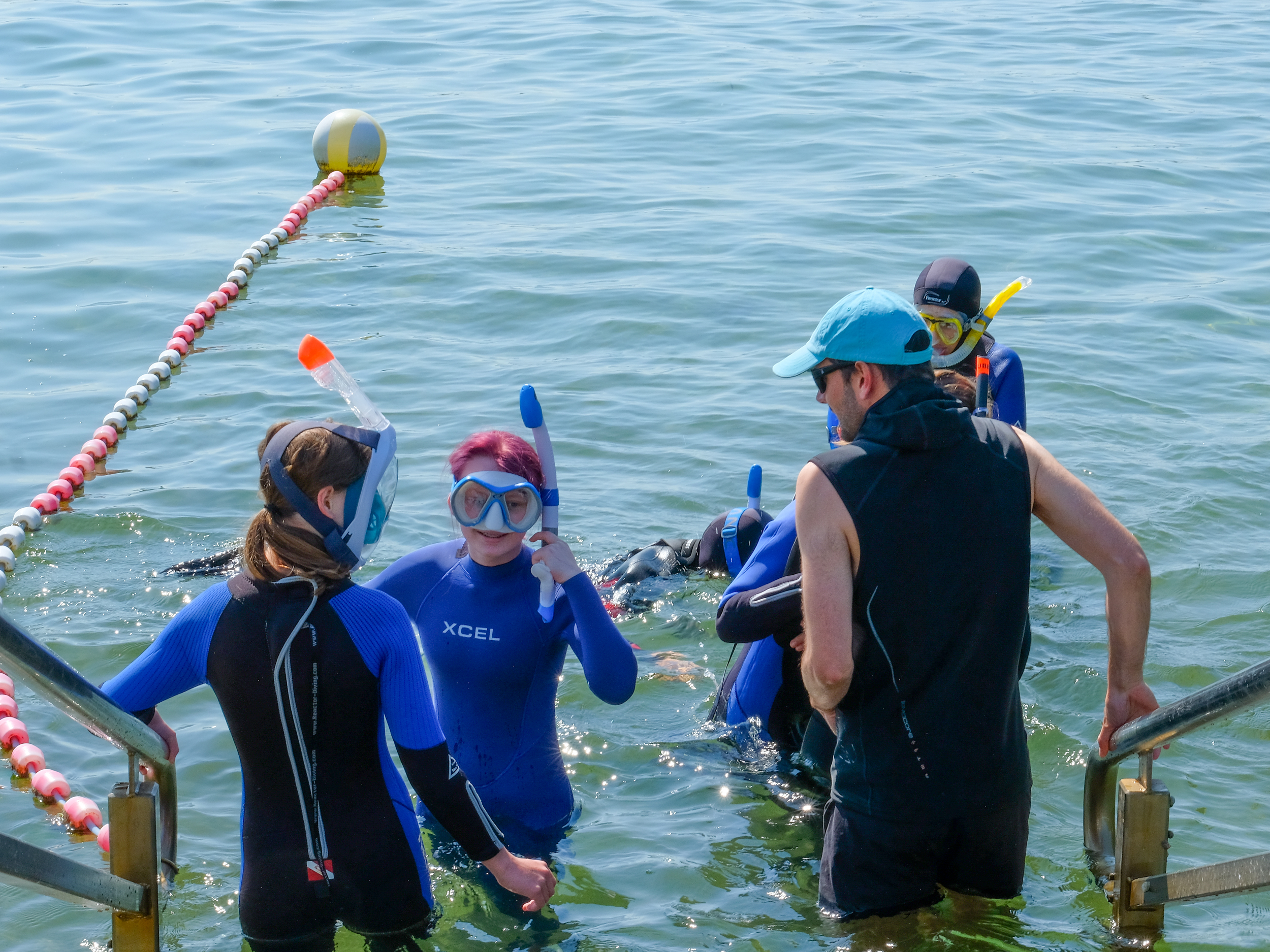
Diving into the underwater world for the first time with a mask and snorkel – a truly memorable experience for young people. This year, the ‘Snorkeling.City’ project is once again giving 25 school classes the chance to explore the Baltic Sea up close.
Photo: Louisa Trippe, GEOMAR
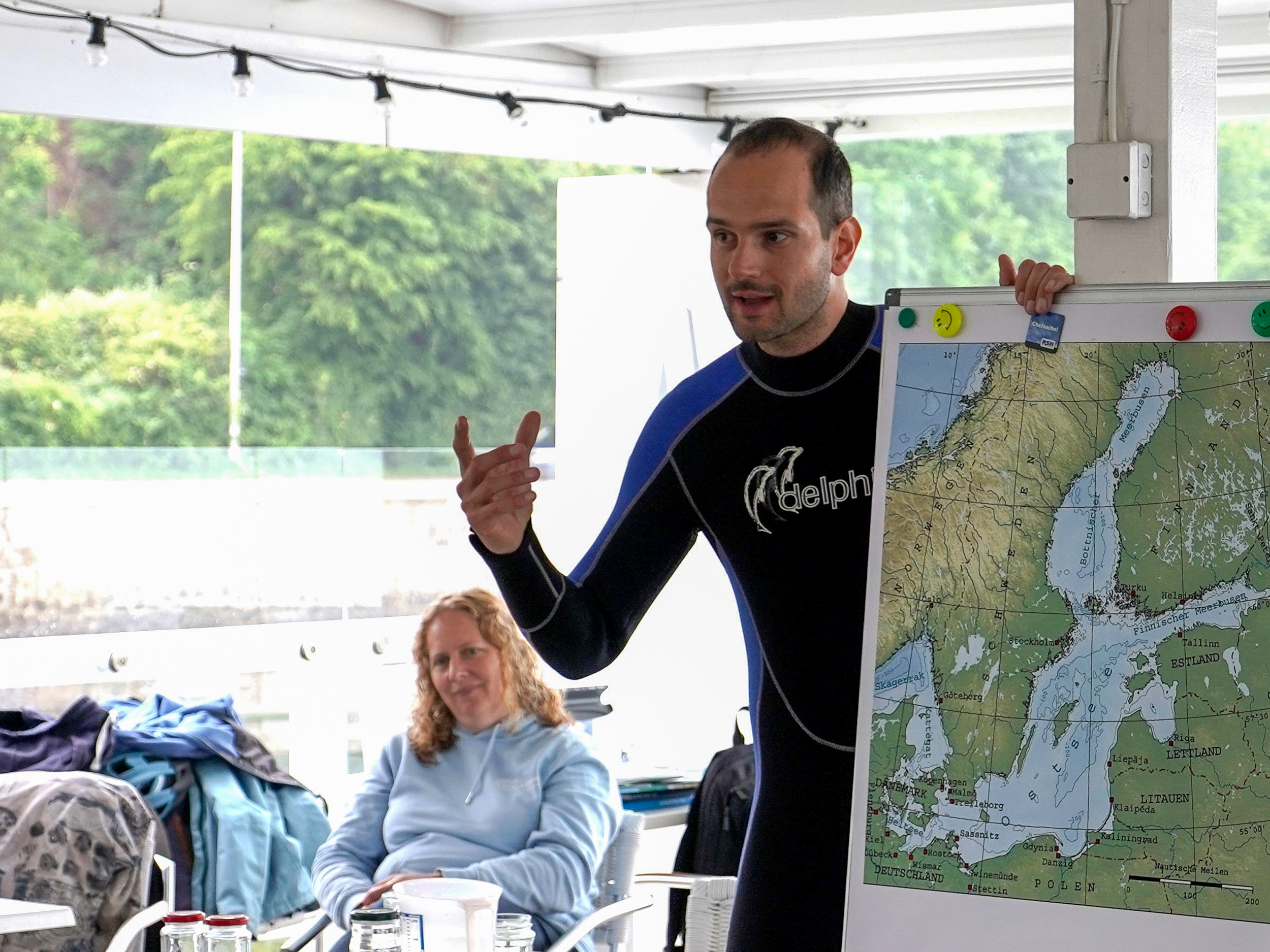
What makes the Baltic Sea so special? Project leader Dr Henry Göhlich combines environmental education with practical snorkelling sessions.
Photo: Maike Nicolai, GEOMAR
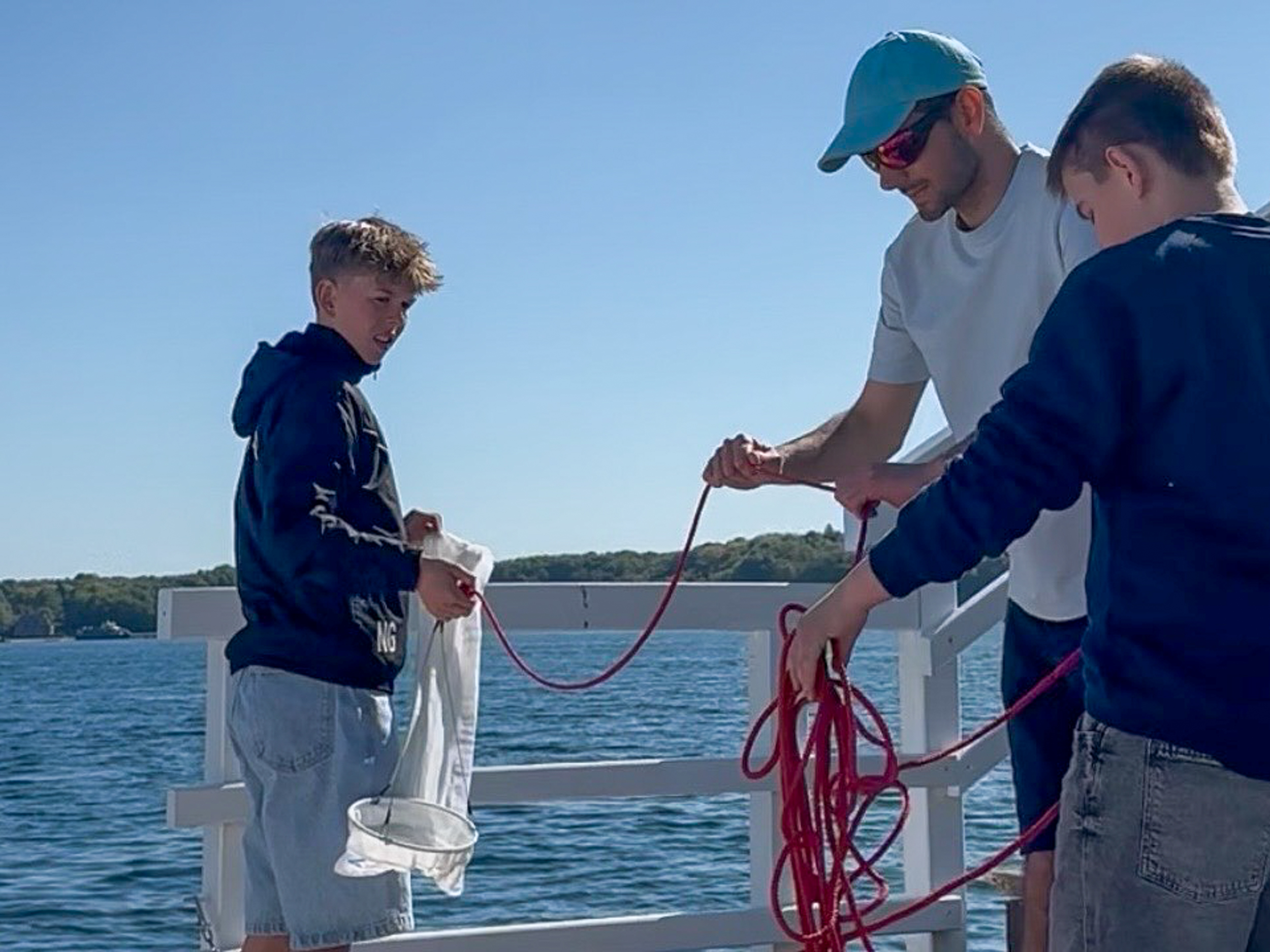
The phytoplankton net is about to be lowered into the water: The participating pupils are also learning how to use methods of marine science.
Photo: Lauren Peck, GEOMAR
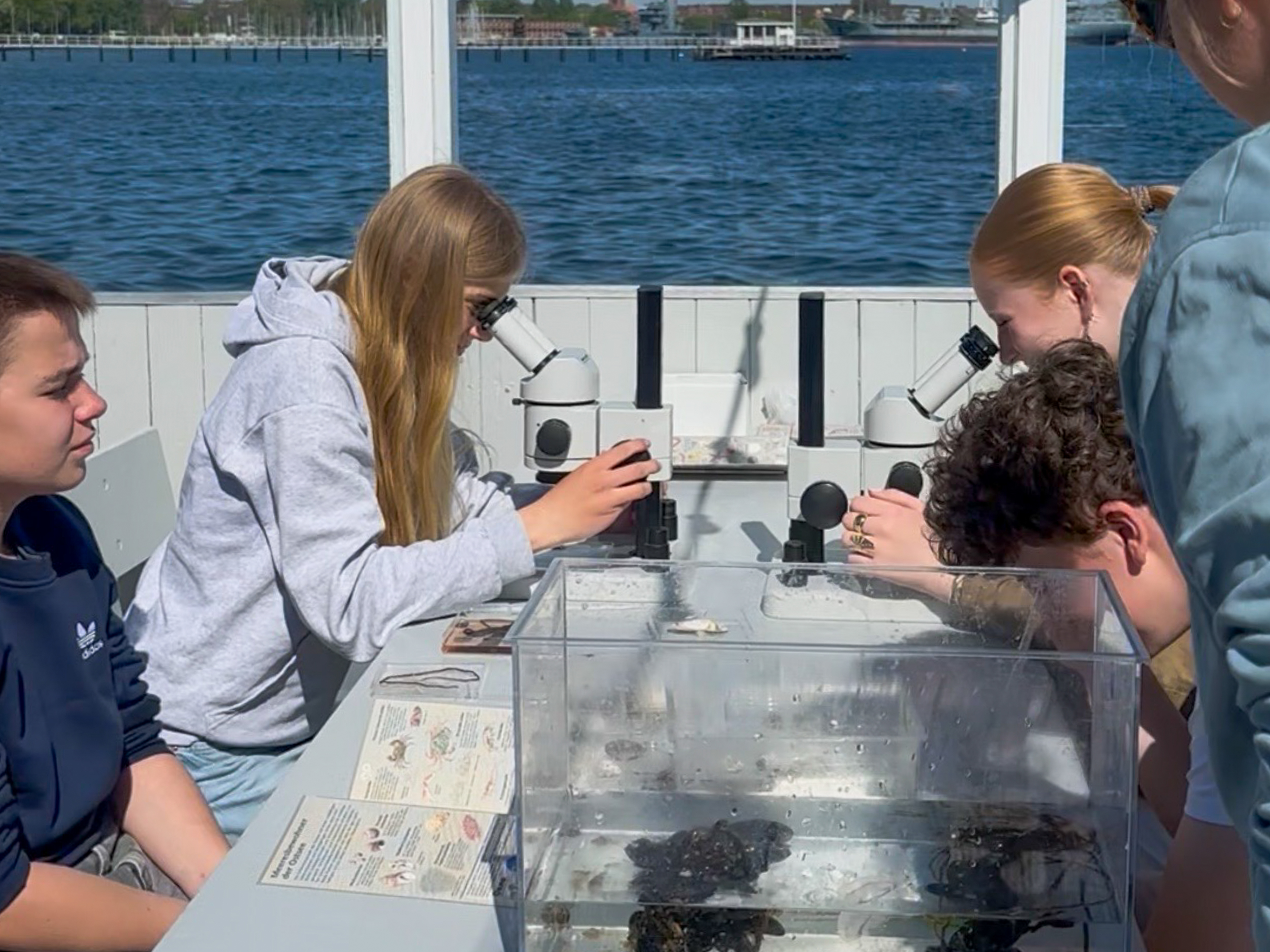
Microscopes provide an even closer view of life in the Baltic Sea.
Photo: Lauren Peck, GEOMAR
Diving into a Fascinating Underwater World Right on the Doorstep
Educational project “Snorkeling.City” enters its third year
Most people only know the Baltic Sea from above the surface – sometimes grey, sometimes green, sometimes deep blue. Yet very few have ever seen with their own eyes what lies beneath. Directly off the quayside in Kiel Fjord, however, exists a surprisingly diverse underwater world. This summer, around 500 pupils will have the opportunity to discover it themselves using masks, snorkels and fins. Through the environmental education project “Snorkeling.City”, initiated by the GEOMAR Helmholtz Centre for Ocean Research Kiel, 25 school classes will experience the underwater world of the Baltic Sea right on their doorstep.
The project is led on a voluntary basis by Dr Henry Göhlich and implemented together with Pro Ocean. Financial support for “Snorkeling.City” comes from the BINGO! Environmental Lottery, the German Federal Ministry for the Environment, Climate Protection, Nature Conservation and Nuclear Safety, regional companies and private donors.
When uncertainty turns into amazement
The first time snorkelling in the sea, the first breath through a mask, the moment a shore crab suddenly scuttles across the seabed or a pipefish hidden in seagrass comes into view – for many children, this first glimpse beneath the surface of the Baltic Sea becomes an unforgettable experience.
Starting from Seebad Düsternbrook, the school groups head directly into Kiel Fjord, entering a world of seagrass, shrimps, jellyfish and small crustaceans. Initial uncertainty often turns into enthusiasm. Many children overcome fears of cold water or unfamiliar marine animals, learn to work together in a buddy system and discover a habitat they had barely noticed before.
Experiencing the sea – protecting nature
“We only protect what we know and experience emotionally,” says Dr Mark Lenz, marine biologist at GEOMAR. Lenz initiated the project and is pleased to see it entering its third season: “Anyone who has snorkelled through a seagrass meadow once will see the Baltic Sea differently afterwards. That is exactly the experience we want to give children and young people.”
The courses combine outdoor experience with scientific environmental education. Before entering the water, pupils learn, for example, what it means that the Baltic Sea is a brackish sea and why seagrass meadows are so important for biodiversity, water quality and coastal protection.
The groups are accompanied by students from Kiel University and GEOMAR who are trained in environmental education, first aid, lifesaving and snorkelling practice. Participants also work with simple scientific methods such as microscopy and measurements of salinity, oxygen and pH levels.
Learning through direct experience
The combination of science, physical activity, teamwork and emotional experience creates a unique learning environment. Instead of learning about environmental protection solely in the classroom, participants experience the Baltic Sea directly with their own bodies.
“After snorkelling, many children talk at home for the first time about seagrass, crabs or jellyfish – and suddenly entire families start discussing marine conservation,” says project leader Dr Henry Göhlich. “That personal connection makes all the difference.”
In the long term, the organisers aim to ensure that every child living along Schleswig-Holstein’s Baltic coast has the opportunity to experience the underwater world of the Baltic Sea at least once. Experience shows that anyone who has snorkelled through a seagrass meadow develops a different relationship with the sea – and understands immediately why marine conservation begins right on our doorstep.
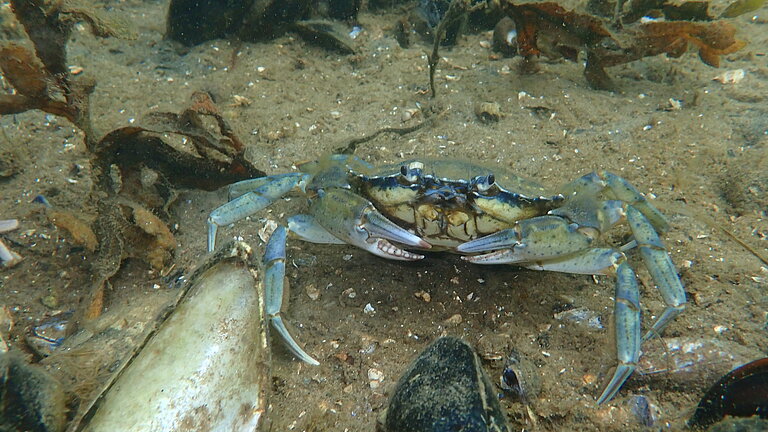
Encounter with a shore crab on the seabed: This year, the 'Snorkeling.City' project is once again giving 25 school classes the opportunity to explore the Baltic Sea up close.
Photo: Snorkeling.City
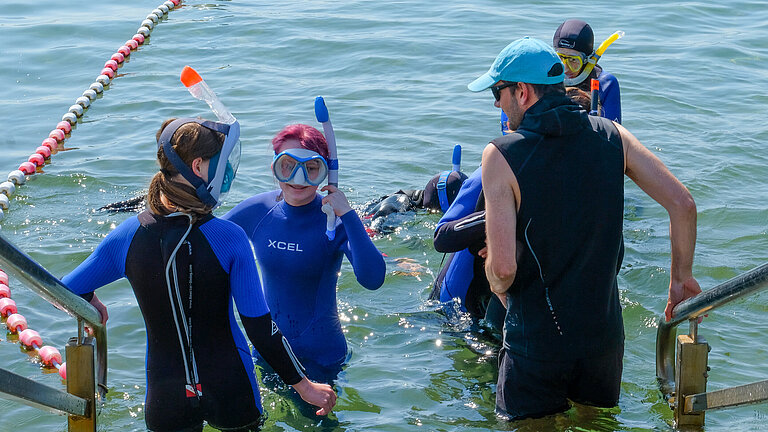
Diving into the underwater world for the first time with a mask and snorkel – a truly memorable experience for young people. This year, the ‘Snorkeling.City’ project is once again giving 25 school classes the chance to explore the Baltic Sea up close.
Photo: Louisa Trippe, GEOMAR
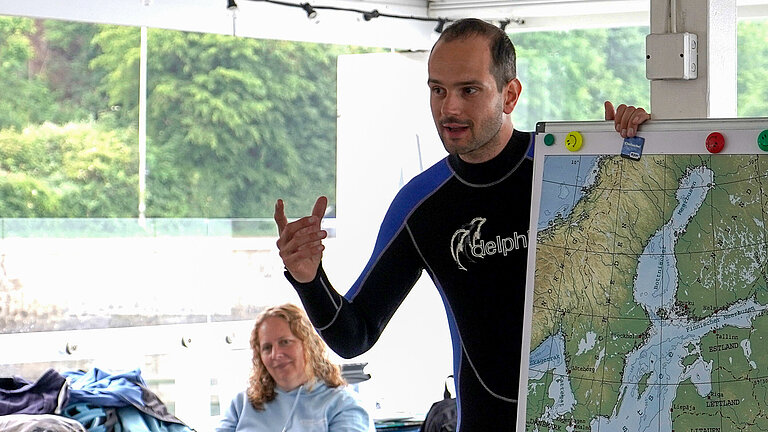
What makes the Baltic Sea so special? Project leader Dr Henry Göhlich combines environmental education with practical snorkelling sessions.
Photo: Maike Nicolai, GEOMAR
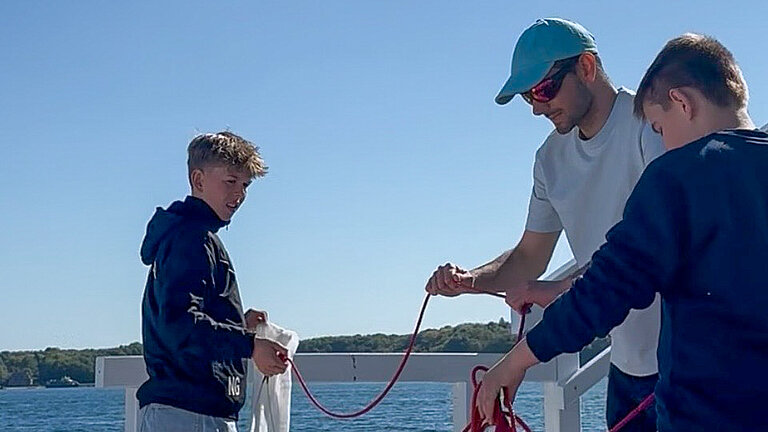
The phytoplankton net is about to be lowered into the water: The participating pupils are also learning how to use methods of marine science.
Photo: Lauren Peck, GEOMAR
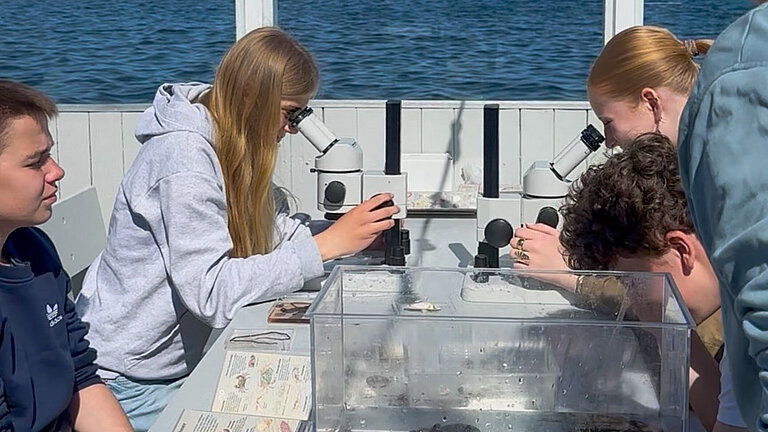
Microscopes provide an even closer view of life in the Baltic Sea.
Photo: Lauren Peck, GEOMAR