Prof. Dr. rer. nat. Oliver Nebel
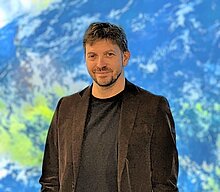
Professor (Topic 3 & Topic 8)
Research Devision 4: Dynamics of the Ocean Floor
Research Unit: Magmatic and Hydrothermal Systems
Office:
Room: 8D-209
Phone: +49 431 600 1455
E-Mail: onebel(at)geomar.de
Address:
GEOMAR Helmholtz Centre for Ocean Research Kiel
Wischhofstraße 1-3
D-24148 Kiel
Research Focus
Oliver Nebel is a geochemist whose research is centred on the application of isotope geochemistry to investigate the formation, evolution, and temporal constraints of rocks and minerals. His work aims to improve our understanding of geological processes by integrating high-precision analytical techniques with fundamental questions in Earth science, with a focus on high-temperature processes.
A primary focus of his research is isotope geochemistry, encompassing both radiogenic isotopes and non-traditional stable isotopes. Radiogenic isotope systems are used to constrain the timing and rates of geological processes, while non-traditional stable isotopes provide sensitive tracers of physicochemical processes operating during mineral formation and rock evolution. Together, these isotope systems enable detailed insights into source characteristics, process mechanisms, and temporal relationships within complex geological systems. This research is applied to the evolution of Earth’s continents and ocean basins, their peripheral volcanic rims, and volcanic islands located within Earth’s tectonic plates. A key aspect of his research is the role of Earth’s water in magma evolution, with a particular emphasis on how water–melt interactions influence geochemical signatures and the isotopic record preserved in igneous systems.
A major component of his expertise lies in high-precision geochronology. Through the precise dating of rocks and minerals, Oliver Nebel places quantitative constraints on the age, duration, and sequence of geological events. This work is critical for reconstructing the evolution of the Earth’s crust and mantle and for linking geochemical signatures to specific stages of geological history.
His research relies on advanced laboratory and analytical methods, particularly state-of-the-art mass spectrometry and rigorous sample preparation techniques. Method development and refinement form an important part of his work, ensuring the accuracy, precision, and reproducibility of isotope measurements and enabling the application of emerging isotope systems to geological problems.
Vita
Research and teaching positions held
- since 2025: GEOMAR Helmholtz-Zentrum für Ozeanforschung Kiel and Christian-Albrechts Universität zu Kiel, Germany, Heisenberg Fellow and Senior Staff Scientist, since 11/2025: Heisenberg Professor and Chair of Magmatic Geochemistry
- 2015-2025: School of Earth, Atmosphere and Environment, Monash University, Melbourne, Australia: Future Fellow (level D), 2015-2019, 2019-2025, Associate Professor (research and Teaching, tenured, level D), Head and Research Director, Monash Isotopia Laboratory, 2016-2015, 2025 (ongoing): Adjunct Associate Professor
- 2016 Department of Applied Sciences, Technical University Graz, Austria: Visiting Professor
- 2009-2015: Research School of Earth Sciences, The Australian National University, Canberra, Australia: Research Fellow (Level B), 2009-2012, DECRA Fellow (Level C), Experimental Petrology Group
- 2006-2009: Vrije Universiteit Amsterdam, The Netherlands; Postdoctoral Researcher (Onderzoeker), Department of Petrology (2006-2008), Department of Isotope Geology (2008-2009)
Education
- 2006: Dr. rer. nat. Isotopengeochemie, Institut für Mineralogie, Universität Münster, Germany; Dissertation: Refinements in Rb-Sr geochronometry
- 2002: Dipl. Geol. (Geologie & Paläontologie), Institut für Geologie und Paläontologie, Universität Münster, Germany