Image of the Month: July 2015
The Research Vessel SONNE
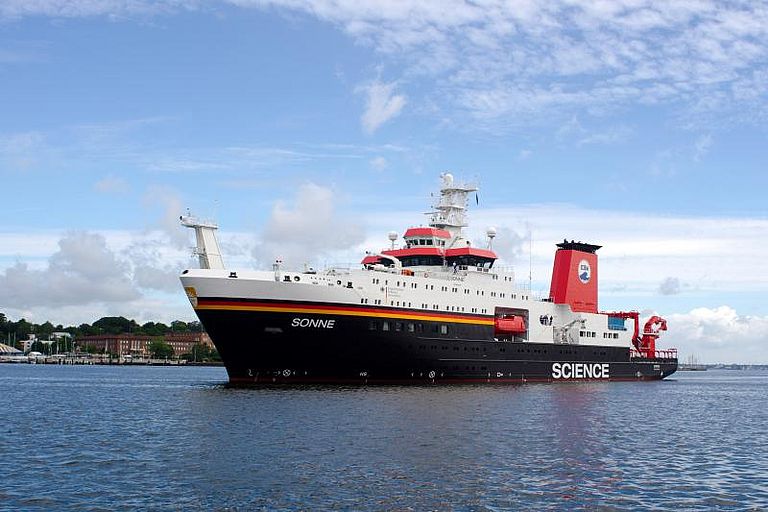
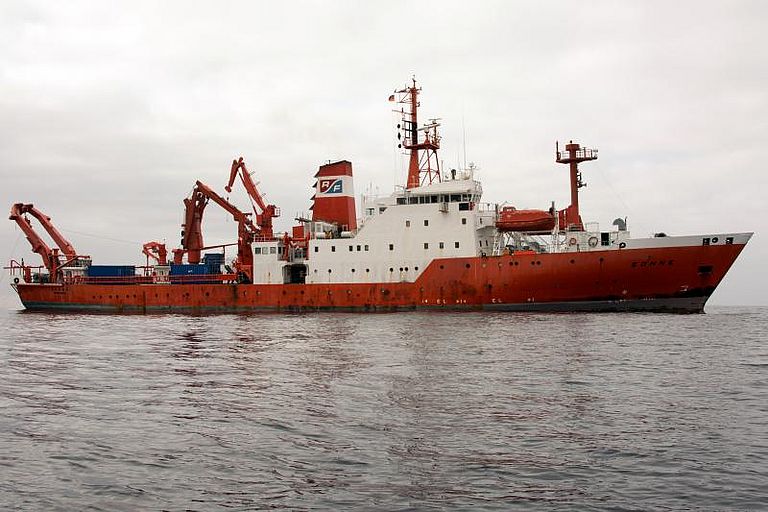
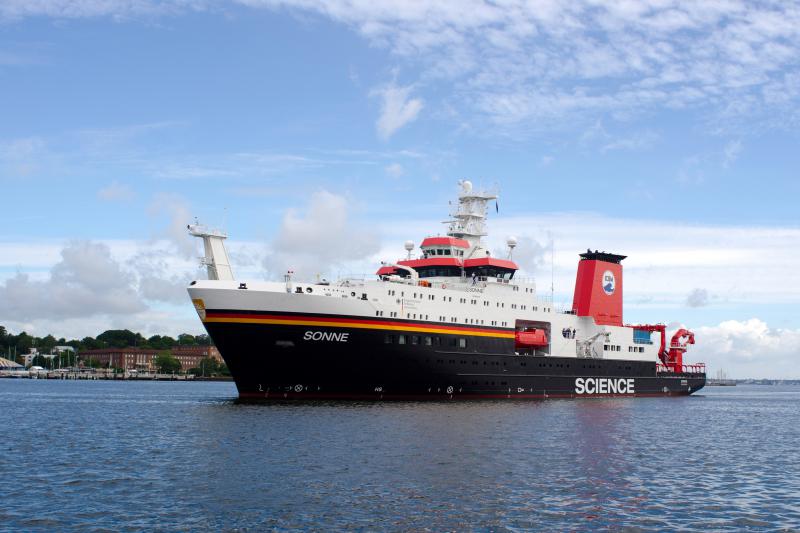
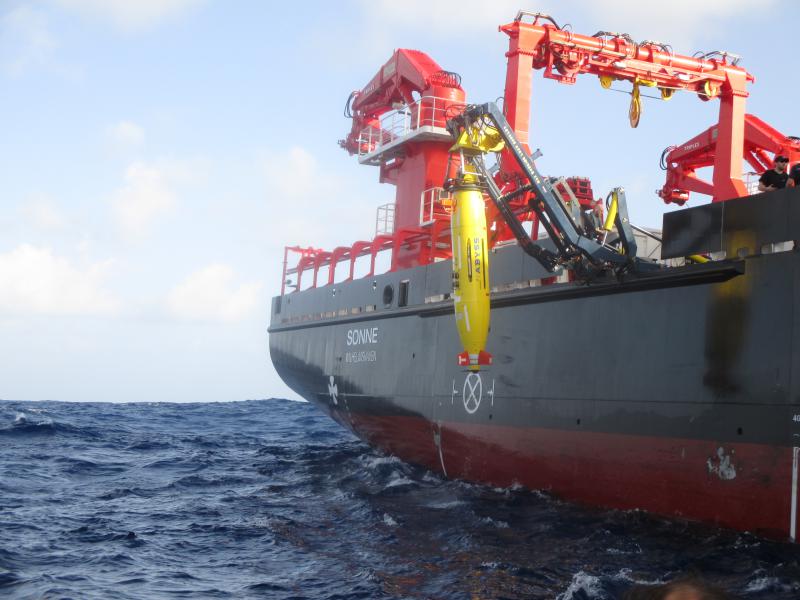
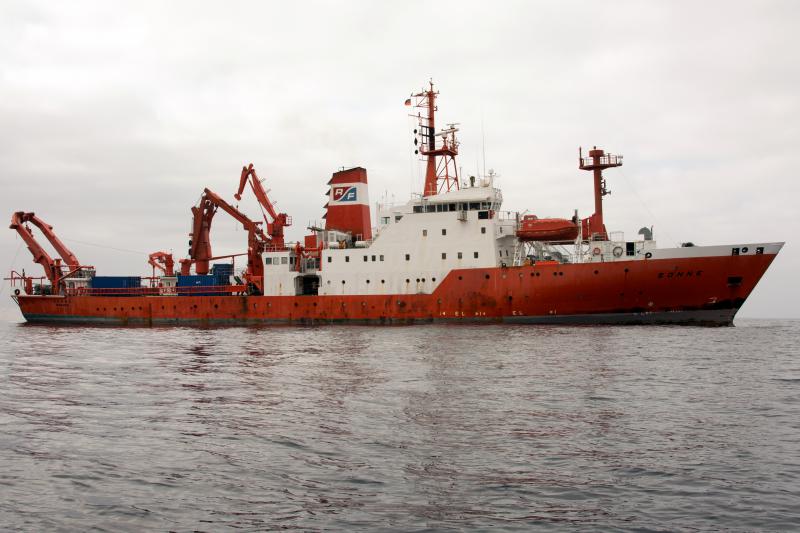
Our image of the month July shows the German research vessel SONNE. It is the youngest and with a length of 116 meters also the largest ship of the German research fleet. When it was commissioned in November 2014, the SONNE succeeded a vessel of the same name that had served German marine sciences mainly in the Pacific and the Indian Ocean from 1977 to 2014. After a presentation tour along the north German coastal states the new SONNE started its first scientific cruise on 14 December 2014 (SO237) from the Canary Islands across the Atlantic Ocean to Martinique.
At the beginning of February 2015 the new SONNE finally reached the Pacific Ocean where she serves as a platform for multidisciplinary marine research. At the moment, July 2015, RV SONNE is conducting research in the Gulf of Mexico. The aim of this expedition (SO241) is to better understand the interaction between geology and climate. With GEOMAR-Professor Dr Christian Berndt as chief-scientist, a German-Mexican-Swiss research team wants to find out whether geological processes, such as the dissolution of gas hydrates due to volcanic activity, may have an impact on climate warming. Therefore they investigate the seabed in the so-called Guaymas Basin. This is the only region in the world, where igneous rocks currently enter sedimentary basins to a greater extent. Using seismic systems, the scientists try to obtain images of the seabed's deeper structures and processes.
The following cruises are part of the JPIO-project “Ecological Aspects of Deep-Sea Mining”. It is carried out by 25 partners from 11 European countries. The participating scientists study the deep-sea ecosystems in two areas where vast amounts of polymetallic nodules are found. Nodules have caught industry's interest because of promising prospects for heavy metals, such as rare earth elements (REE), copper, nickel, and cobalt. They mainly occur in the abyssal plains of the Pacific, Indian, and Atlantic Ocean. First pilot mining projects were conducted in the 1970s but stopped again soon. 1994, the International Seabed Authority (ISA) was founded to set up internationally binding regulations for the utilization of the seabed beyond national jurisdiction (called 'The Area') within the regularity of United Nations Convention on the Law of the Sea (UNCLOS). Today the ISA has granted 13 licenses for the exploration of polymetallic nodule fields in the Clarion Clipperton Zone (CCZ) in the north-east Pacific and one license in the Indian Ocean. Several European countries are among the license holders.
One of the obligations of the ISA is to ensure effective protection of the marine environment from harmful effects that may arise from commercial deep-sea mining operations. From July to October scientific cruises with RV SONNE are planned to revisit the DISCOL experimental area in the Peru Basin, where the seafloor was scientifically disturbed by ploughing in 1989. Studying this unique site will allow to assess the long-term impact of mining activities. At the DISCOL site the scale of recovery, the ecosystem status, and the biogeochemical situation after 26 years will be investigated by comparing disturbed plough tracks with adjacent undisturbed areas. Other topics that will be worked on with RV SONNE this year are the gas exchange between ocean and atmosphere, and the seismic hazards around the Chilean port of Antofagasta.
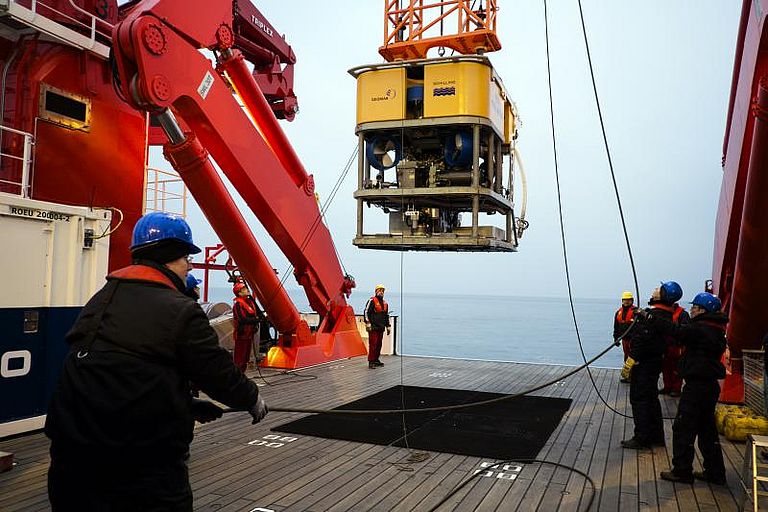
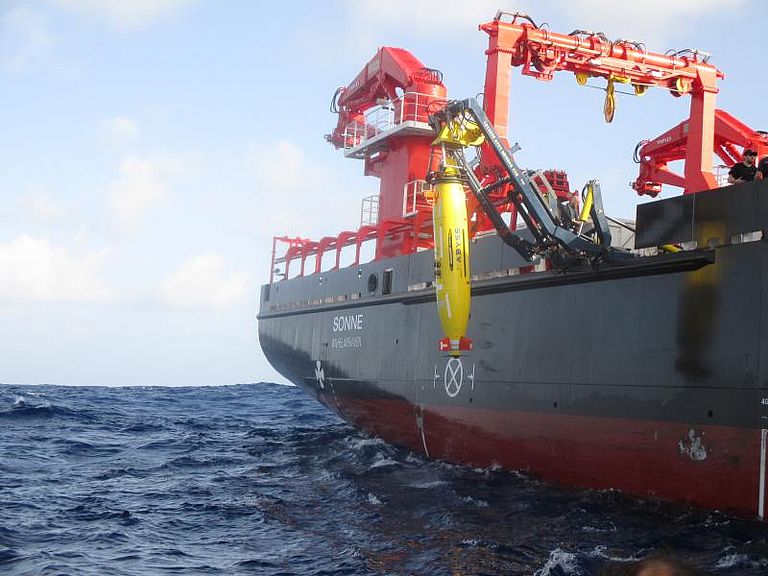
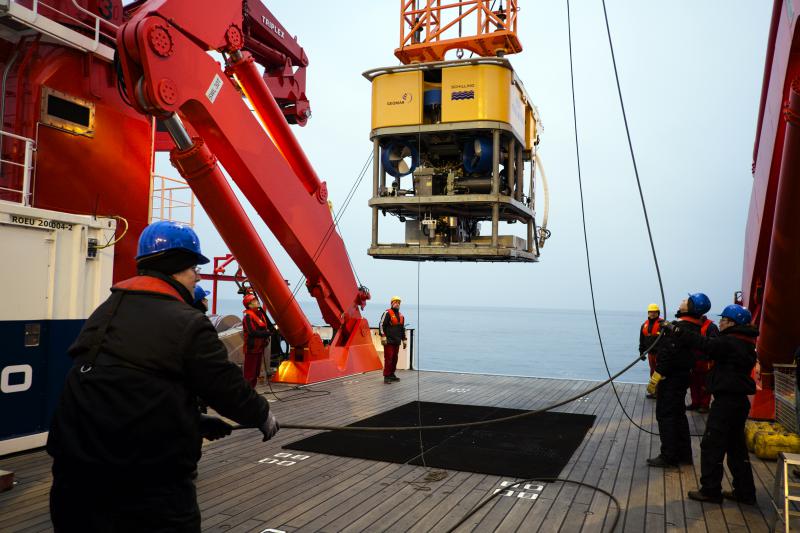
RV SONNE is well equipped for all the different kinds of scientific work programmes. In addition to four dry-, two wet- and two climate-laboratories many more specialized facilities are available on board. Much more advanced than its predecessor, the new SONNE meets the requirements of various disciplines such as marine geology, biology, climate research or biogeochemistry and enables interdisciplinary work at sea. Various winches and cranes, including an A-frame crane at the stern with a capacity of 30 tns, ensure that even large devices such as deep-sea robots like ROV KIEL 6000 can be used without any problems. Beyond that, water treatment, special waste separation systems and the use of low-emission fuels make the new SONNE a very environmentally friendly research vessel.
Additional information about the ship and its cruises:
<link forschen expeditionen _top abs-internal-link einen internen link im aktuellen>www.geomar.de/forschen/expeditionen/ GEOMAR expeditions
https://www.ldf.uni-hamburg.de/sonne.html Control Statiion German Research Vessels
http://www.oceanblogs.org/so237/ Blog of the first scientific cruise of RV SONNE (December 2014 - January 2015)
http://www.oceanblogs.org/eadsm/ Blog of the project "Ecological Aspects of Deep-Sea Mining"