Image of the Month: September 2015
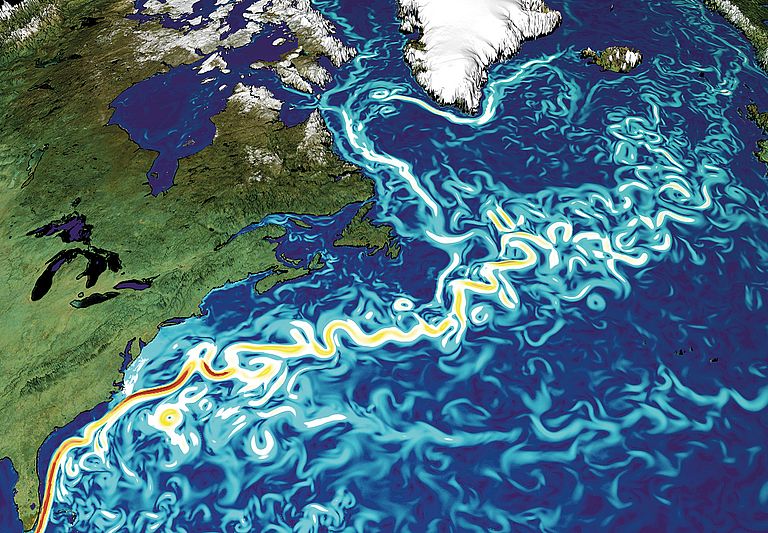
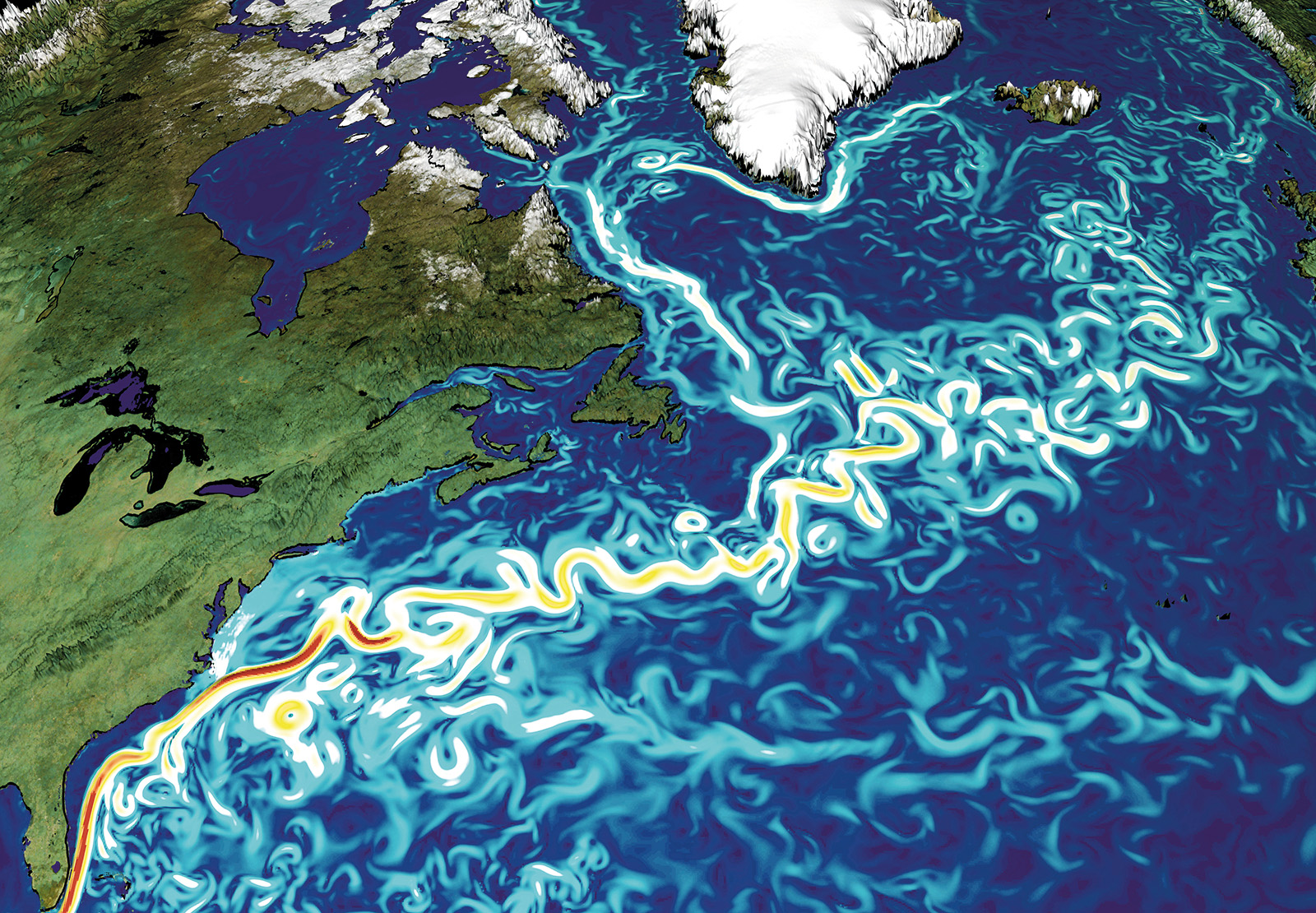
Gulfstream in the ocean model ORCA12
Our image of the month is an exceptional one because it shows no ships, no deep-sea animals, and no diving robot, but instead is computer- generated. You can see a snapshot of the North Atlantic, where different colors represent different current speeds. So many eddies and currents are visualized. Very prominent is the Gulf Stream. It belongs to the strongest ocean currents worldwide, and provides with its far north reaching extensions a relatively mild climate to northern Europe. The Gulf Stream transports up to 100 million cubic meters of water per second along the US east coast poleward. It is just one of several so-called western boundary currents, which are responsible for the redistribution of heat and moisture between the subtropics and the polar regions.
According to some climate models, this heat conveyor belt could weaken by the end of the 21st century as a result of the global climate change. Only in recent years scientists have managed through the use of anchored measurement systems to monitor the strength and variability of this heat conveyor belt continuously. Nevertheless, it is still impossible to observe the Gulf Stream and other ocean currents completely for long periods directly in the oceans.
Therefore, oceanographers work closely together with colleagues who, based on actual measured data as well as physical laws and mathematical rules, model the oceans with supercomputers. So they are able to fit data obtained regionally into the global context to better understand the whole Earth system. They are also able to give insights on future developments on the basis of data obtained in the present and the past.
This special image was created by the ocean model ORCA12. Depending on the particular problem at hand, oceanographers and climate scientists can choose between different kind of models. But they have to consider a rule of thumb: The more components are incorporated into the model and the higher its resolution, the more expensive are the calculations. Precise models of complex current systems often need several months of computing time on supercomputers.
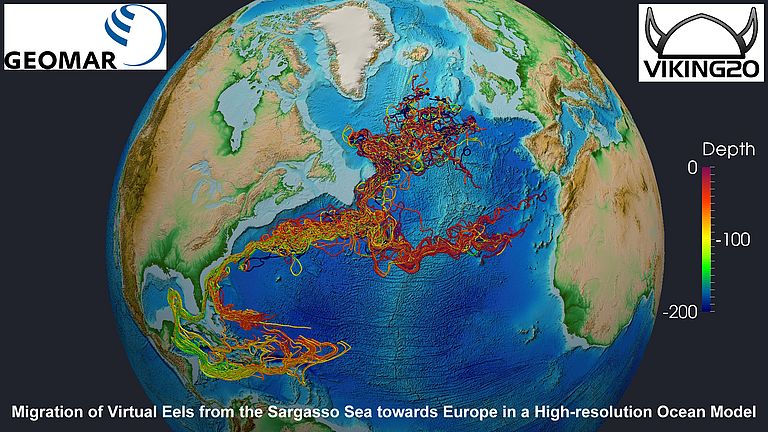
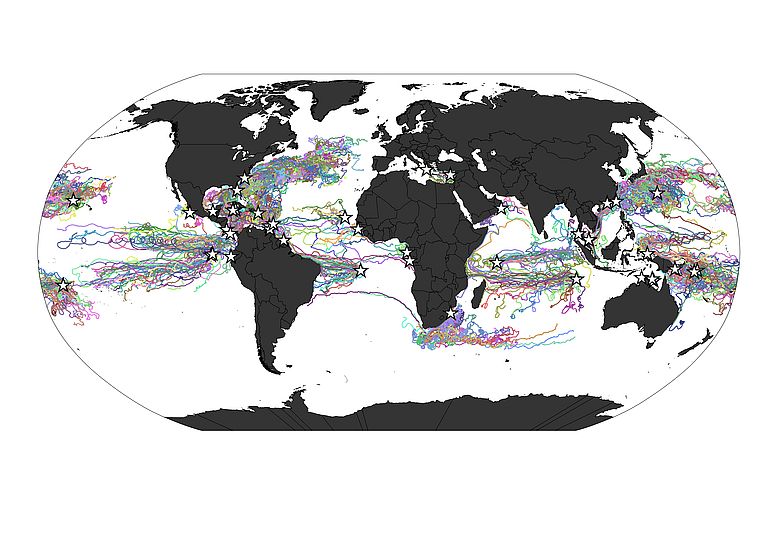
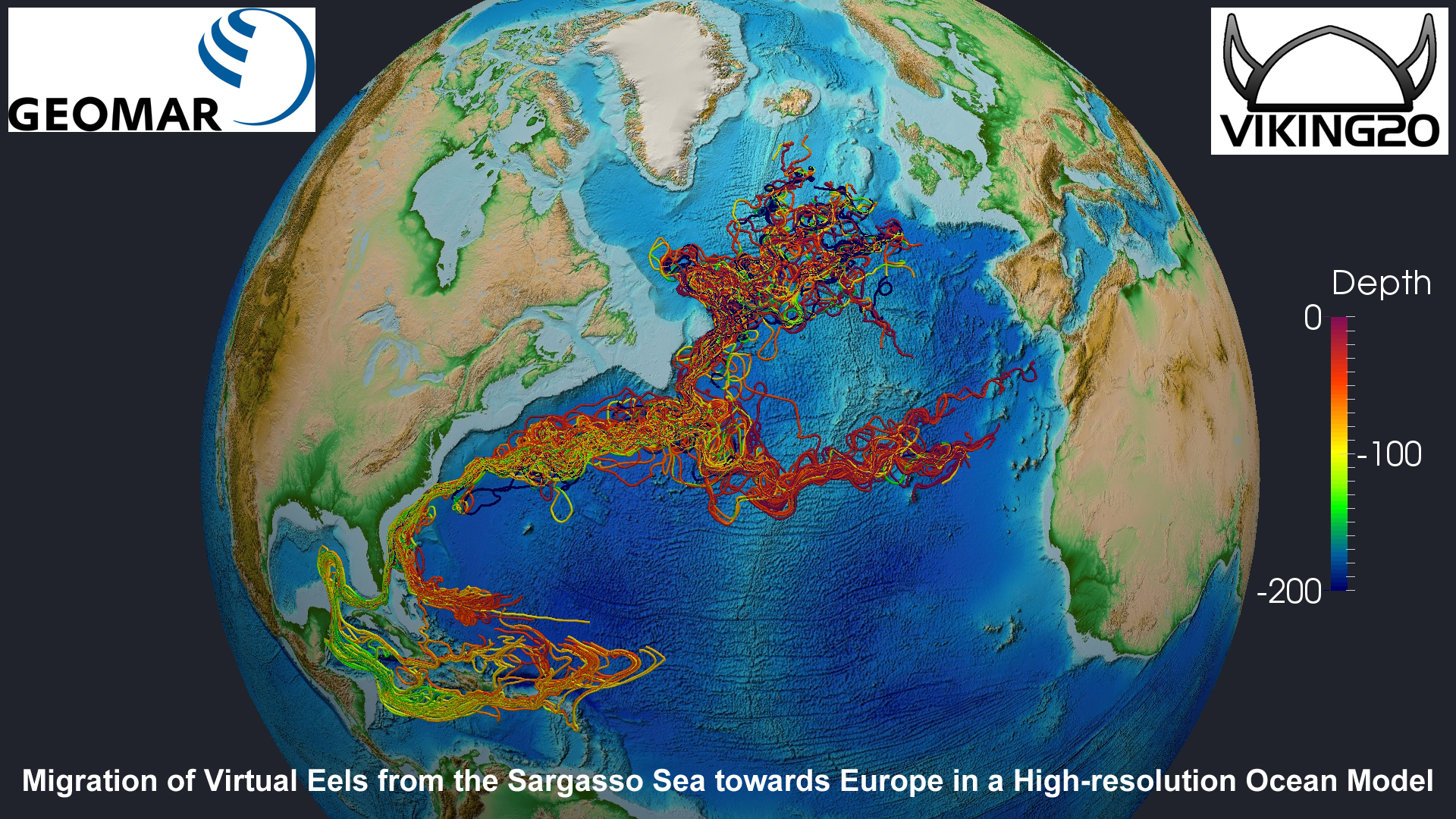
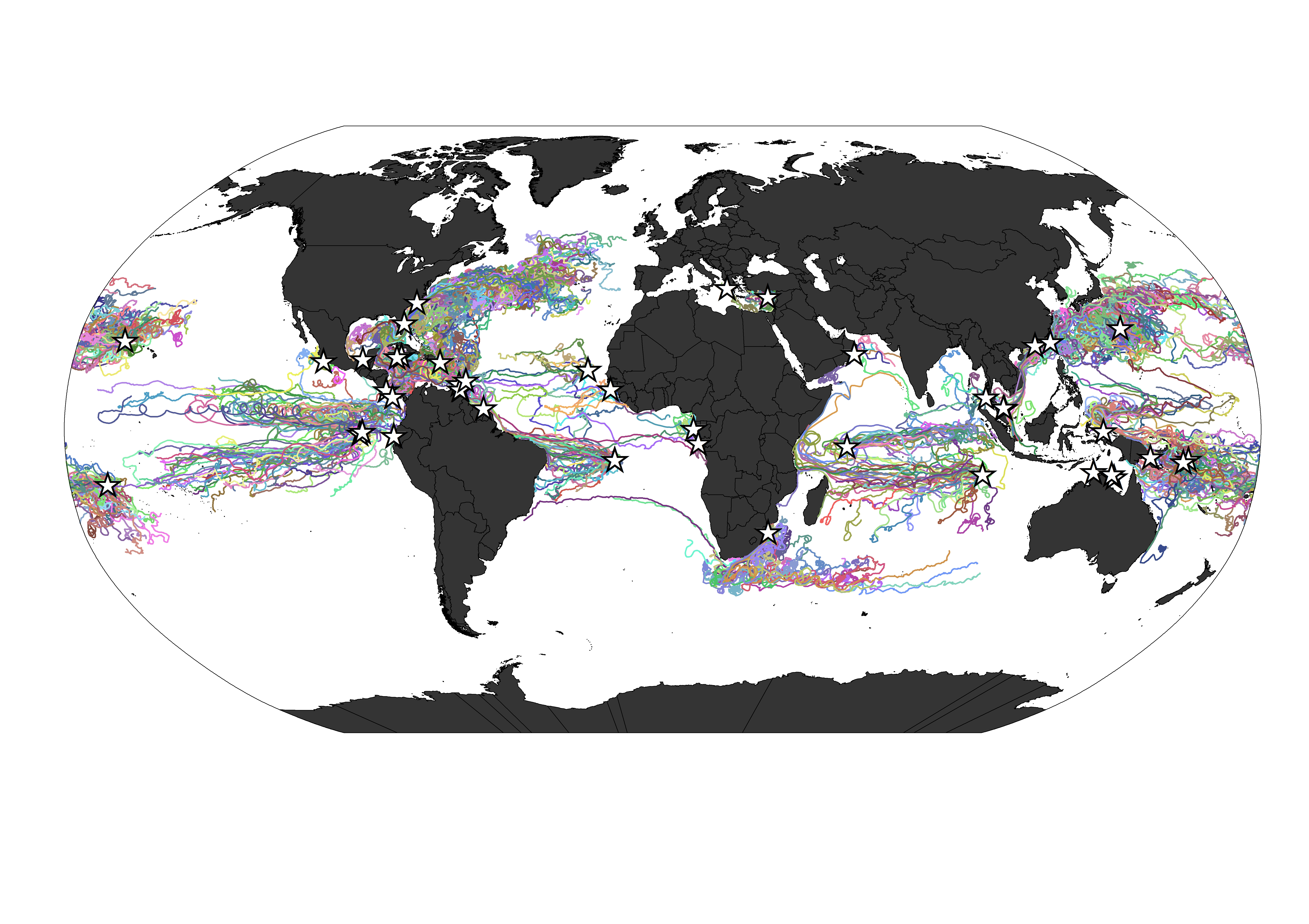
Meanwhile, these models are not only used to study climate or ocean currents. They can help, among other things, to explain migrations of marine organisms, such as young eels or turtles. Such data are essential in order to take effective measurements to protect endangered species. Models can additionally be used to track the path of floating debris in the oceans.
Simultaneously, the modelers continuously compare their results with the reality, in order to further improve the models.
Further information:
<link news article wo-ist-mh370 _top abs-internal-link einen internen link im aktuellen>"Where is MH370?" press release
<link de entdecken artikel article aale _top abs-internal-link einen internen link im aktuellen>"The fate of the eels" press release
<link de forschen fb1 fb1-tm schwerpunkte _top abs-internal-link einen internen link im aktuellen>GEOMAR research unit "Theory and Modeling"