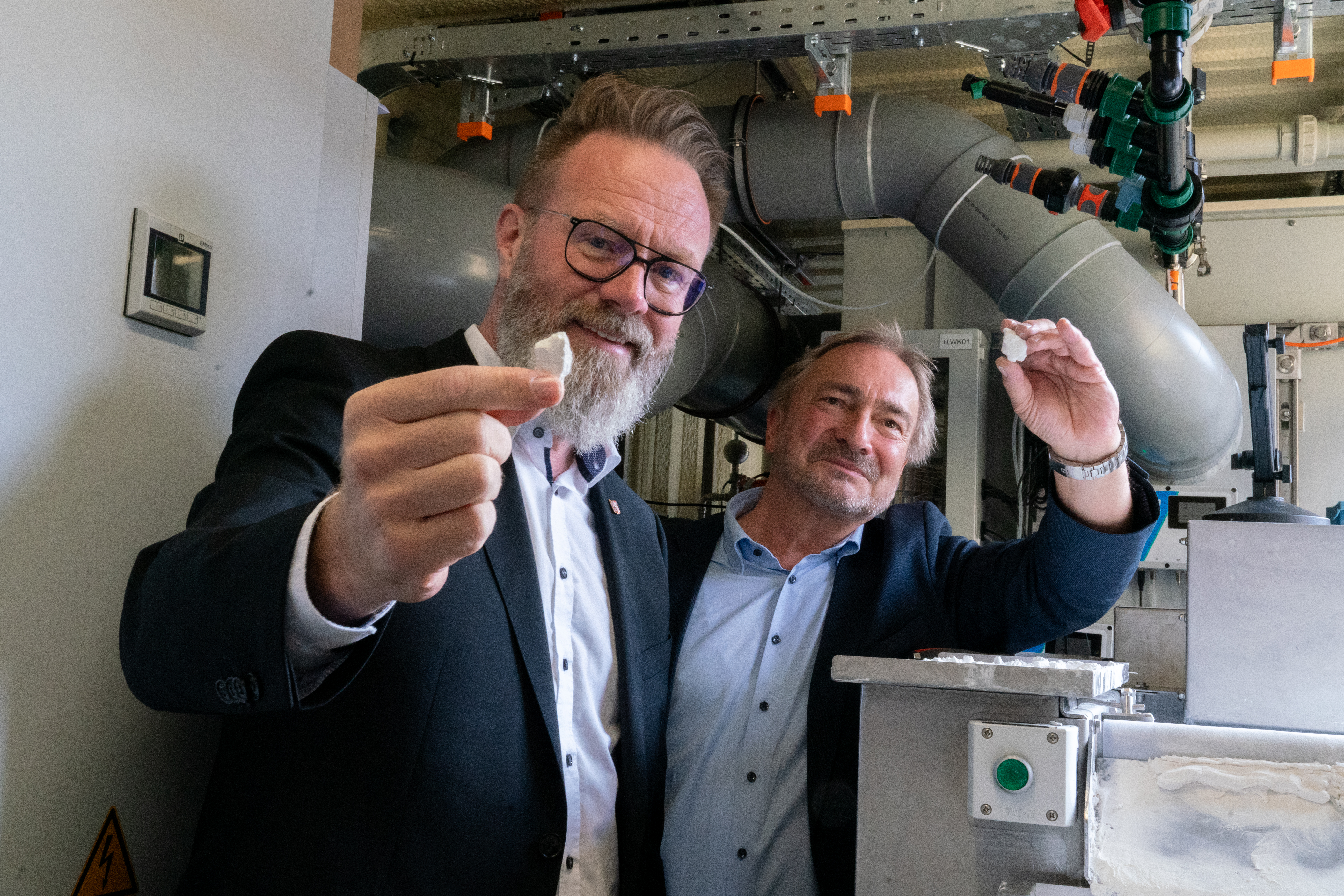
Carbon dioxide in the ambient air is converted into solid calcium carbonate: State Minister for Economic Affairs, Claus Ruhe Madsen (left) and Anton Eisenhauer, CTO and project lead at CarbonOcean Engineering.
Photo: Sarah Uphoff, GEOMAR
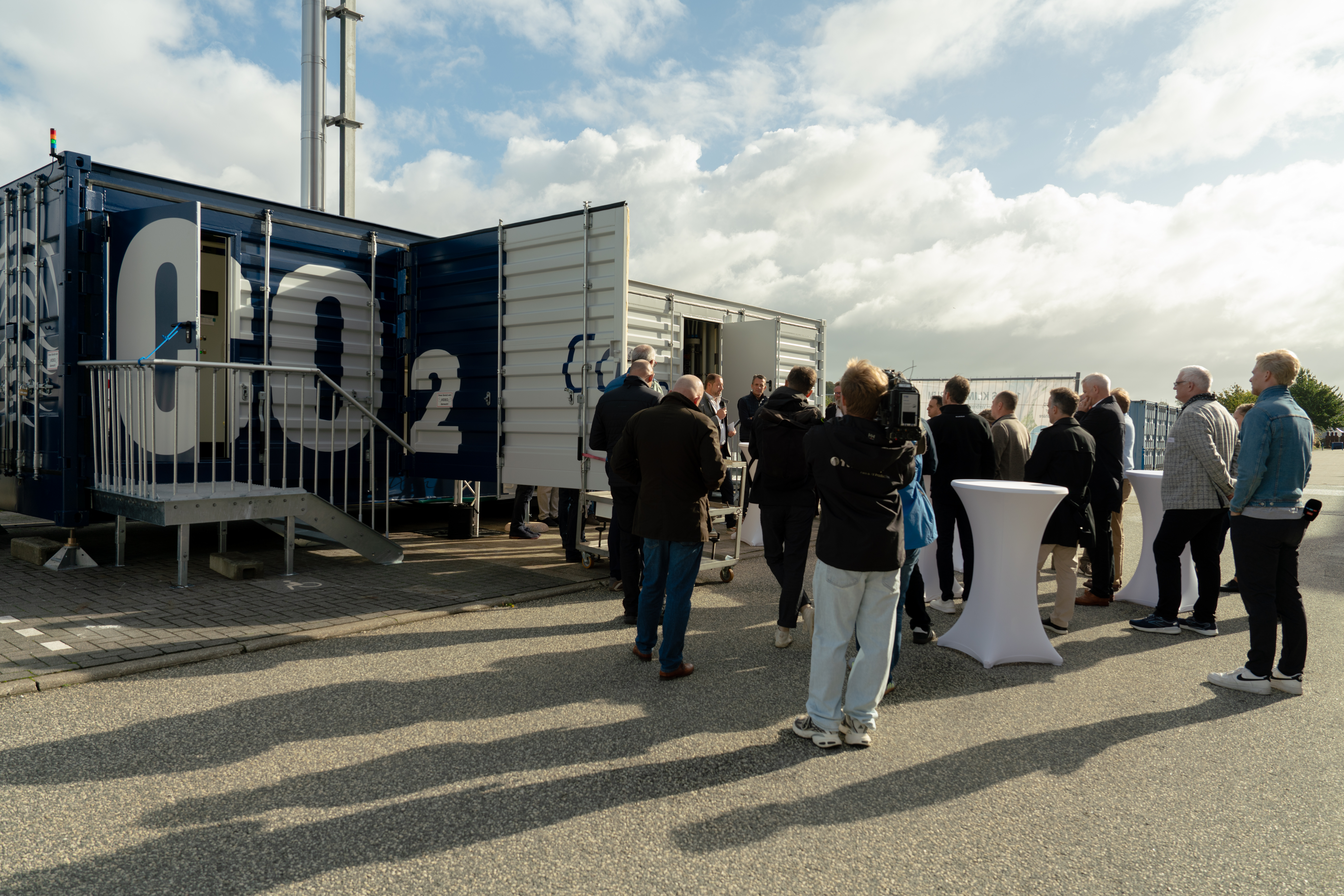
The CarbonOcean pilot plant is housed in a 40-foot container on the banks of the Schwentine river.
Photo: Sarah Uphoff, GEOMAR
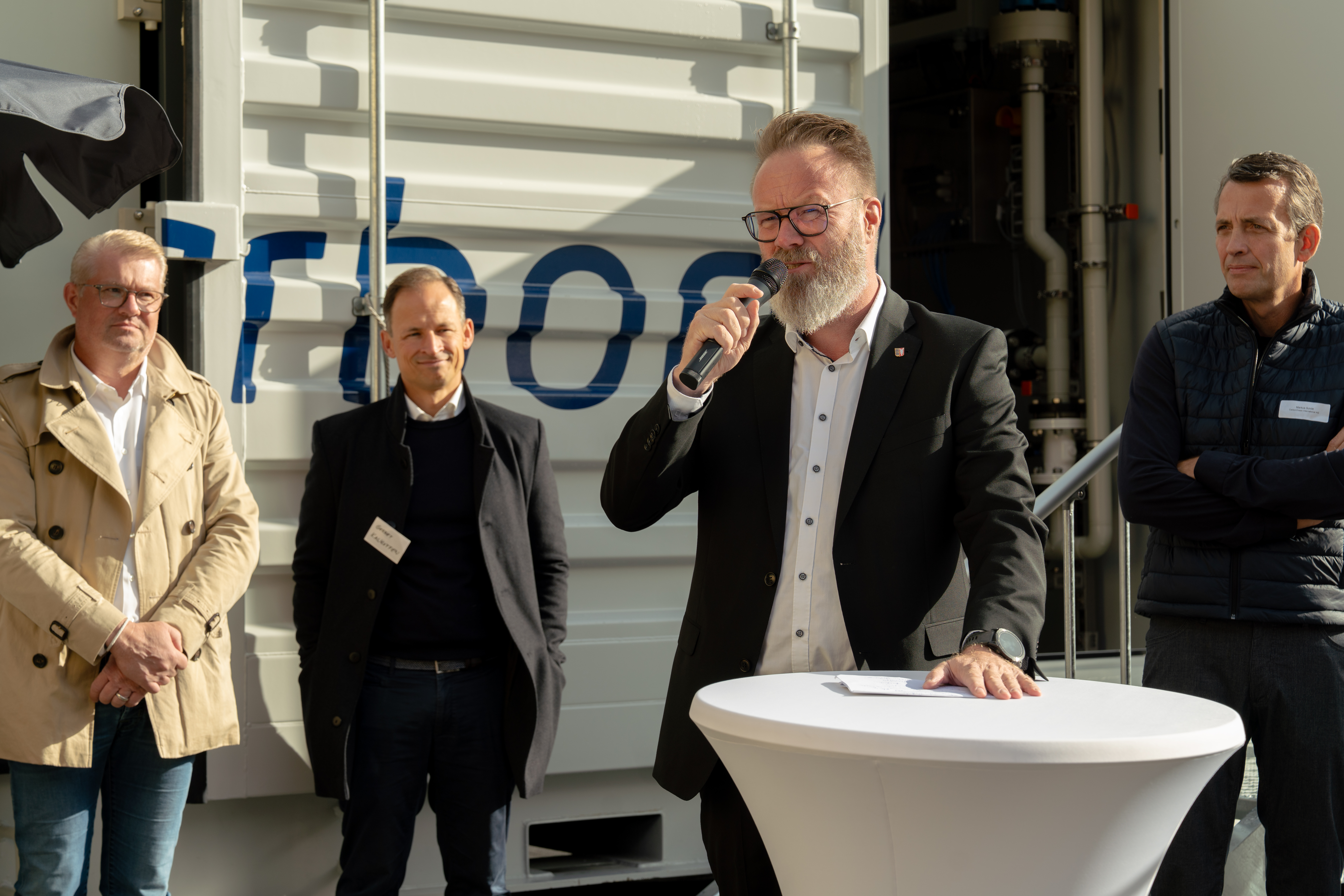
Claus Ruhe Madsen, Minister for Economic Affairs, expressed his delight at the innovative idea from Schleswig-Holstein.
Photo: Sarah Uphoff, GEOMAR
Capturing and mineralising CO2 from the air
CarbonOcean unveils demonstration plant in Kiel
A 40-foot container stands on the banks of the Schwentine, directly on the GEOMAR quay. Inside, the CarbonOcean demonstrator is being operated under real-world conditions: it investigates how carbon dioxide (CO2) can be captured directly from the ambient air using an aqueous calcium hydroxide suspension and bound in highly concentrated form as a mineral. The demonstrator serves to investigate operational stability, material balances and product quality, and to gather reliable data for further development and scaling up.
How it works: Capture and mineralisation
In the pilot plant, ambient air is brought into contact with an aqueous calcium hydroxide suspension. The CO2 from the air reacts with the calcium hydroxide and is mineralised as solid calcium carbonate. The resulting suspension is then filtered to separate the solids from the liquid. In this way, CarbonOcean is testing a key process step for CO2 capture from dilute gas streams such as ambient air.
In a further stage of development, the calcium carbonate – which occurs naturally as the main component of limestone – is to be broken down again by heating. In this process, the CO2 is recovered in concentrated form and the calcium-containing feedstock is returned to the process. The concentrated CO2 could then be permanently stored or used as a raw material.
The plant is currently being operated using tap water in a closed-loop system. In the future, investigations will also look into the process engineering and environmental conditions under which seawater or other saline aqueous solutions could be incorporated into the process concept.
From development to potential industrial application
The plant was developed and built under the leadership of CarbonOcean AG and its Kiel-based subsidiary, CarbonOcean Engineering GmbH, with the support of Tapprogge, a company also based at the Seefischmarkt. The demonstration plant is designed to test key process steps under real-world conditions and to establish a data foundation for further technical optimisations and potential upscaling. CarbonOcean aims to further develop the entire process, including thermal regeneration, and to establish industrial value chains for the recovered CO2.
“With the plant in Kiel, we can demonstrate in practical operation what works and where we need to make further improvements. This experience forms the basis for larger plants. Our goal is a process that operates reliably and can be run economically,” says Benedikt Brambs, COO of CarbonOcean.
GEOMAR as a scientific partner
The GEOMAR Helmholtz Centre for Ocean Research Kiel is providing scientific support for the project. The focus is on the quantitative measurement of CO2 and material flows, the evaluation of process performance, and the investigation of the prerequisites for robust scaling.
“We convert invisible CO2 in the air into a solid substance that we can capture, weigh and analyse. This provides a concrete basis for verifying the capture and further developing the process. Ultimately, the climate benefits are determined by the overall balance of the entire process, including energy requirements and permanent storage,” adds Prof. Dr Anton Eisenhauer, CTO and project lead at CarbonOcean Engineering GmbH.
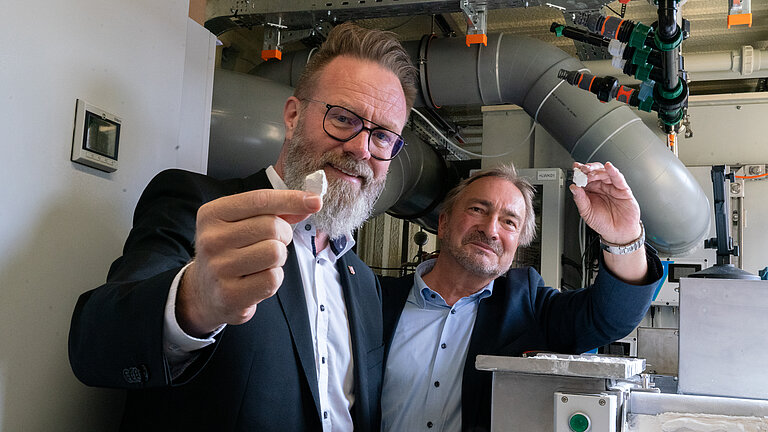
Carbon dioxide in the ambient air is converted into solid calcium carbonate: State Minister for Economic Affairs, Claus Ruhe Madsen (left) and Anton Eisenhauer, CTO and project lead at CarbonOcean Engineering.
Photo: Sarah Uphoff, GEOMAR
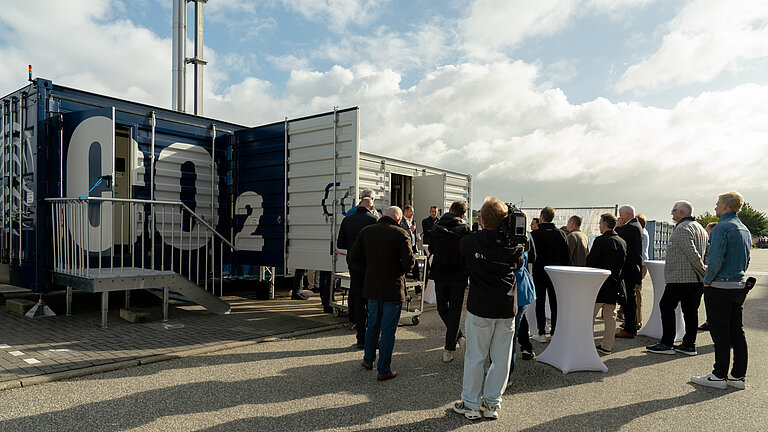
The CarbonOcean pilot plant is housed in a 40-foot container on the banks of the Schwentine river.
Photo: Sarah Uphoff, GEOMAR
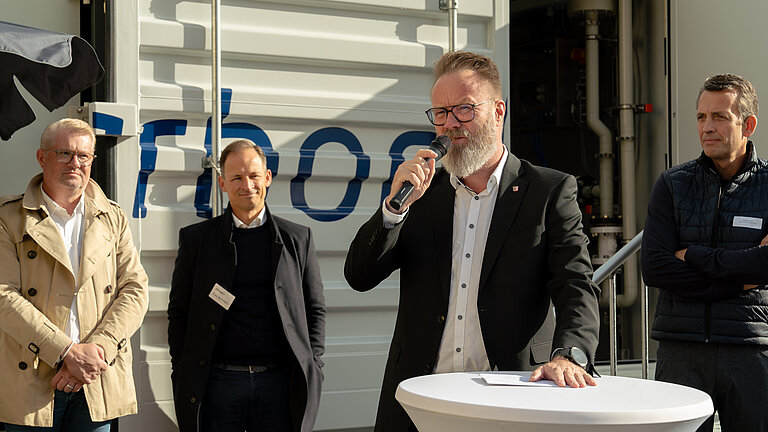
Claus Ruhe Madsen, Minister for Economic Affairs, expressed his delight at the innovative idea from Schleswig-Holstein.
Photo: Sarah Uphoff, GEOMAR