Publications
![[Translate to English:] Cover](/fileadmin/_processed_/f/4/csm_cover-Malbuch_6ba39e35cc.jpg)
A Glimpse into the Baltic Sea –
A Coloring Book for Little Ocean Explorers
The Baltic Sea is home to many animals and plants; you might be able to see some of them from the beach, while others hide beneath the surface of the sea. And some are so small that you can only see them with a microscope. In this coloring book, you’ll find many creatures that call the Baltic Sea home. You can color them however you like and learn a little more about them on each page.
Illustrations: Alexandra Hahn and Katja Seebass. (PDF, German, as of 2026)
![[Translate to English:] Cover](/fileadmin/_processed_/a/2/csm_cover-resources-de_306faadc47.jpg)
Mineral Resources from the Deep Sea –
Origins, Potential, and Risks
The goal of the “Marine Mineral Resources” research group at GEOMAR is to understand the formation of potential deposits and to assess the potential of these deposits through seafloor exploration. However, deep-sea resource extraction has environmental impacts. The “Marine Geosystems” research unit at GEOMAR investigates processes on the seafloor to assess the expected damage to deep-sea ecosystems and develops new concepts for environmental monitoring. (PDF, as of 2020)
![[Translate to English:] Cover](/fileadmin/_processed_/b/c/csm_cover-cabo-verde_4c393cb229.jpg)
Ocean Science Centre Mindelo – New Plattform for Marine Science in the Tropical Atlantic
GEOMAR has been conducting research off the coast of Cabo Verde in the tropical northeastern Atlantic for many years. This brochure aims to highlight the importance of the region, showcase the diversity of current research topics, and introduce the research infrastructure that has been established. (PDF, as of 2018)
![[Translate to English:] Cover](/fileadmin/_processed_/9/4/csm_cover-echolot-de_26d757191e.jpg)
Echo Sounder – Hearing the Depth
This brochure explores the development of the echo sounder, for which Alexander Behm, a physicist and entrepreneur from Kiel, received the first patent in 1913. Learn more about the history of ocean depth measurement—from the first hand-held sounding lines in ancient Egypt to the steam-powered sounding machines of the 19th century, the development of ocean depth charts, and today’s seafloor surveying using modern multibeam echo sounders. (PDF, german, as of 2018)
Squids of the tropical Atlantic, poster with photos by Uwe Piatkowski, GEOMAR (german)
Squids are among the most striking creatures of the deep sea. This selection takes a look at their impressive diversity and thus illustrates the importance of the tropical ocean as a hotspot of biodiversity. The animals shown here were caught during the METEOR expedition M97 in June 2013 in the central East Atlantic south of Cape Verde. For this purpose, plankton nets were deployed at night or at dusk down to a depth of 4,000 metres. Most of the specimens are still in the larval or juvenile stage and live down to a depth of about 1,000 metres. These typical deep-sea creatures can grow to several metres in length when fully grown.
Deep Sea fishes, poster with photos by Solvin Zankl (german)
With glowing hinges on their heads, mouths larger than their bodies and dangerous-looking fangs, many of these creatures seem to have stepped straight out of a science fiction film. In fact, these fish live in the deep sea, the largest habitat on our planet. For us humans, it is just as inaccessible, hostile and alien as outer space. The photos shown here are exhibits from the collection of Dr Johannes Kinzer. The marine biologist and former aquarium director of the Kiel Institute of Oceanography (IfM) collected these deep-sea fishes during numerous expeditions in the 1960s and 1970s in the Atlantic, Pacific and Indian Oceans.
Scientific Publications in OceanRep
OceanRep is an open access digital collection containing the research output of GEOMAR staff and students. Note for users of mobile platforms: the pages are currently not available in a responsive design.
Background Information on Marine Research (external links)
World Ocean Review
Numerous researchers and partners have contributed to the publications, representing years of commitment to the oceans and the highest scientific standards. The aim of the "World Ocean Reviews" is to present scientifically sound findings in a comprehensible form and thus to serve all those who wish to participate actively and in an informed manner in current discussions in the field of marine research.
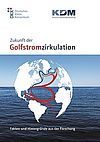
Future of the Gulf Stream circulation
There has been lots of speculation about the Gulf Stream. But what kind of scientific evidence exists? Nine experts summarize this evidence in this brochure. One of the key messages: The Gulf Stream circulation will not collapse in the near future. But this is not a reason to be complacent. A Brochure from the Deutsches Klima-Konsortium and the German Marine Research Consortium.