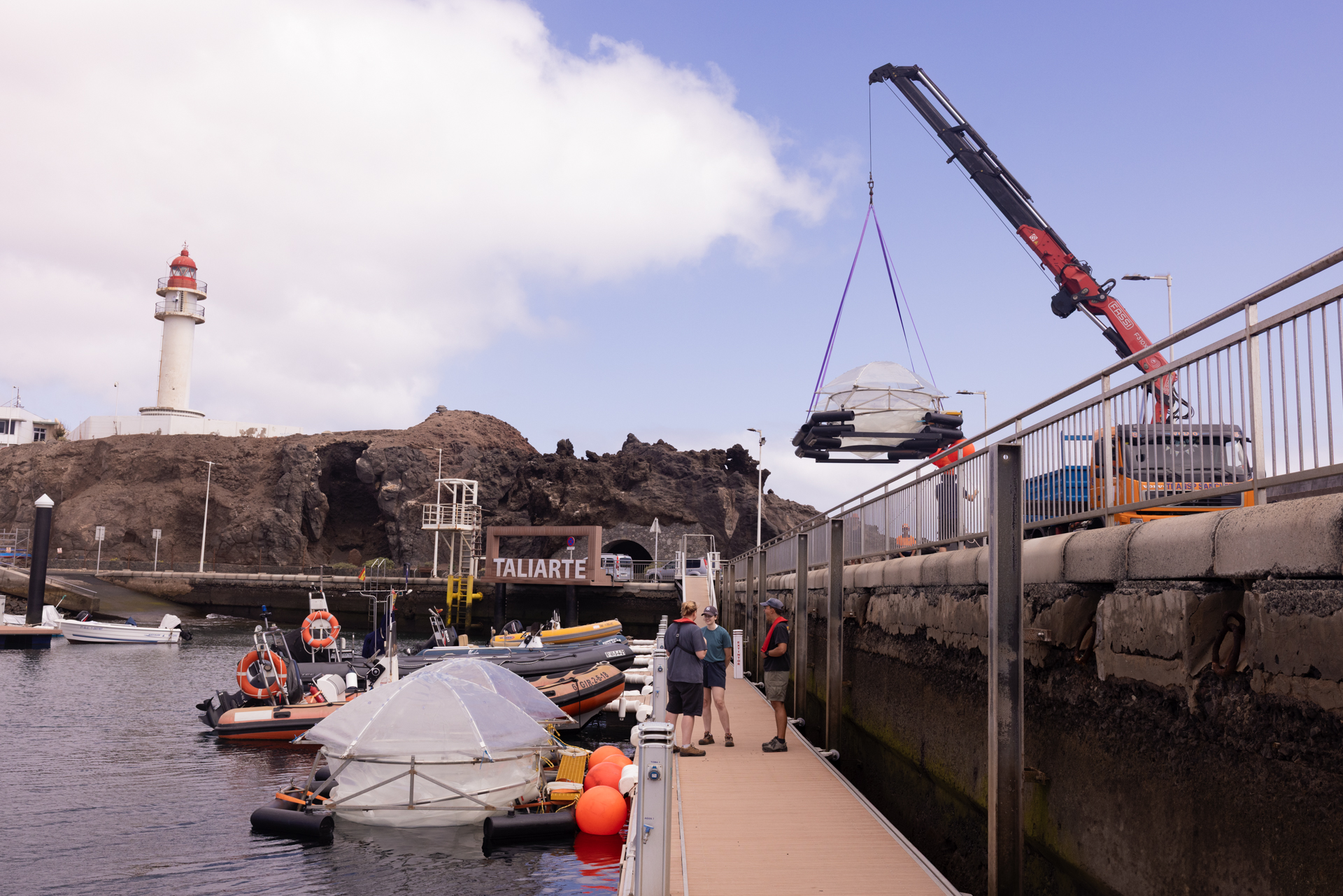
Over the next seven weeks, the small harbour of Taliarte on the east coast of Gran Canaria is set to become an open-air laboratory once again. An international research team will conduct the first-ever tests to determine whether concrete rubble is suitable for increasing the alkalinity of seawater.
Photo: Michael Sswat, GEOMAR
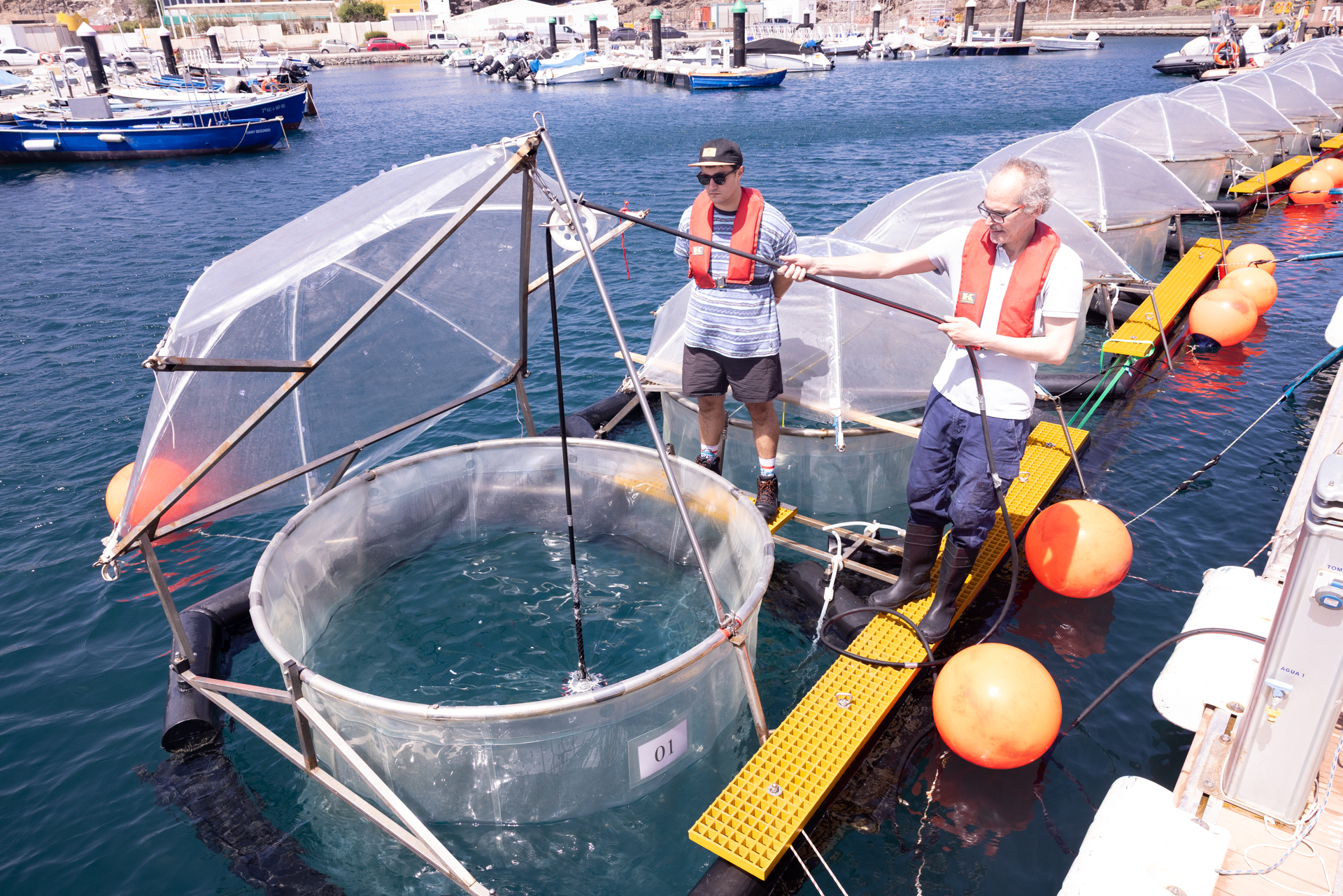
Kai Schulz and Charly Moras are carrying out the alkalinity treatment by distributing an alkaline solution using a device called 'spider' inside the mesocosm.
Photo: Michael Sswat, GEOMAR
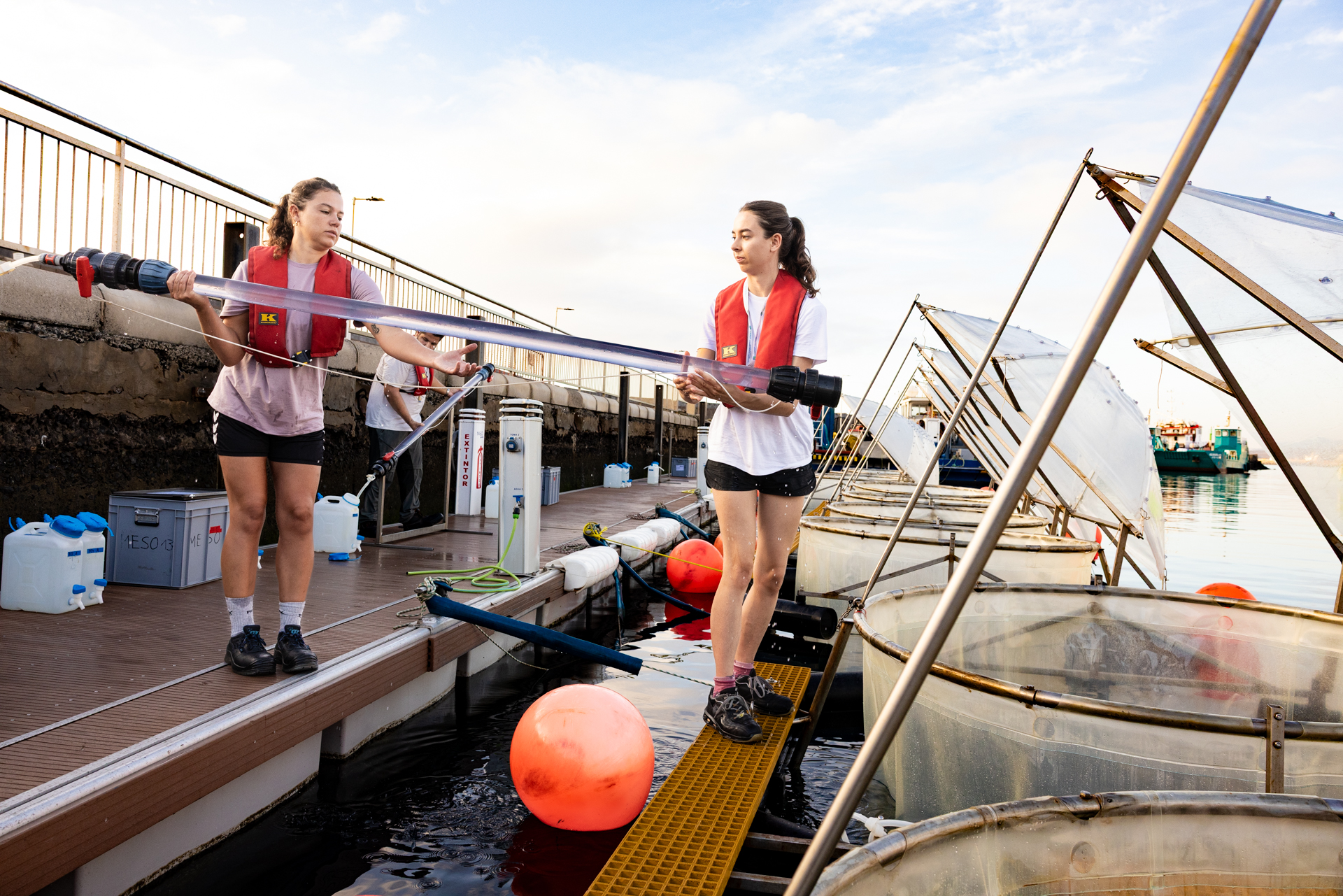
Emily Raab and Catherine Jones are sampling the mesocosms using tubes to cover the entire water column.
Photo: Michael Sswat, GEOMAR
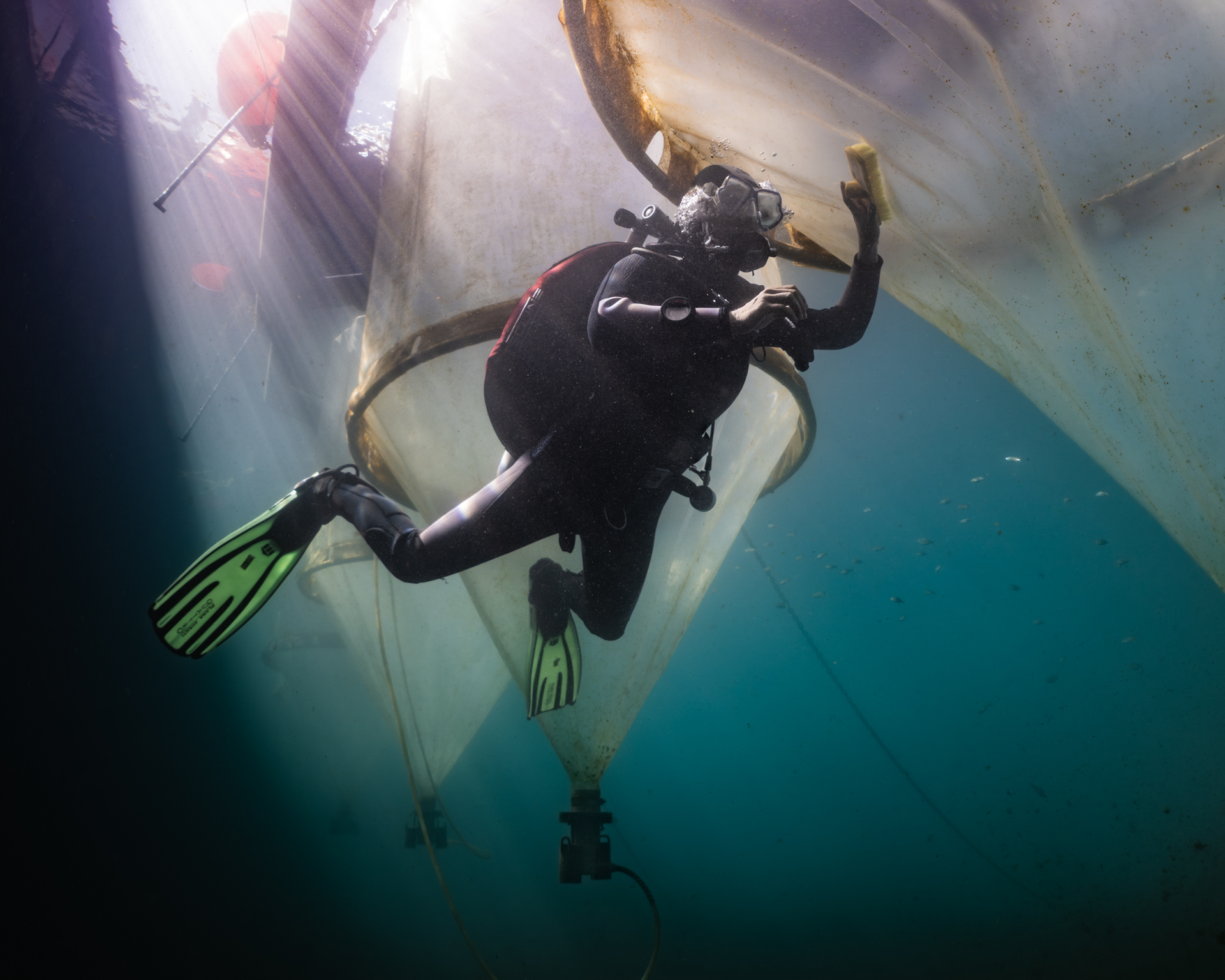
Diver Isabell Hentschel is cleaning the outside of the mesocosms to prevent shadowing caused by biofouling.
Photo: Michael Sswat, GEOMAR
Construction waste for climate protection in the ocean?
New mesocosm experiment on Gran Canaria using ground concrete demolition waste
Over the next seven weeks, the harbour of the small community of Taliarte on the east coast of Gran Canaria will become an open-air laboratory. In twelve mesocosms – giant floating test tubes closed off from the surrounding seawater – an international research team led by the GEOMAR Helmholtz Centre for Ocean Research Kiel is testing for the first time whether concrete rubble is suitable for increasing the alkalinity of seawater. Ocean Alkalinity Enhancement (OAE) mimics the process of natural rock weathering and can increase the ocean’s ability to absorb CO2 from the atmosphere.
“This year’s experiment is about comparing a liquid source of alkalinity with ground concrete rubble and assess how well both substances are tolerated by the marine environment,” explains Emeritus Prof. Dr Ulf Riebesell, a marine biologist at GEOMAR and co-lead of the experiment. The experiment forms part of the international research project OceanAlkAlign, which aims to standardise measurement and assessment methods for OAE, thereby creating a robust basis for future decisions.
An open-air laboratory at PLOCAN
It is no coincidence that the experiment is taking place in Taliarte: the Canary Islands Marine Research Institute PLOCAN (Plataforma Oceánica de Canarias), a long-standing research partner of GEOMAR, is located right by the harbour there. It is from here that the mesocosms are deployed, filled and monitored throughout the entire duration of the experiment.
Why we need CO2 removal
The idea of adding extra alkalinity to the sea forms part of a wider context. Since the start of industrialisation, the CO2 content of the atmosphere has risen sharply; a significant proportion of the gas dissolves in the ocean, altering its chemistry. The result is progressive acidification, which can put particular pressure on organisms that form calcareous structures – such as mussels or corals. At the same time, the additional CO2 is driving global warming.
According to many current scenarios, emission reductions alone will not be sufficient to achieve the targets of the Paris Agreement. Consequently, methods for active CO2 removal (Carbon Dioxide Removal, CDR) are coming to the fore. OAE is regarded as an option with high potential, provided it can be implemented effectively and in an environmentally responsible manner.
Increasing the buffer capacity of seawater
Ocean alkalisation involves increasing the buffering capacity of seawater. Put simply, this raises seawater pH which enables the ocean to absorb additional CO2 and store it in more stable dissolved forms. This is chemically straightforward; however, it remains unclear how marine ecosystems react to different sources of alkalinity, concentrations and forms of input, and where the tolerance limits lie. This is precisely where the mesocosm experiments come in: like giant test tubes, they replicate a section of the ecosystem, including planktonic food webs, microorganisms and biogeochemical processes, thereby enabling controlled comparisons.
Concrete rubble: waste with potential – and with questions
Concrete rubble is one of the largest waste streams worldwide: an estimated five billion tonnes are generated each year, and only a fraction of this has been reused to date. Because concrete contains cement, which has alkaline properties, finely ground material could, in principle, serve as a source of alkalinity. Model estimates are therefore exploring whether large quantities of CO2 could be sequestered in this way in the long term.
However, a material that appears unproblematic on land can have different effects in the sea: particles can increase turbidity or harm microorganisms, which in turn could have an impact on food webs. “A waste product does not automatically become a sustainable solution simply because it is available,” says Associate Professor Dr Kai Schulz of Southern Cross University (Australia), co-leader of the experiment. “We need data showing under what conditions OAE could be ecologically acceptable and where the limits lie.”
How the experiment works
Natural plankton communities are being observed over several weeks in the twelve mesocosms. The team is using a comparative approach: some of the systems are being fed ground concrete rubble in increasing quantities, whilst other mesocosms are treated with liquid sodium hydroxide (NaOH) as a reference for ‘pure’ alkalinity; there are also control systems with no additions.
Measurements include changes in the water’s carbon dioxide system (including pH and alkalinity), CO2 uptake, and biological parameters: the composition and productivity of phytoplankton, zooplankton responses, microbial processes, and indications of shifts in the food web. This enables both the effectiveness and any potential side effects along the food chain to be assessed.
Objective: to define a ‘safe operating space’
The results from Taliarte are intended to help determine threshold values: which dosages alter the water chemistry in the desired way – and at what point do ecological effects become apparent? What differences are evident between solid particles and dissolved alkalinity? And how can findings from laboratory, mesocosm and field studies be combined in such a way that they serve as a sound scientific basis for decision-making? “Understanding before scaling up – that is the crux of the matter,” emphasises Schulz. “If OAE is ever to be discussed on a larger scale, it must be based solely on transparent data regarding benefits and risks.”
About: KOSMOS Mesocosms
Since 2006, GEOMAR has been using its self-developed “Kiel Off-Shore Mesocosms for Future Ocean Simulations” (KOSMOS) to investigate questions of ocean change under realistic conditions. In 23 experiments to date, the focus has included ocean acidification, warming, nutrient dynamics and potential countermeasures such as artificial upwelling or various OAE approaches.
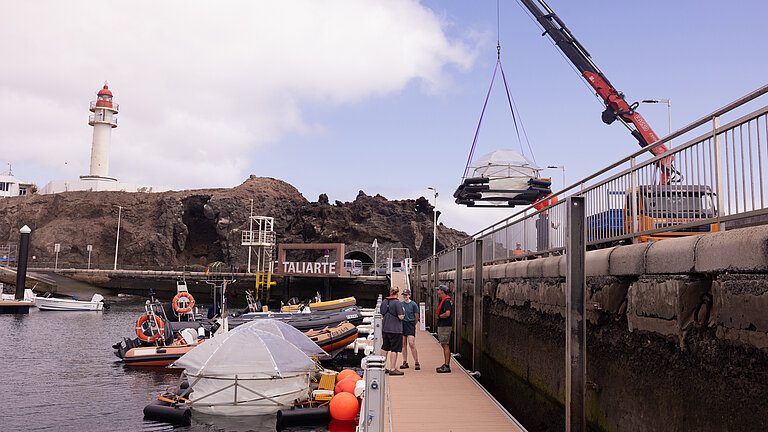
Over the next seven weeks, the small harbour of Taliarte on the east coast of Gran Canaria is set to become an open-air laboratory once again. An international research team will conduct the first-ever tests to determine whether concrete rubble is suitable for increasing the alkalinity of seawater.
Photo: Michael Sswat, GEOMAR
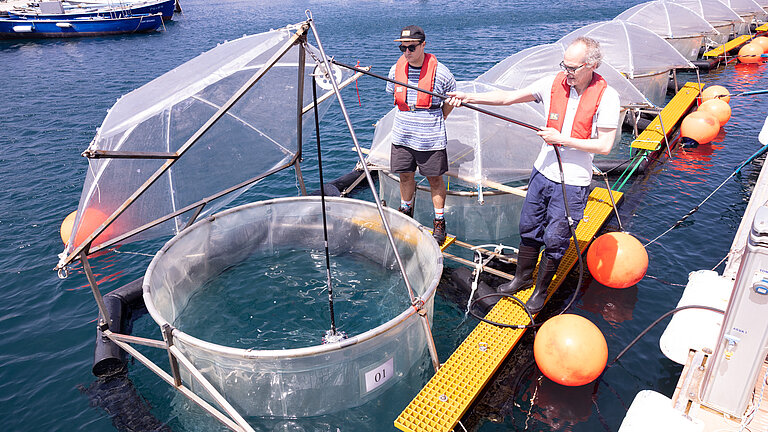
Kai Schulz and Charly Moras are carrying out the alkalinity treatment by distributing an alkaline solution using a device called 'spider' inside the mesocosm.
Photo: Michael Sswat, GEOMAR
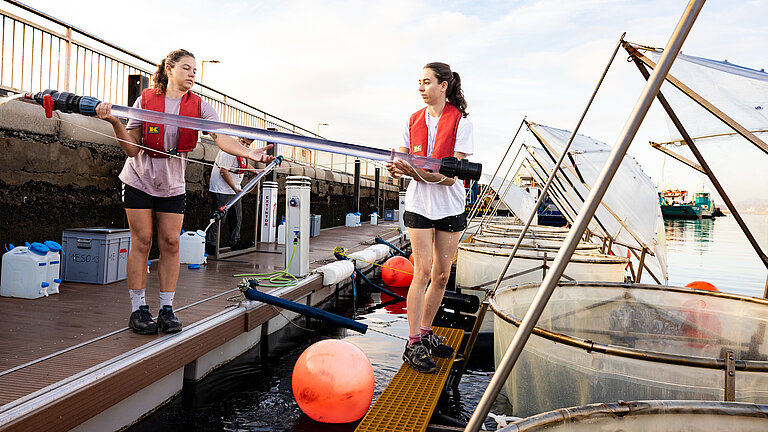
Emily Raab and Catherine Jones are sampling the mesocosms using tubes to cover the entire water column.
Photo: Michael Sswat, GEOMAR
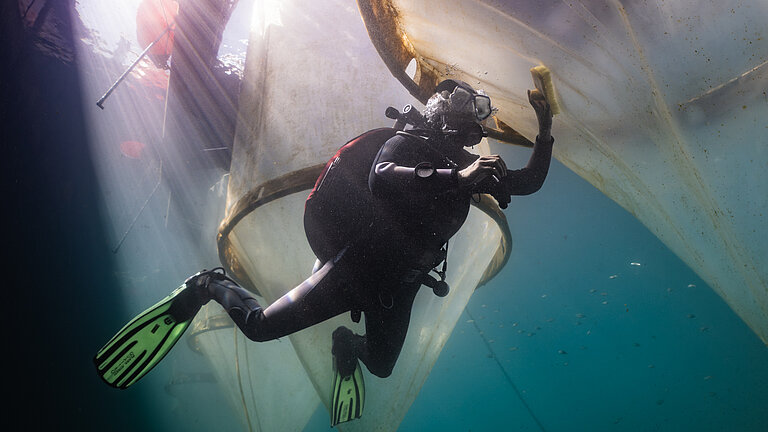
Diver Isabell Hentschel is cleaning the outside of the mesocosms to prevent shadowing caused by biofouling.
Photo: Michael Sswat, GEOMAR