
Anna Niewerth
Phone: +49 (0) 431 600 2812
E-Mail: aniewerth(at)geomar.de
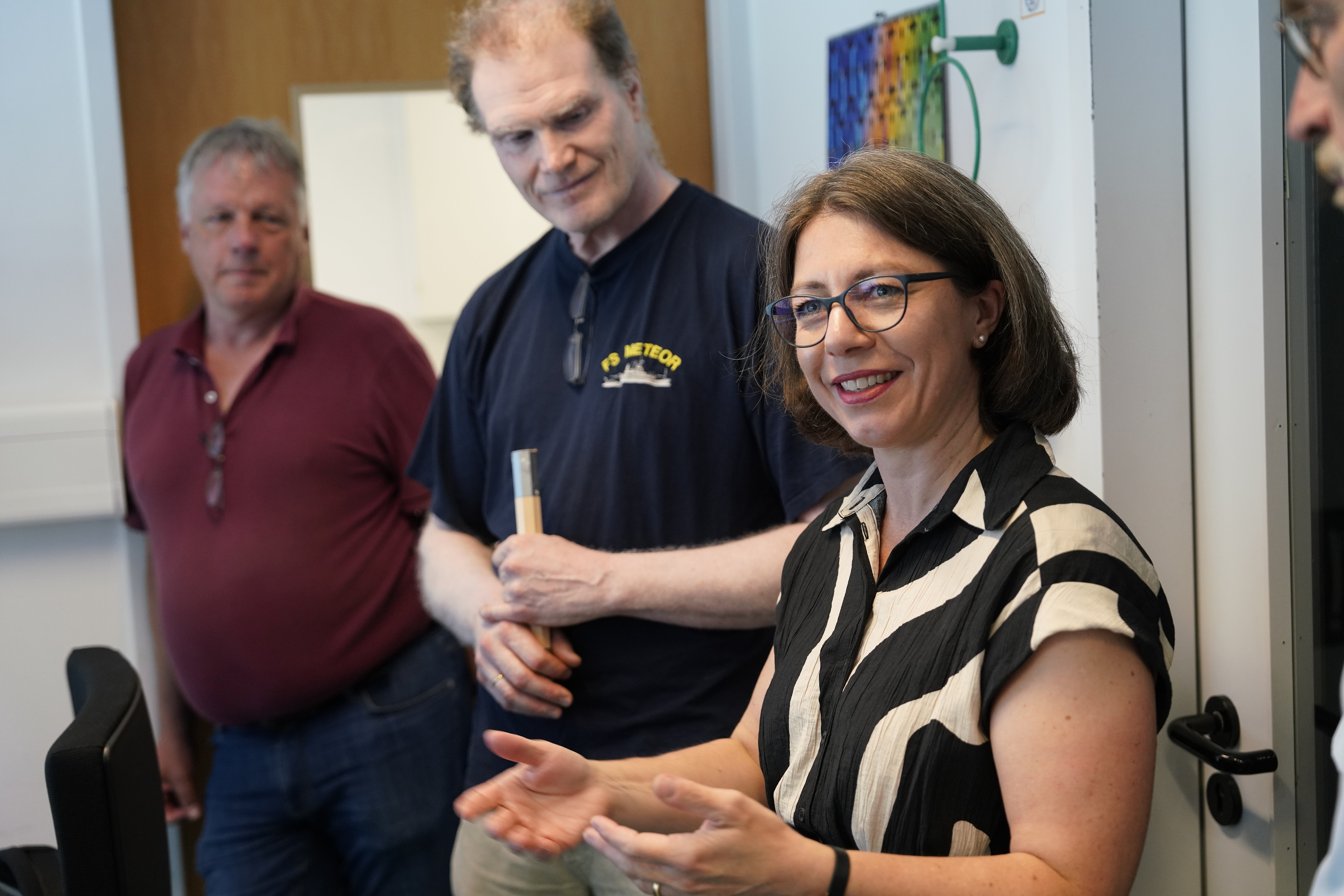
Director Prof. Dr Katja Matthes (right) officially opens the new microprobe laboratory together with Prof. Dr Colin Devey (left) and Dr Steffen Kutterolf (centre).
Photo: Ann Kristin Montano, GEOMAR
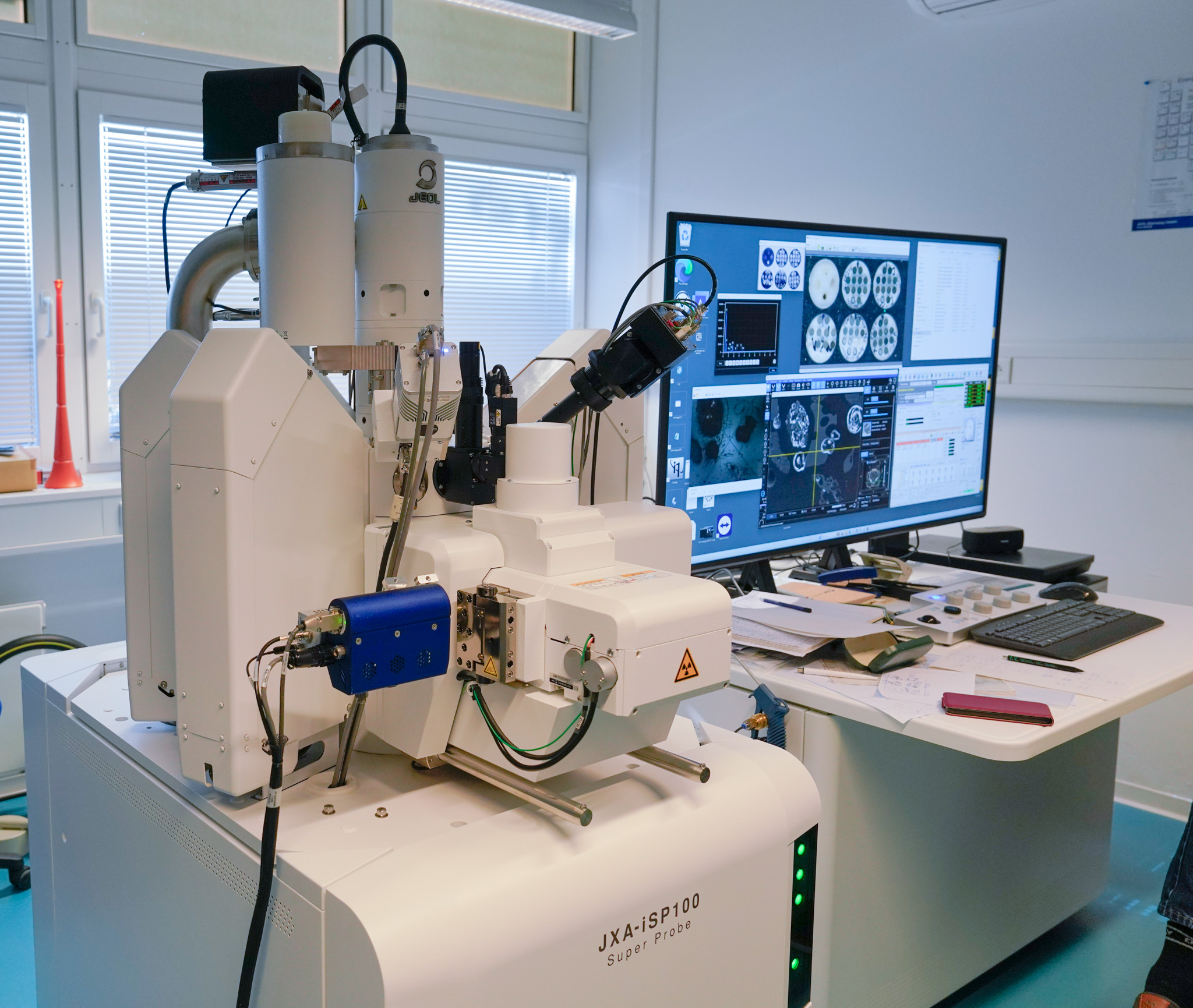
The new JEOL JXA-iSP100 electron microprobe enables precise analysis of the chemical composition of geological and biological materials.
Photo: Pia Steinke, GEOMAR
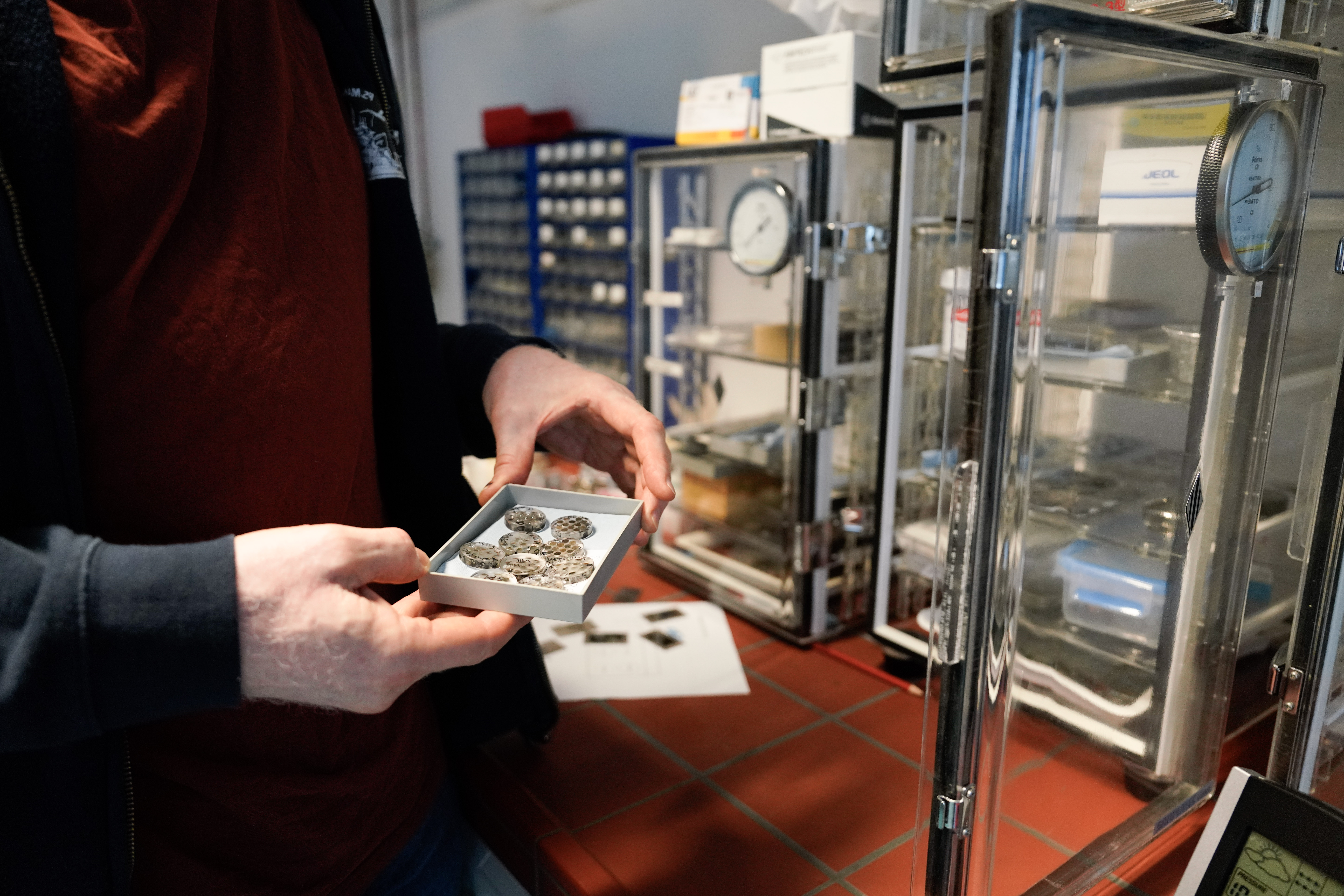
For the analysis, the samples are embedded in epoxy resin and polished.
Photo: Pia Steinke, GEOMAR
Deciphering the Ocean’s Traces with a New Microprobe
The new electron microprobe enables more precise analyses of volcanic material, ores and marine organisms
With the new microprobe, the GEOMAR Helmholtz Centre for Ocean Research Kiel now has an analytical system that measures chemical compositions with unprecedented precision. Compared with its predecessor, acquired in 2005, the new technology now enables measurements at the nanoscale, with significantly greater precision than before. This makes it possible, for example, to reliably characterise glass fragments measuring just 50 micrometres in size from volcanic ash dating back several million years. GEOMAR Director Prof. Dr Katja Matthes emphasises: “The new electron microprobe is an enormous asset to our entire institute. It opens up new possibilities for many departments to investigate materials and processes in the ocean more precisely and reliably than ever before.”
Marine Archives
After 20 years of continuous operation under the leadership of PD Dr Thor Hansteen, the workhorse of the ‘Magmatic and Hydrothermal Systems’ department was replaced at the end of 2025 by a latest-generation electron microprobe. With the new instrument in place, responsibility for the laboratory has now been handed over to PD Dr Steffen Kutterolf, supported by laboratory technician Mario Thöner.
Kutterolf is currently using the instrument to examine volcanic ash from Santorini in the Aegean Sea. These are deposits on the seabed dating back 2–3 million years. Such sediments preserve glass fragments and metal compounds, serving as archives of Earth’s and the ocean’s history. “Eruption products are better preserved in the sea than on land, where they can only be traced back a few hundred to a thousand years. We want to know specifically how long Santorini has actually been active,” says Kutterolf. Until now, the assumption was 500,000 years, but the researchers now estimate an age of at least one million years.
Analyses such as these can provide insights into when a volcano erupted in the past. From this, predictions about future activity can also be derived.
Versatile Applications
The microprobe is used in a wide variety of specialist fields. Biologists, for example, analyse mussels, corals or so-called otoliths. These are the ear stones of fish, in which material is deposited in layers over the course of their lives. The individual ‘growth rings’ thus reflect the prevailing environmental conditions at the time. Chemical analysis makes it possible to retrace, in retrospect, the habitats a fish has passed through – for instance, if it has migrated from the less salty waters of the Baltic Sea to the North Sea, on to the Atlantic and later back to the Baltic Sea.
The Chemical Fingerprint
In order to identify individual chemical elements in a sample, a fine electron beam is generated in the microprobe and focused onto the surface in question. The beam ejects an electron from an inner shell of an atom. To fill the resulting vacancy, an electron from the next higher shell jumps into its place. X-rays are emitted during this transition. The energy, or wavelenght of these X-rays is specific to each element. In the newly acquired electron microprobe, the intensities of the corresponding X-rays are detected by five spectrometers. The concentration of the chemical elements in the sample is calculated by means of comparative measurements using standard materials.
This allows the chemical composition of the sample to be clearly described and, for example, used as a chemical ‘fingerprint’ in the case of volcanic particles. For marine samples of unknown origin, this ‘fingerprint’ can be used to attribute the sample to specific volcanic eruptions.
Director Prof. Dr Katja Matthes (right) officially opens the new microprobe laboratory together with Prof. Dr Colin Devey (left) and Dr Steffen Kutterolf (centre).
Photo: Ann Kristin Montano, GEOMAR
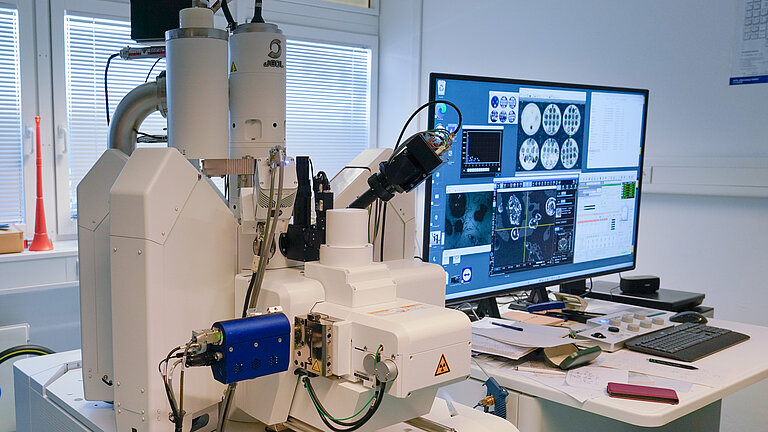
The new JEOL JXA-iSP100 electron microprobe enables precise analysis of the chemical composition of geological and biological materials.
Photo: Pia Steinke, GEOMAR
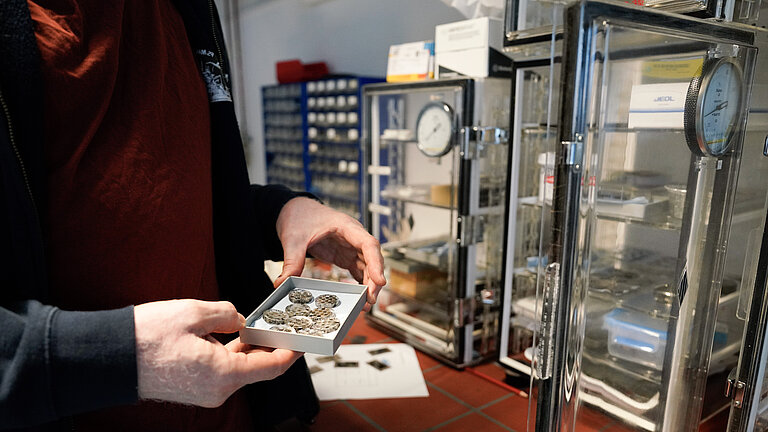
For the analysis, the samples are embedded in epoxy resin and polished.
Photo: Pia Steinke, GEOMAR