
Many visitors were delighted to have the opportunity to take a look behind the scenes of marine research at GEOMAR’s Open Day.
Photo: Pia Steinke, GEOMAR

Open Ship on the ALKOR: Just one day before setting off on a two-week voyage to the Baltic Sea, the ship's officers and scientists gave around 2,000 guests the opportunity to experience first-hand how a research vessel is prepared for an expedition.
Photo: Pia Steinke, GEOMAR

In the large assembly hall, model makers had set up tanks for their remote-controlled underwater vehicles. Here, anyone could try their hand at being an ROV (remotely operated vehicle) pilot.
Photo: Julia Gehringen, GEOMAR

The screen-printing station was a big hit with visitors. Here, people could design their own GEOMAR bag featuring marine motifs.
Photo: Julia Gehringer, GEOMAR

At GEOMAR’s training stand, visitors could find out about apprenticeship opportunities at the research centre.
Photo: Julia Gehringer, GEOMAR

The workshops were open to the public, showcasing GEOMAR's development and construction of customised marine research technology and laboratory solutions.
Photo: Julia Gehringer, GEOMAR

In the large assembly hall, large-scale equipment is stored, maintained and prepared for expeditions. During the Open Day, visitors could learn about the challenges of conducting research in extreme conditions and how they are tackled.”
Photo: Julia Gehringer, GEOMAR

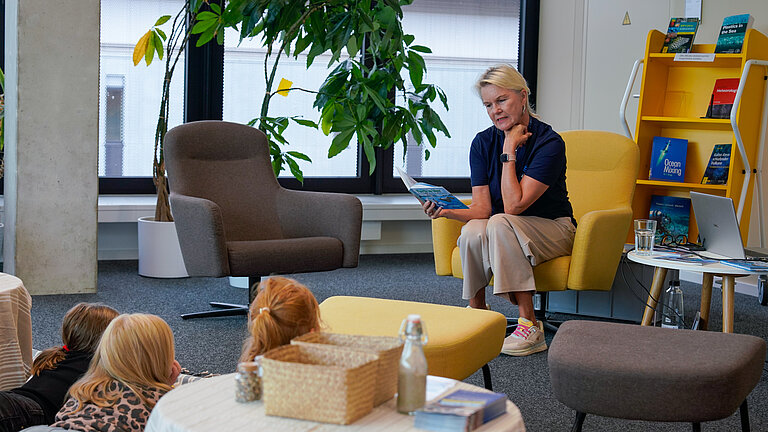
The marine science library, with its story time corner for children, provided a cosy retreat during the Open Day.
Photo: Julia Gehringer, GEOMAR

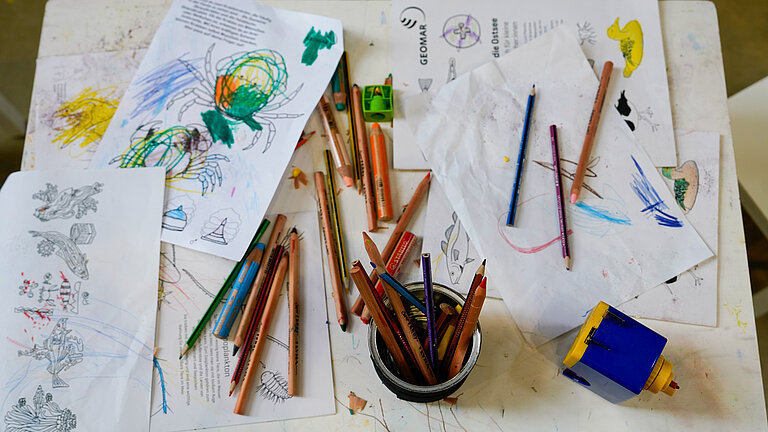
Creative corner for children: colouring in pictures on the theme ‘A glimpse of the Baltic Sea’.
Photo: Lena Petermann, GEOMAR

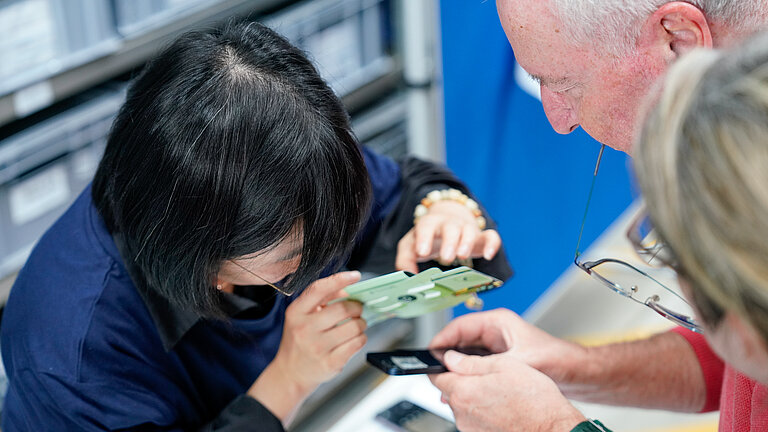
A foldable microscope for viewing specimens with a mobile phone: the so-called Foldscope was developed to support field research in countries with limited infrastructure and is now also used in schools around the world.
Photo: Julia Gehringer, GEOMAR

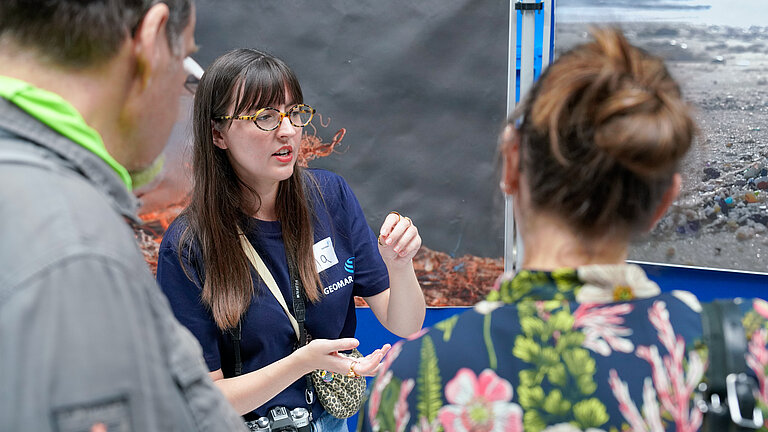
A short workshop on microplastics highlighted the global problem of plastic pollution.
Photo: Julia Gehringer, GEOMAR

A lively atmosphere in the Lithothek: information stands offered hands-on experiments on phytoplankton, microplastics in the ocean and earthquakes.
Photo: Julia Gehringer, GEOMAR

The ROV HEIN provided live footage of visitors to the Lithotheque.
Photo: Julia Gehringer, GEOMAR

What geological conditions are required to safely and permanently store carbon dioxide under the sea? Visitors to the open day were able to find out more about this.
Photo: Julia Gehringer, GEOMAR

High nitrate levels in spring: Lasse Hilscher from GEOMAR’s Friday Research Club presented the results of his nutrient measurements in the River Schwentine.
Photo: Lena Petermann, GEOMAR

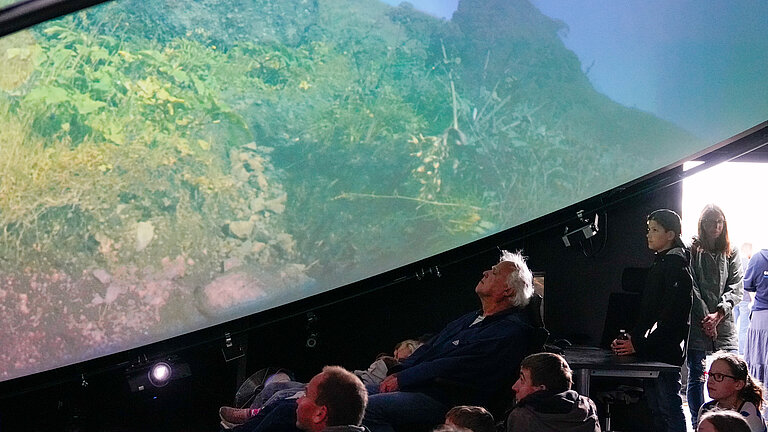
3D cinema could be experienced in the ARENA dome, where visitors could lie back and take a virtual dive to the seafloor.
Photo: Julia Gehringer, GEOMAR

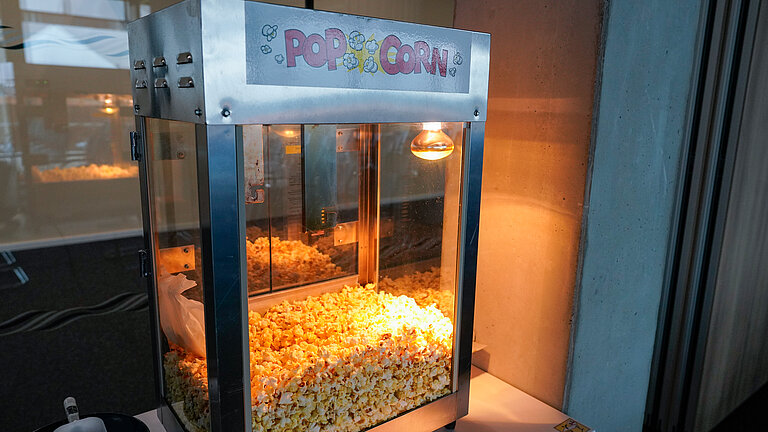
An unusual scent wafted through GEOMAR’s new building during the Open Day: fresh popcorn brought a cinema atmosphere to the conference area.
Photo: Julia Gehringer, GEOMAR

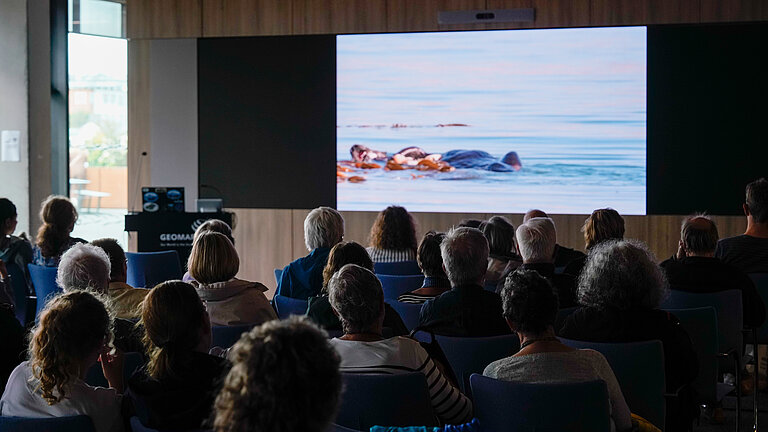
Cinema in collaboration with the ocean film festival Cinemare: three programmes of short and documentary films were screened.
Photo: Julia Gehringer, GEOMAR

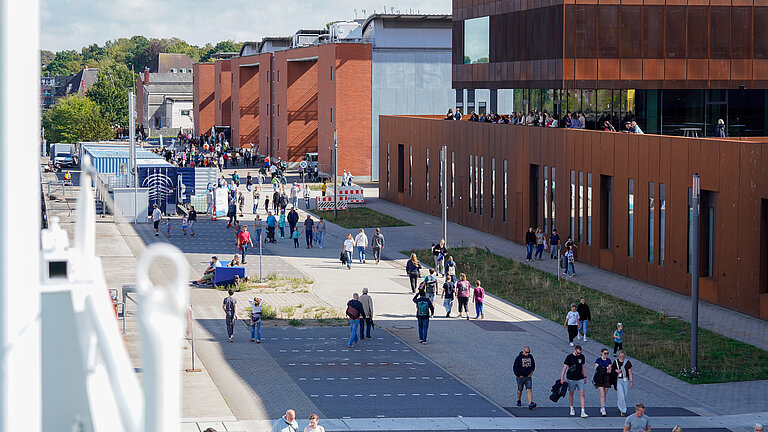
View of the GEOMAR campus from the ship: on Sunday, the doors of several buildings at the research centre were open to visitors.
Photo: Lena Petermann, GEOMAR

Scientific talks in the lecture theatre covered topics such as light pollution, munitions, medicinal compounds from the sea, and the question of how nutrient limitations in microalgae can be detected from space.
Photo: Julia Gehringer, GEOMAR
Behind the Scenes of Marine Research
GEOMAR Open Day 2026
Just one day before the crew set off on a two-week cruise in the Baltic Sea, ship’s officers and GEOMAR researchers gave around 2,000 visitors the opportunity to experience how a research vessel is prepared for an expedition. ALKOR lowered its gangway, and visitors could pack their own “expedition crate”, learn about scientific work in the onboard labs, and find out what life at sea is like during a cruise.
Workshops, Training and Deep-Sea Technology
Onshore, the doors of several buildings across the research centre were open. In the metal workshop, carpentry shop and grinding shop, visitors could get a taste of day-to-day workshop work. Nearby, GEOMAR’s apprentices provided information about training opportunities at the centre. In the large assembly hall, dedicated model-makers once again set up pools for their meticulously built remote-controlled underwater vehicles. Guests of all ages were even able to try their hand at piloting an ROV (remotely operated vehicle). Marine research technology such as autonomous underwater gliders and moorings for long-term observations was also on display, along with a showcase of items that did not come back from deep-sea deployments unscathed—an impressive reminder of the extreme conditions oceanographic equipment must withstand.
Along the banks of the River Schwentine, visitors could learn about research on Sargassum mats and watch excerpts from the Ocean Crew’s acrobatic musical “Unter Wasser” (“Underwater”). In the warehouse known as the “Lithothek”, a paper foldable microscope that works with a smartphone—the Foldscope—was presented. Originally developed to enable field research and hands-on science education in places with limited infrastructure, Foldscopes are now used worldwide. Other stands offered hands-on activities on phytoplankton, microplastics in the ocean and earthquakes.
Virtual Dives and Expedition Cinema
Visitors could also experience 3D cinema in the ARENA dome, reclining while taking a virtual dive to the seafloor. In GEOMAR’s new building, the unusual smell of popcorn led the way to the “Expedition Cinema”, where three programmes of short films and documentaries were screened in collaboration with the CINEMARE marine film festival.
Many visitors also enjoyed the chance to step behind the scenes on guided tours of laboratories, the seawater supply facility and the sediment core storage facility. A particular crowd favourite was the screen-printing station in the foyer of Building 8, where visitors could design their own GEOMAR tote bag with marine motifs. The programme was complemented by story-reading and art stations for children, as well as background information on the collaborative project ‘Surfacing the Unseen’. As part of the project, GEOMAR researchers, primary school pupils from Gaarden and the artist Marina Friedrich created the large, colourful mural at the entrance to the Seefischmarkt.
Current Topics in Marine Research
Of course, an open day at a research centre would not be complete without scientific talks. In the lecture theatre, many visitors heard about current findings on topics such as light pollution, sea-dumped munitions, medicinal compounds from the ocean, and how nutrient limitation in microalgae can be detected from space.
We would like to thank everyone who helped make the day possible — and all visitors who came through GEOMAR’s open doors. We hope they went home with new impressions, a few “aha” moments and some handmade souvenirs.
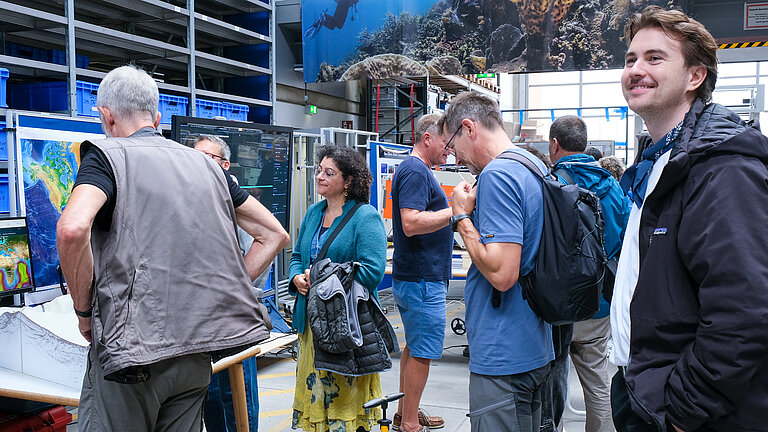
Many visitors were delighted to have the opportunity to take a look behind the scenes of marine research at GEOMAR’s Open Day.
Photo: Pia Steinke, GEOMAR
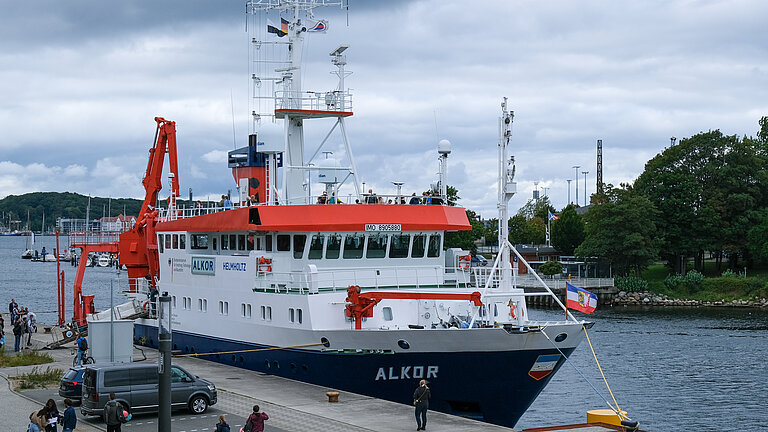
Open Ship on the ALKOR: Just one day before setting off on a two-week voyage to the Baltic Sea, the ship's officers and scientists gave around 2,000 guests the opportunity to experience first-hand how a research vessel is prepared for an expedition.
Photo: Pia Steinke, GEOMAR
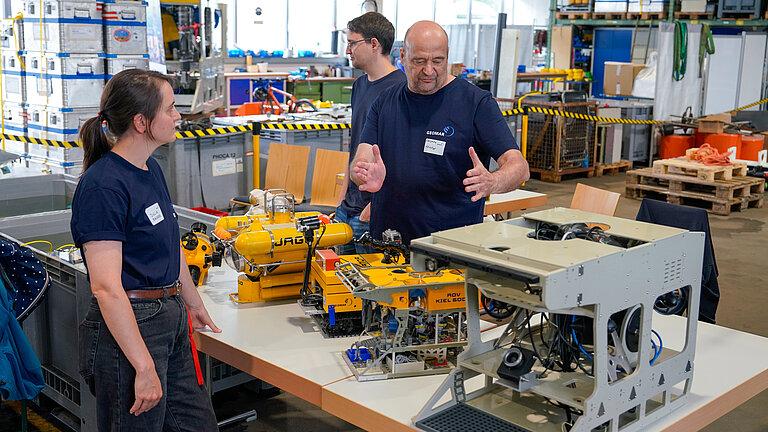
In the large assembly hall, model makers had set up tanks for their remote-controlled underwater vehicles. Here, anyone could try their hand at being an ROV (remotely operated vehicle) pilot.
Photo: Julia Gehringen, GEOMAR
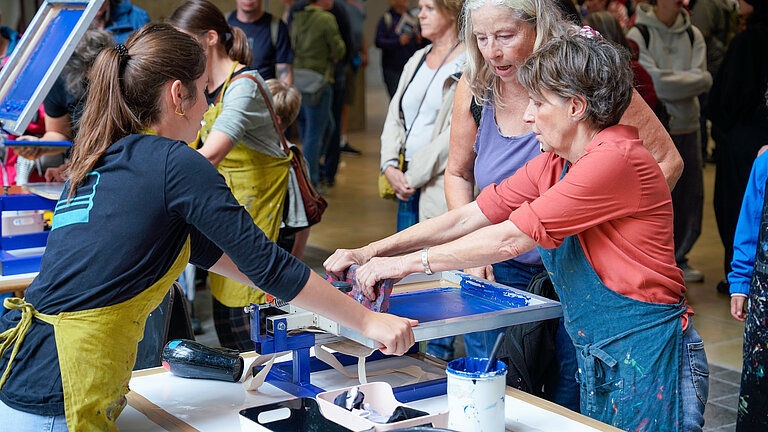
The screen-printing station was a big hit with visitors. Here, people could design their own GEOMAR bag featuring marine motifs.
Photo: Julia Gehringer, GEOMAR
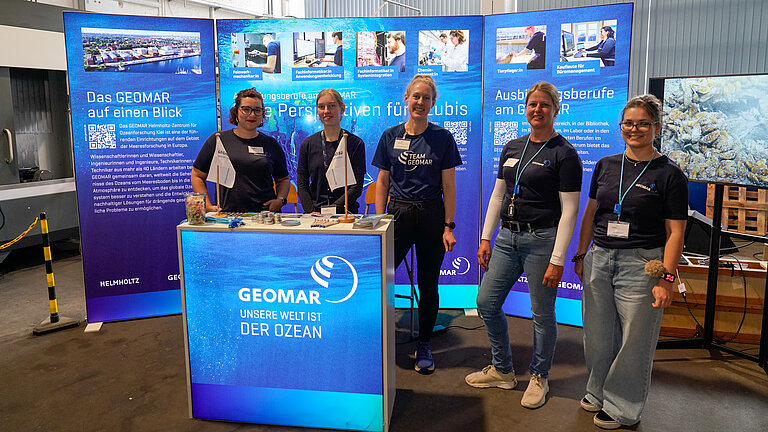
At GEOMAR’s training stand, visitors could find out about apprenticeship opportunities at the research centre.
Photo: Julia Gehringer, GEOMAR
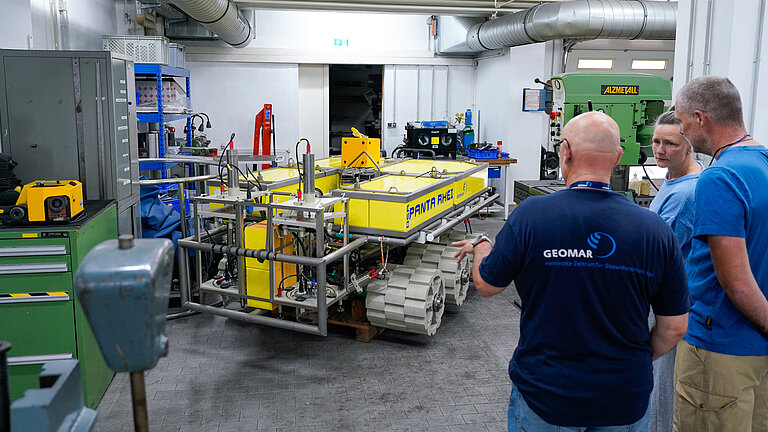
The workshops were open to the public, showcasing GEOMAR's development and construction of customised marine research technology and laboratory solutions.
Photo: Julia Gehringer, GEOMAR
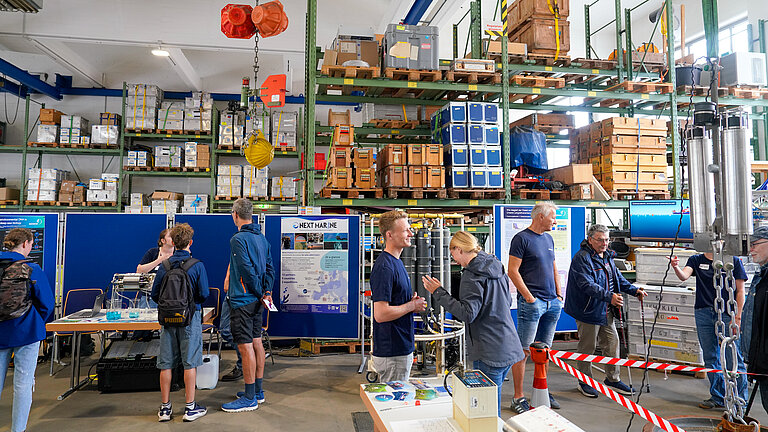
In the large assembly hall, large-scale equipment is stored, maintained and prepared for expeditions. During the Open Day, visitors could learn about the challenges of conducting research in extreme conditions and how they are tackled.”
Photo: Julia Gehringer, GEOMAR
The marine science library, with its story time corner for children, provided a cosy retreat during the Open Day.
Photo: Julia Gehringer, GEOMAR
Creative corner for children: colouring in pictures on the theme ‘A glimpse of the Baltic Sea’.
Photo: Lena Petermann, GEOMAR
A foldable microscope for viewing specimens with a mobile phone: the so-called Foldscope was developed to support field research in countries with limited infrastructure and is now also used in schools around the world.
Photo: Julia Gehringer, GEOMAR
A short workshop on microplastics highlighted the global problem of plastic pollution.
Photo: Julia Gehringer, GEOMAR
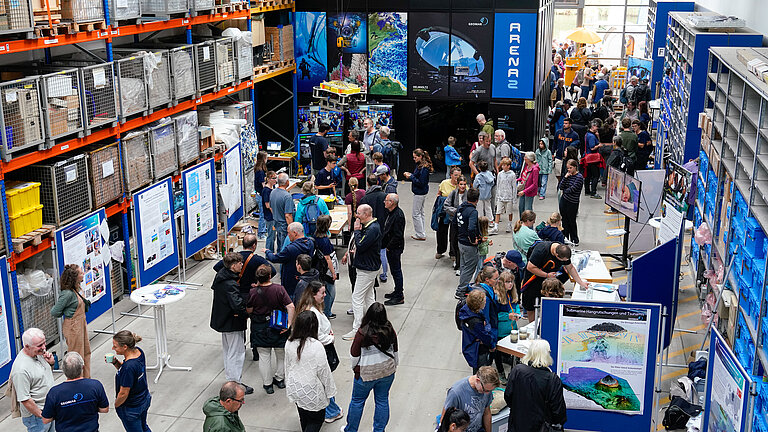
A lively atmosphere in the Lithothek: information stands offered hands-on experiments on phytoplankton, microplastics in the ocean and earthquakes.
Photo: Julia Gehringer, GEOMAR
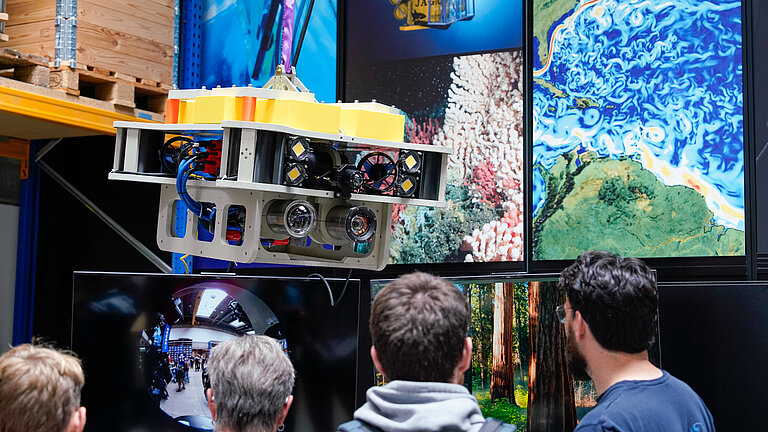
The ROV HEIN provided live footage of visitors to the Lithotheque.
Photo: Julia Gehringer, GEOMAR
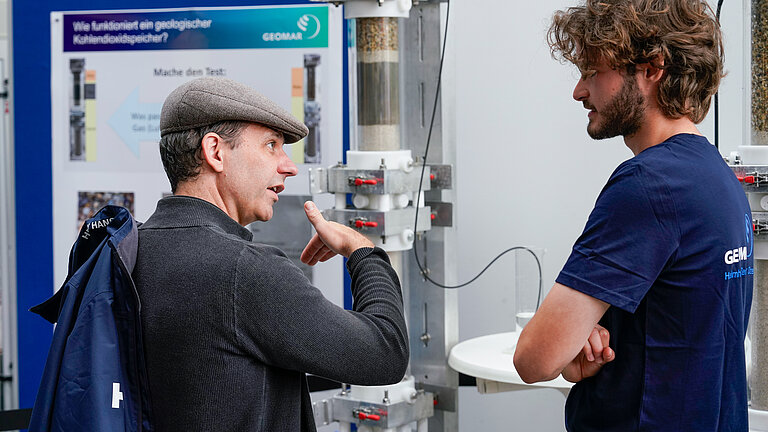
What geological conditions are required to safely and permanently store carbon dioxide under the sea? Visitors to the open day were able to find out more about this.
Photo: Julia Gehringer, GEOMAR
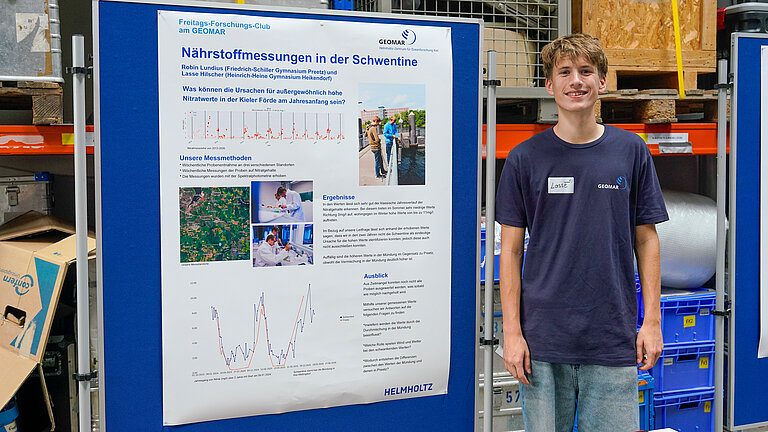
High nitrate levels in spring: Lasse Hilscher from GEOMAR’s Friday Research Club presented the results of his nutrient measurements in the River Schwentine.
Photo: Lena Petermann, GEOMAR
3D cinema could be experienced in the ARENA dome, where visitors could lie back and take a virtual dive to the seafloor.
Photo: Julia Gehringer, GEOMAR
An unusual scent wafted through GEOMAR’s new building during the Open Day: fresh popcorn brought a cinema atmosphere to the conference area.
Photo: Julia Gehringer, GEOMAR
Cinema in collaboration with the ocean film festival Cinemare: three programmes of short and documentary films were screened.
Photo: Julia Gehringer, GEOMAR
View of the GEOMAR campus from the ship: on Sunday, the doors of several buildings at the research centre were open to visitors.
Photo: Lena Petermann, GEOMAR
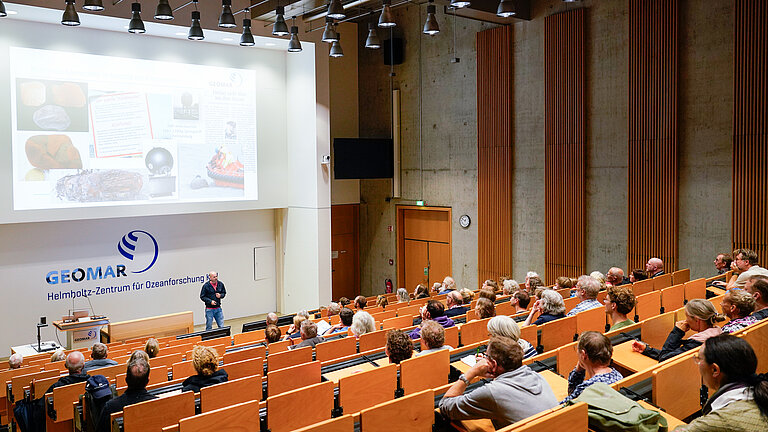
Scientific talks in the lecture theatre covered topics such as light pollution, munitions, medicinal compounds from the sea, and the question of how nutrient limitations in microalgae can be detected from space.
Photo: Julia Gehringer, GEOMAR