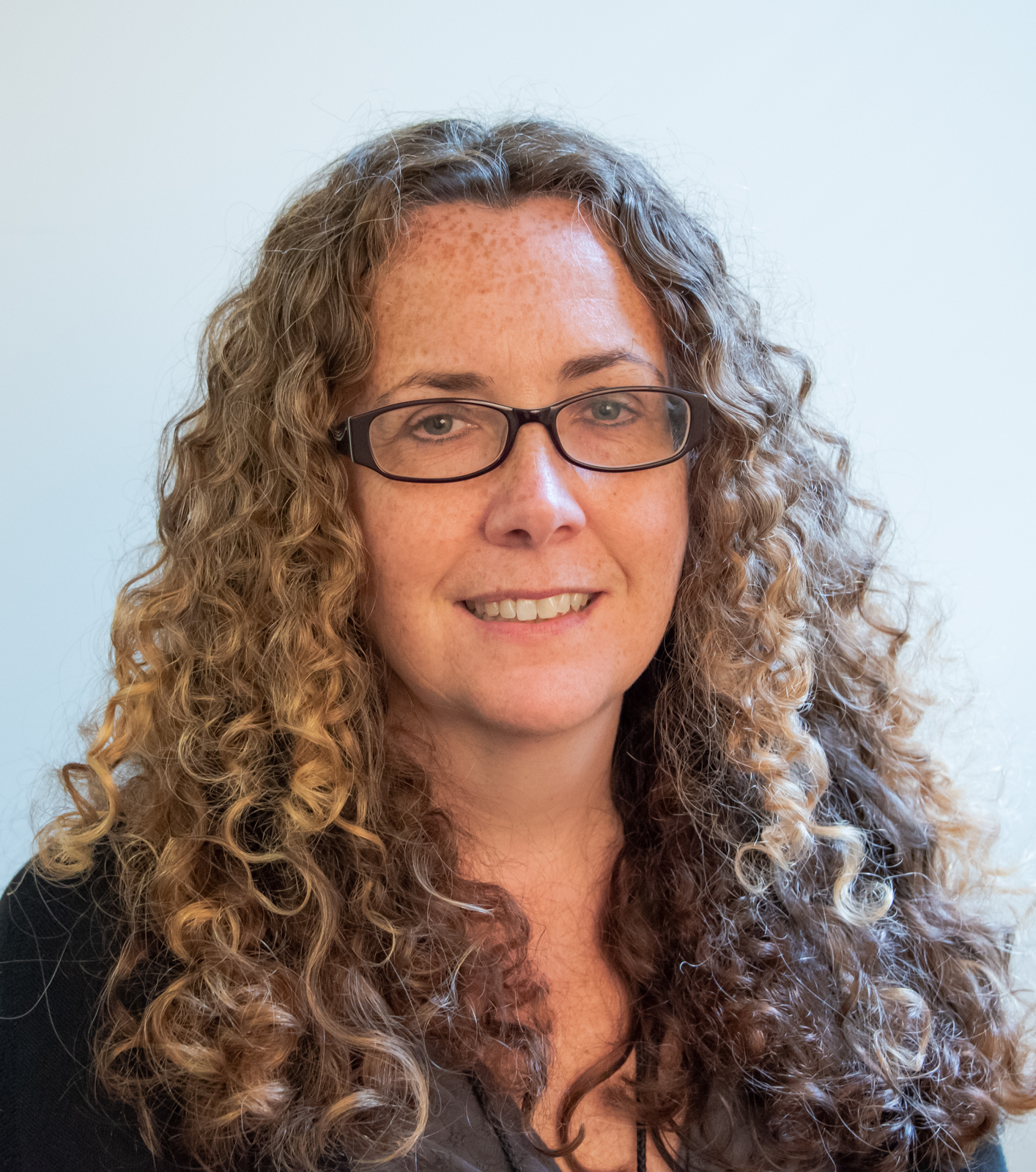
Since 2023, Professor Dr Laura Wallace has held a Helmholtz Distinguished Professorship in Geodynamics. She has now been appointed Fellow of the American Geophysical Union.
Photo: GEOMAR
Professor Dr Laura Wallace named Fellow of the American Geophysical Union
GEOMAR Helmholtz Distinguished Professor honoured for pioneering research on slow slip and plate-boundary deformation
Wallace is honoured for her sustained contributions to tectonics, particularly her work on deformation processes at subduction zones and slow slip events. Her research combines geodetic measurements, seafloor observations, scientific ocean drilling and long-term monitoring to better understand how tectonic plate boundaries behave throughout the earthquake cycle.
Slow earthquakes, measured over weeks instead of seconds
Most people experience earthquakes as sudden events, if they feel them at all. Beneath the seafloor and along tectonic plate boundaries, however, parts of Earth’s crust can also move in a much slower way: over days, weeks or even years. These processes are known as slow slip events. They are similar to earthquakes because movement occurs along a fault, but unlike earthquakes they usually release energy too gradually to be felt directly at the surface.
Understanding slow slip is important because it has changed how researchers think about fault motion and earthquake generation. The first slow slip events were identified in Japan and Cascadia in the early 2000s using permanent GPS networks that can detect mm-level changes in the movement of the land. Wallace detected comparable events in New Zealand soon afterwards, in 2002, and was among the first researchers to recognise that shallow slow slip events at subduction zones, at depths of less than 15 kilometres, can occur episodically, similar to events already observed over 30 kilometres deep along plate boundaries.
“I am really honored and surprised to receive this recognition from the scientific community. I also want to acknowledge the contributions by dozens of colleagues I have worked with over the years, who also helped make a career in science so rewarding and fun”, says Laura Wallace.
A career focused on moving plate boundaries
Wallace uses geodetic methods to study how Earth’s crust deforms at tectonic plate boundaries. These methods can detect very small changes in position and elevation, including movements of only a few centimetres. Her research has taken her to subduction zones around the circum-Pacific including New Zealand, Papua New Guinea, the Solomon Islands and Japan.
A central focus of her work is understanding the earthquake cycle at subduction zones. Subduction zones are regions where one tectonic plate dives beneath another. They generate the largest earthquakes and tsunamis on earth and are responsible for over 80% of the world’s earthquake energy release. Slow slip events add an important layer of complexity: they show that faults do not move only through steady creep or sudden earthquakes, but through a wider spectrum of deformation processes.
In 2014, she led the Hikurangi Ocean Bottom Investigation of Tremor and Slow Slip (HOBITSS) experiment. The experiment was the first to successfully use seafloor pressure sensors to resolve slow slip events at an offshore subduction zone. It demonstrated that centimetre-scale vertical displacement of the seabed during a slow slip event can be detected beneath the deep sea.
In 2018, Wallace co-led International Ocean Discovery Program (IODP) Expedition 375 aboard the scientific drilling vessel JOIDES Resolution. The expedition investigated slow slip processes at New Zealand’s Hikurangi subduction zone. Researchers collected rock cores and geophysical logs from material involved in slow slip events and installed observatories beneath the seafloor to monitor changes in the crust during the slow slip cycle.
Since 2023, Wallace has held Helmholtz Distinguished Professor in Geodynamics at GEOMAR, within the Marine Geodynamics research unit. She maintains a joint affiliation with the University of Texas Institute for Geophysics.
Since 2023, Professor Dr Laura Wallace has held a Helmholtz Distinguished Professorship in Geodynamics. She has now been appointed Fellow of the American Geophysical Union.
Photo: GEOMAR