
Katja Matthes, Director of GEOMAR, and Marc Petrikowski, captain of the ALKOR, welcomed Dorit Stenke, Schleswig-Holstein’s Minister for Education, who came on board the research vessel to see how environmental education can be put into practice (from left to right).
Photo: Sarah Uphoff, GEOMAR

Pupils from the Friday Research Club at GEOMAR and Schloss Plön Grammar School are preparing for their day trip aboard the research vessel ALKOR, during which they will carry out biological, chemical and physical experiments to investigate the state of the Baltic Sea.
Photo: Sarah Uphoff, GEOMAR

Before setting sail, Dorit Stenke, the Schleswig-Holstein Minister for Education, visited the ALKOR with Captain Marc Petrowski and Katja Mathes, the Director of GEOMAR. The minister praised the opportunity to witness science first-hand, saying that it would spark pupils' curiosity and strengthen their ability to play an active role in shaping the future.
Photo: Sarah Uphoff, GEOMAR
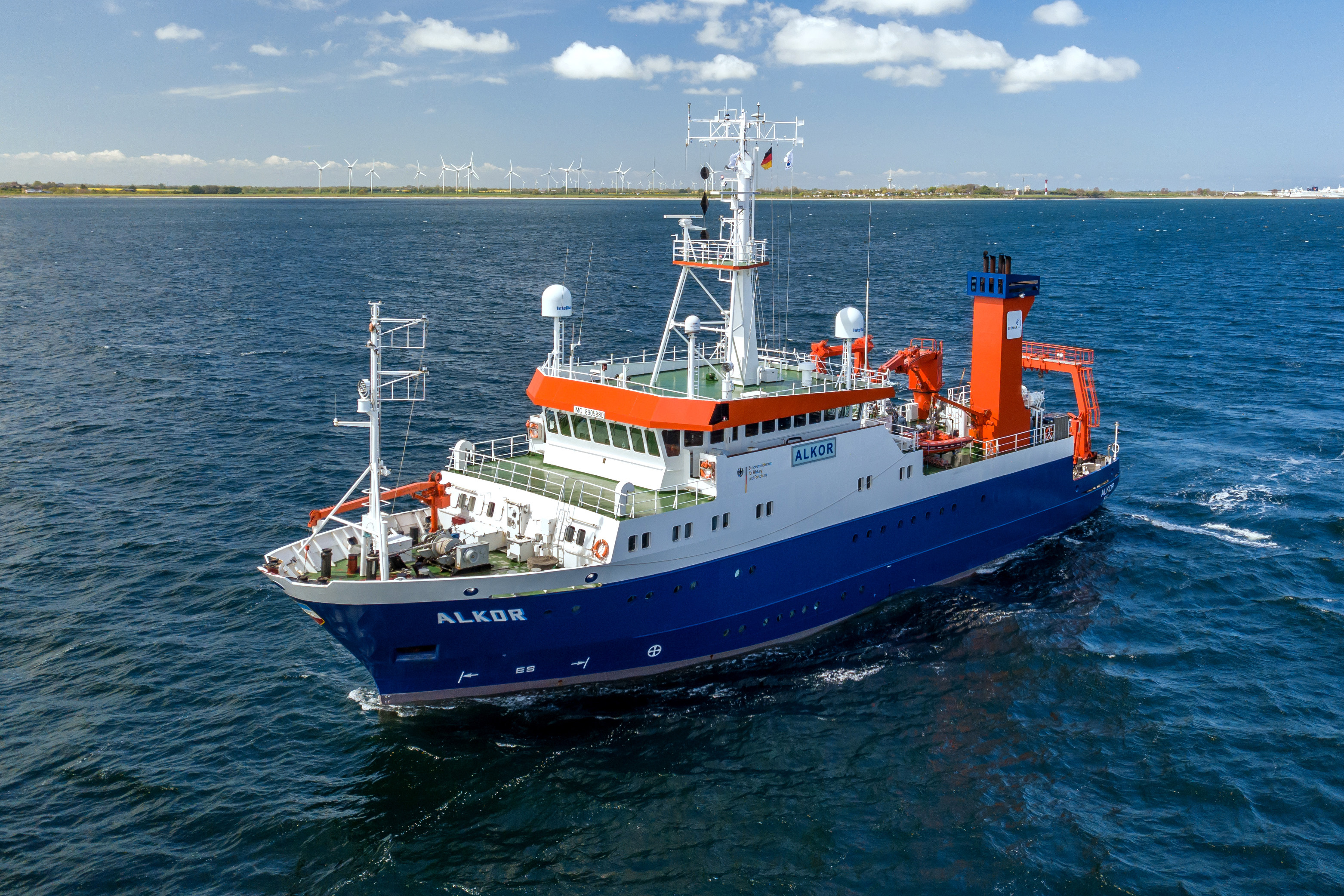
Today, pupils from the GEOMAR Friday Researchers Club and Gymnasium Schloss Plön are travelling to Boknis Eck aboard the research vessel ALKOR to learn about marine scientific research methods.
Photo: Marc Petrikowski
Minister Dr Dorit Stenke visits the ALKOR
Experiencing research, shaping the future: pupils learn about scientific work on a research vessel
Half past eight in the morning outside GEOMAR in Kiel-Wellingdorf: the ALKOR is still securely moored at the jetty. In the laboratories on board the ship, young people are setting up their scientific stations. During the day’s voyage, biological, chemical and physical experiments will be carried out to investigate the state of the Baltic Sea. The pupils had already packed equipment such as microscopes, plankton nets and photometers into large aluminium crates the week before, as a research vessel is essentially a floating platform – the laboratories are empty. You have to bring everything you need for the experiments with you.
The trip takes them to the Boknis Eck long-term observation station in Eckernförde Bay. There, the young people learn how to use the ‘workhorse of marine research’, the CTD probe. The device consists of a rosette water sampler, which can be used to take water samples from various depths, and a measuring probe that records data on conductivity, temperature and depth. In addition, plankton is collected and organisms are retrieved from the seabed using a dredge.
Around half of the pupils are already familiar with some of these methods. They regularly attend the Friday Researchers Club at GEOMAR, where they develop their own research questions and carry out experiments. The second group comes from Gymnasium Schloss Plön, which is collaborating with GEOMAR on the German-Danish Interreg project MYREcross. The project brings together schools, universities and research institutions from both countries to prepare young people for working with future technologies. As part of this, the project partners are developing teaching modules on topics such as artificial intelligence, robotics, drones and autonomous systems.
“The day trip is a great opportunity for the pupils to experience first-hand how scientific findings are generated and how they can help to develop solutions to societal and environmental challenges,” said Prof. Dr Katja Matthes, Director of the GEOMAR Helmholtz Centre for Ocean Research Kiel. “Sustainable development needs people who remain curious, ask questions and are able to contextualise scientific findings.”
And Dr Dorit Stenke, Minister for Education, said: “When pupils not only learn about research in the classroom, but also collect and analyse data themselves on board a research vessel, science becomes a tangible experience. Such experiences spark curiosity and strengthen the ability to play an active role in shaping the future.”
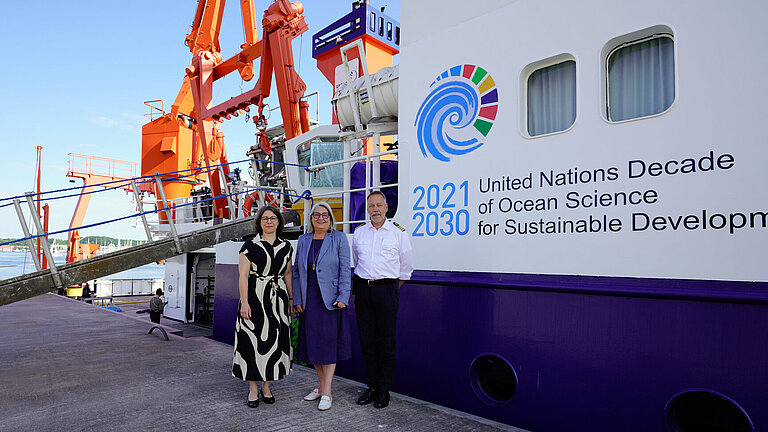
Katja Matthes, Director of GEOMAR, and Marc Petrikowski, captain of the ALKOR, welcomed Dorit Stenke, Schleswig-Holstein’s Minister for Education, who came on board the research vessel to see how environmental education can be put into practice (from left to right).
Photo: Sarah Uphoff, GEOMAR
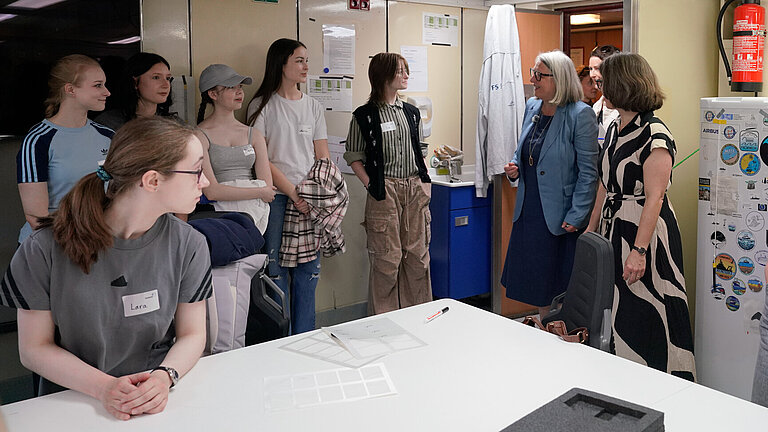
Pupils from the Friday Research Club at GEOMAR and Schloss Plön Grammar School are preparing for their day trip aboard the research vessel ALKOR, during which they will carry out biological, chemical and physical experiments to investigate the state of the Baltic Sea.
Photo: Sarah Uphoff, GEOMAR
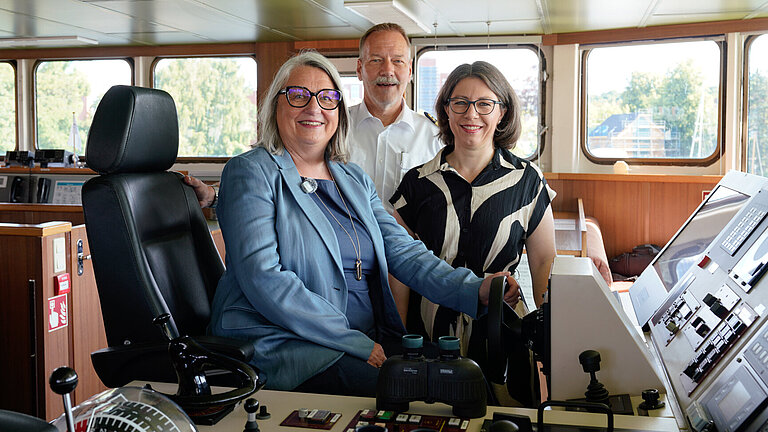
Before setting sail, Dorit Stenke, the Schleswig-Holstein Minister for Education, visited the ALKOR with Captain Marc Petrowski and Katja Mathes, the Director of GEOMAR. The minister praised the opportunity to witness science first-hand, saying that it would spark pupils' curiosity and strengthen their ability to play an active role in shaping the future.
Photo: Sarah Uphoff, GEOMAR
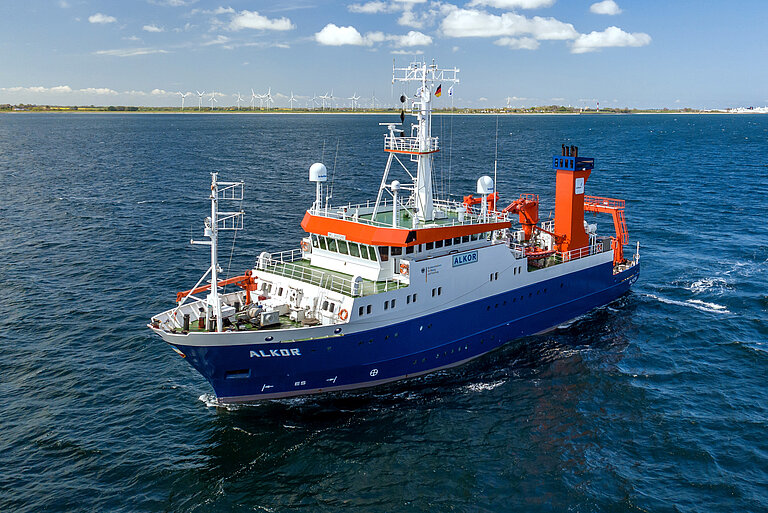
Today, pupils from the GEOMAR Friday Researchers Club and Gymnasium Schloss Plön are travelling to Boknis Eck aboard the research vessel ALKOR to learn about marine scientific research methods.
Photo: Marc Petrikowski