
Anna Niewerth
Phone: +49 (0) 431 600 2812
E-Mail: aniewerth(at)geomar.de
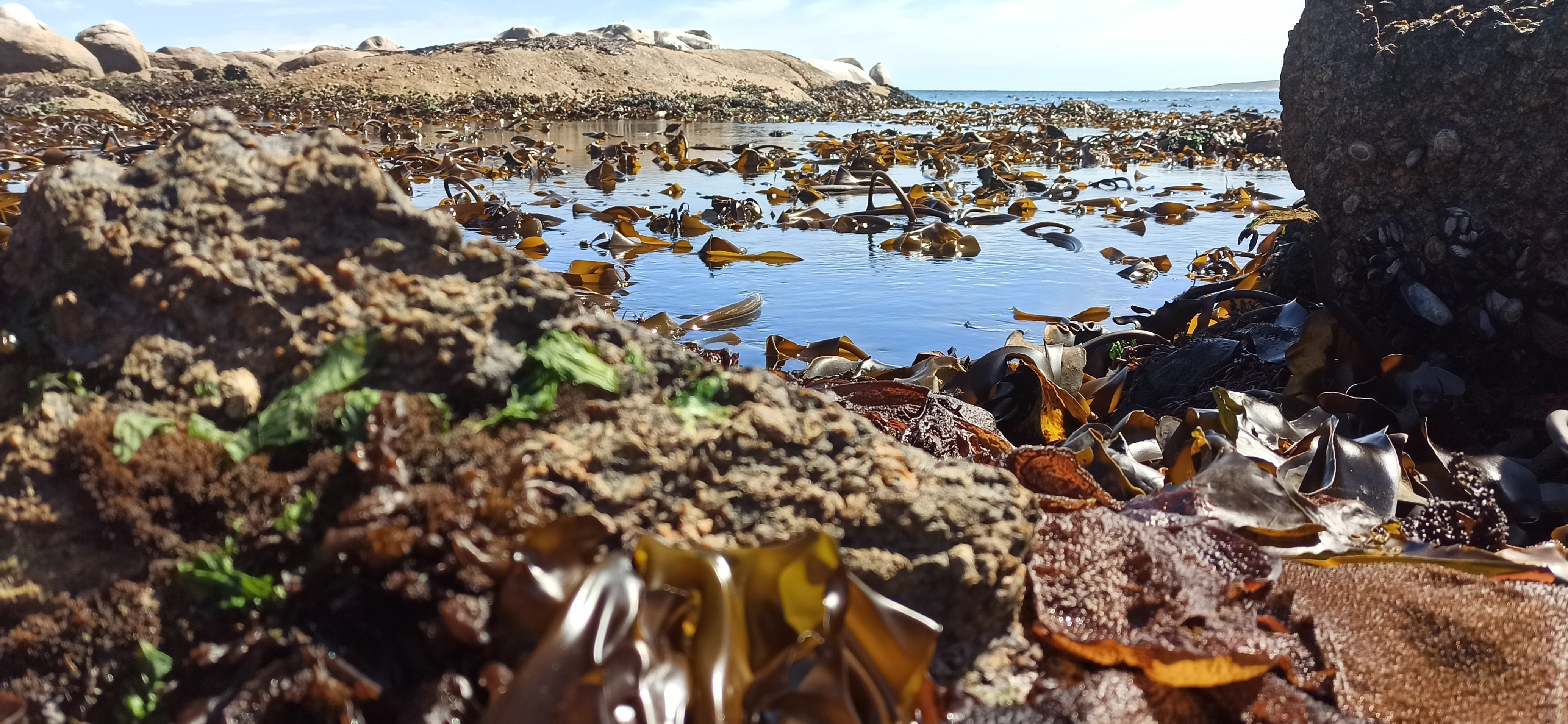
Low tide exposes the Southern African kelp forest.
Photo: Rémy Luthringer (CC-BY)
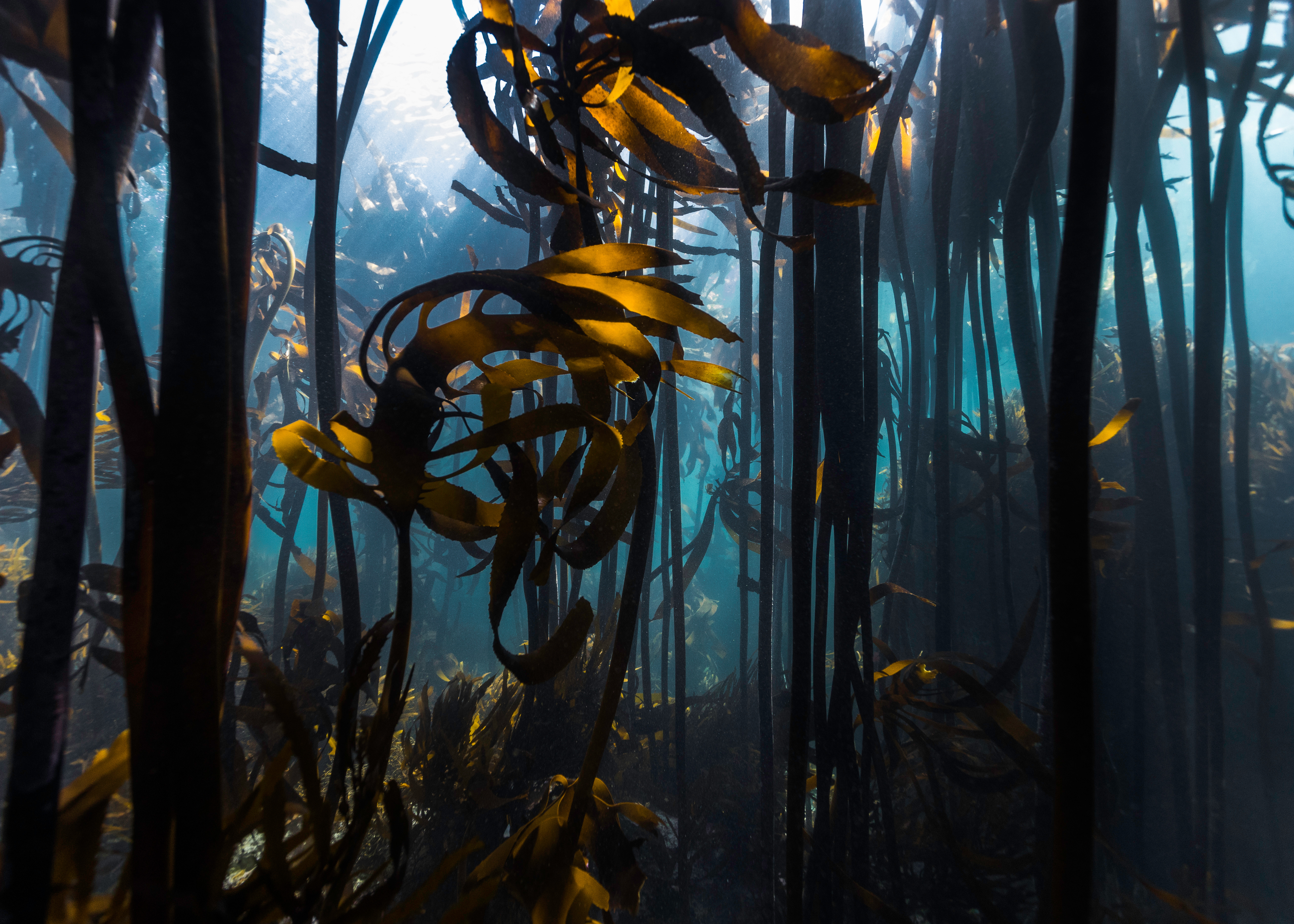
The seaweed Laminaria pallida forms lush underwater kelp forests.
Photo: Adobe Stock
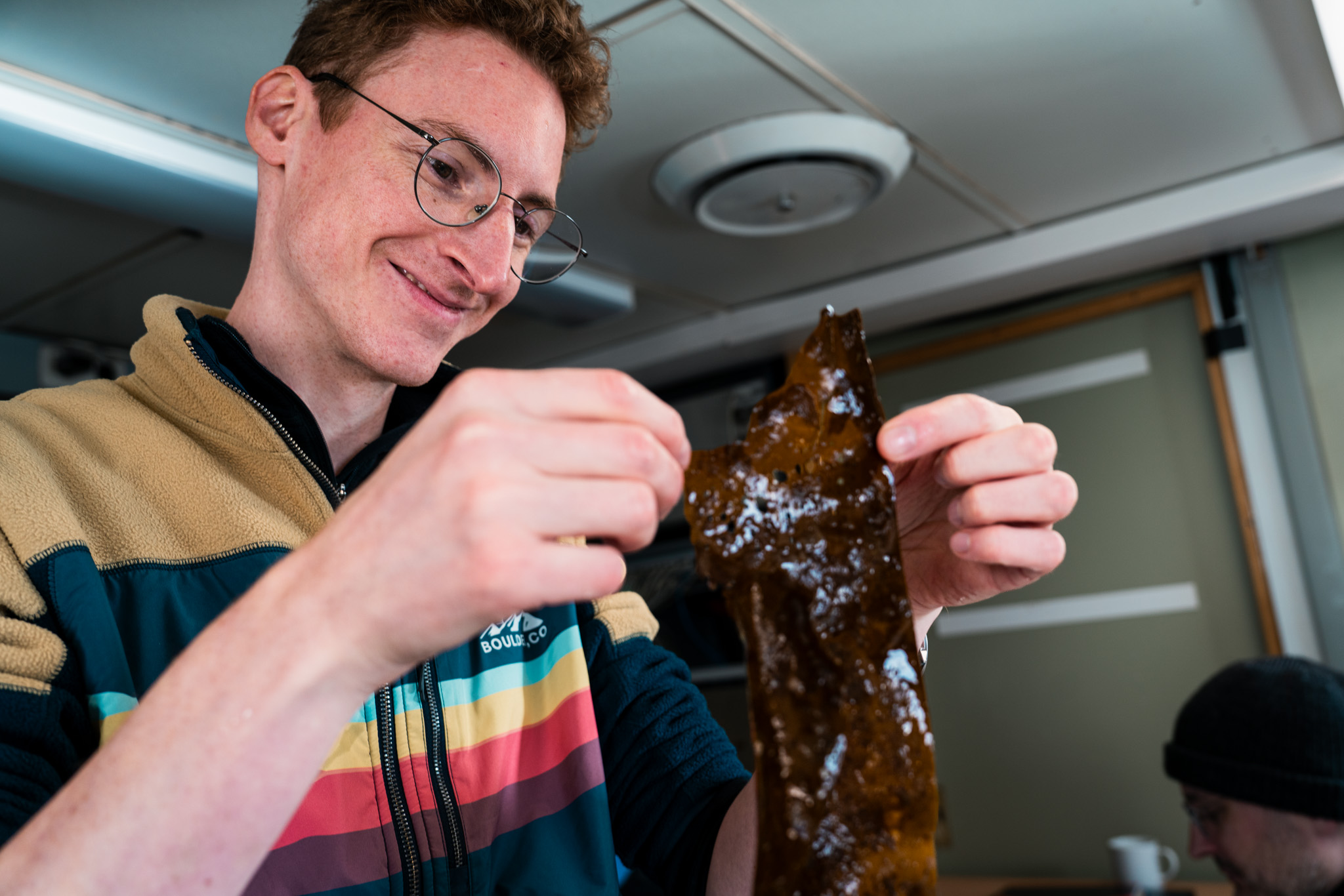
Dr Daniel Liesner, a marine biologist at GEOMAR, has investigated the molecular processes that determine life-stage identity and reproductive strategy in Laminaria pallida, a species of kelp.
Photo: Johna Reimers, GEOMAR
A backup plan for reproduction
In kelp, males can also produce offspring without a mate
Many organisms pass through different life stages and can reproduce either sexually or asexually. Yet how they control these transitions remains poorly understood. In a recent study, researchers from Germany, Namibia, South Africa and France, led by Dr Daniel Liesner, now at GEOMAR Helmholtz Centre for Ocean Research Kiel, investigated the molecular processes that determine life-stage identity and reproductive strategy in Laminaria pallida, a species ofkelp.
Asexual development in male reproductive cells
Kelps form lush and complex ecosystems, known as kelp forests, that provide habitat for countless marine species. But the large kelp visible in the sea represent only one stage of their life cycle. The other stage is microscopic and consists of tiny filaments that produce eggs or sperm.
Reproduction takes place during this microscopic stage, when female filaments release eggs that can be fertilised by sperm from male filaments. It has long been known that unfertilised eggs can also develop into new kelp without fertilisation. This process is known as parthenogenesis.
Surprisingly, while studying cultures of the Southern African kelp Laminaria pallida, the researchers discovered that male reproductive cells can also develop into new kelp without fertilisation, revealing an unexpected route to asexual reproduction.
“Finding that males can reproduce asexually was completely unexpected,” says Dr Daniel Liesner, lead researcher on the study. “We found that males can produce smaller, egg-like gametes which soon initiate asexual cell divisions, showing that parthenogenesis is not only a female trait.” However, compared with kelp produced through sexual reproduction, those developing without fertilisation grew more slowly and showed developmental abnormalities, which could reduce their chances of survival.
Shared gene activity during sexual and asexual reproduction
By analysing which genes are active at different stages of reproduction, the researchers compared how male and female reproductive cells develop into new kelp, both with and without fertilisation. Particularly striking changes were observed in males. There, the activity of many genes shifted strongly during the transition to asexual reproduction.
Notably, genes normally associated with male reproduction became less active, while the overall pattern of gene activity increasingly resembled that of female cells. This suggests that male and female cells may use similar developmental programmes to produce a new generation of kelp without fertilisation.
No clear evidence of clonality in the wild
Intrigued by the prevalence of asexual reproduction in their laboratory cultures, the researchers travelled to Namibia and South Africa to conduct a population-genetic study and explore the role of asexual reproduction in wild populations. To their surprise, among the more than 500 individuals examined, they found no clear evidence of clonality in the wild. Yet when the researchers tested their reproduction at the Max Planck Institute for Biology Tübingen, more than 90 per cent of individuals were capable of reproducing asexually.
“This disconnect between lab and field results was one of the most puzzling aspects of our study,” says Susana Coelho, Director of the Department of Algal Development and Evolution at the Max Planck Institute for Biology Tübingen. “Why is this trait so widespread in laboratory populations if we cannot find any evidence for asexual reproduction in the wild?”
Asexual reproduction is a conditional alternative to sex
To investigate this paradox, the researchers designed an experiment to test whether the presence of the opposite sex influences the likelihood of parthenogenesis. They exposed cultures of one sex to a medium containing the other sex, while preventing contact between the gametes, on the assumption that a diffusible signal indicating the presence of a mate might influence how often asexual reproduction occurs.
The results showed that both male and female individuals produced more offspring when the other sex was absent. “This suggests that kelps have much greater flexibility in how they reproduce than previously appreciated,” explains Susana Coelho. “They can respond to the absence of a mate by increasing their capacity for asexual reproduction in both females and males.”
Kelp have a “Plan B” for reproduction
Sexual reproduction remains the preferred option because it produces more vigorous offspring. But when potential mates are absent, kelp can take matters into their own hands. The researchers found that all kelp individuals examined were capable of sexual reproduction, whereas asexual reproduction occurred mainly after opportunities for mating had passed.
Although doing it alone comes at a cost, it may still offer an important advantage when the opposite sex is absent. For small or isolated populations, this reproductive flexibility could provide exactly what is needed to keep the next generation going until a suitable mate becomes available.
Original publication:
Liesner D, Luthringer R, Kandjengo L, Bolton JJ, Rothman MD, Valero M, et al. (2026): Life-cycle plasticity enables conditional asexual reproduction in a kelp. PLOS Biology 24(11): e3004065.
Low tide exposes the Southern African kelp forest.
Photo: Rémy Luthringer (CC-BY)
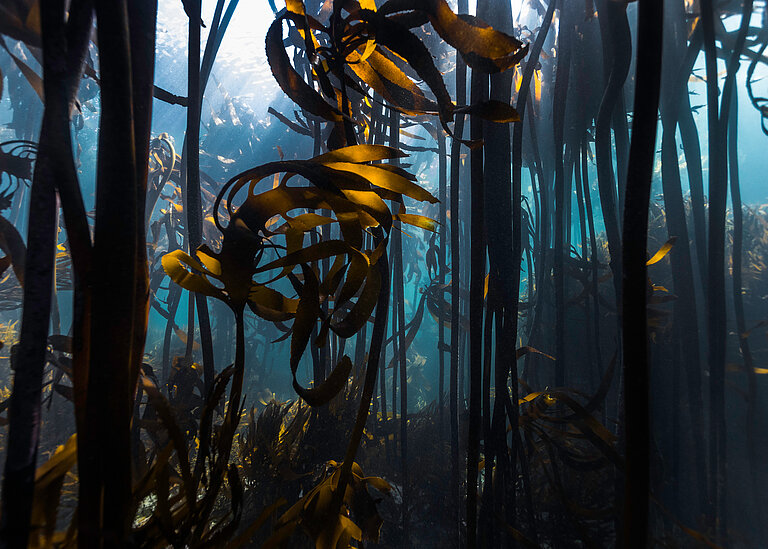
The seaweed Laminaria pallida forms lush underwater kelp forests.
Photo: Adobe Stock
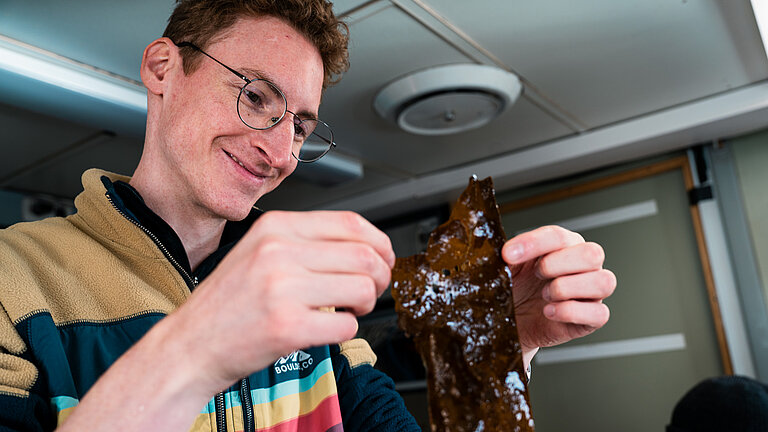
Dr Daniel Liesner, a marine biologist at GEOMAR, has investigated the molecular processes that determine life-stage identity and reproductive strategy in Laminaria pallida, a species of kelp.
Photo: Johna Reimers, GEOMAR