Anna Niewerth
Phone: +49 (0) 431 600 2812
E-Mail: aniewerth(at)geomar.de
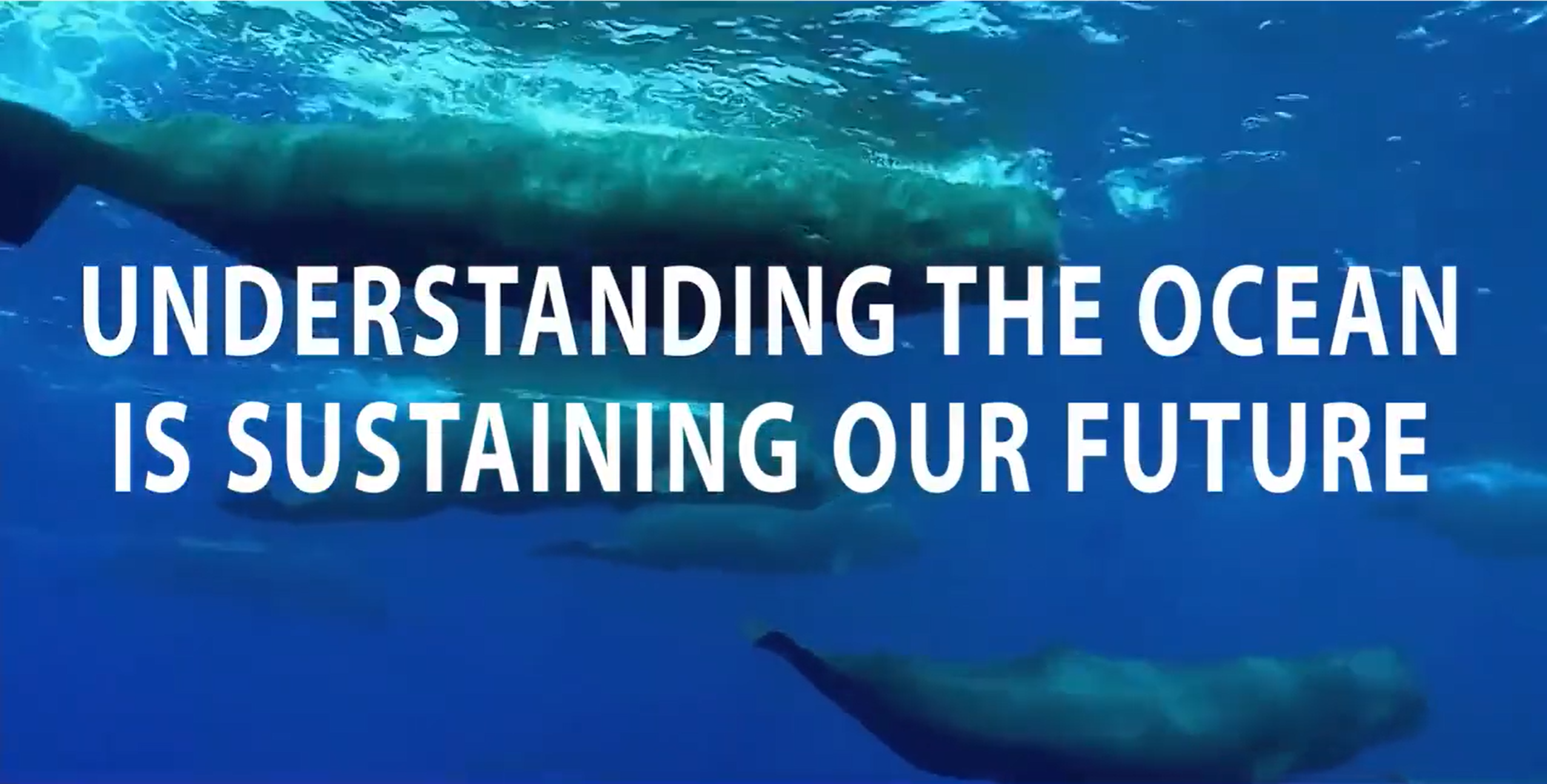
One Planet, One Ocean: An updated version of this free English-language course is now launching its tenth edition. Since its first run, it has reached thousands of people worldwide.
Screenshot: SDG Academy
Understanding the ocean, shaping the future
Ocean MOOC celebrates its 10th edition
The English-language online course ‘One Planet – One Ocean: From Science to Solutions’ provides up-to-date, scientifically based knowledge about the oceans. It has now launched a new, updated edition and is thus entering its tenth year.
The Ocean MOOC is scientifically supported by Kiel University (CAU), GEOMAR Helmholtz Centre for Ocean Research Kiel and the International Ocean Institute (IOI). The course is delivered by the international educational organisation SDG Academy. The partners are thus continuing a successful educational initiative that has reached thousands of participants worldwide since it was first launched.
Six modules explain the ocean from different perspectives
MOOC stands for Massive Open Online Course, i.e. an open online course in which many people can take part regardless of their location. The Ocean MOOC offers a comprehensive overview of the ocean. The six modules cover the topics ‘One Planet – One Ocean’, ‘Coasts’, ‘Marine Ecosystems’, ‘Fisheries and Aquaculture’, ‘Marine Life and Minerals’ and ‘The Ocean and Climate’.
The course is not limited to scientific questions. The content combines the natural sciences with economics, law and the social sciences. Participants learn how the ocean works, how human activities are changing it, and what scientifically grounded solutions are available for a sustainable future.
The recorded lectures are supplemented by further reading, quizzes and discussion forums. Regular live Q&A sessions also offer the opportunity to engage directly with experts. Those wishing to successfully complete the course can additionally purchase a verified certificate for a fee.
The course takes place entirely online and has no entry requirements. Participants can enrol at any time and work through the material at their own pace. You should allow around three to four hours for each module.
Ocean MOOC for anyone interested in the ocean
The Ocean MOOC is aimed at a wide audience: from students and lecturers to professionals in the fields of sustainability, environmental management, business and administration, right through to anyone interested in gaining a better understanding of the ocean’s role in climate, biodiversity and sustainable development. The course also offers stakeholders from the private sector – for example, in the fields of energy, fisheries or corporate social responsibility – a scientifically sound overview of the opportunities and challenges associated with the sustainable use of the oceans.
Anyone interested can enrol free of charge at any time. Further information on the course, the modules and the participating academics can be found on the SDG Academy’s learning platform.
One Planet, One Ocean: An updated version of this free English-language course is now launching its tenth edition. Since its first run, it has reached thousands of people worldwide.
Screenshot: SDG Academy