Learn more about GAME – Information for students
GAME conducts modular research, which means that identical experiments on the same topic are carried out simultaneously at different locations around the world. This allows the effects of human activities to be compared across ecosystems and biogeographical regions. To this end, participants work intensively in binational teams of two. In this way, GAME strengthens the social and cultural skills of students and mobilizes them early on in their careers. The motivation of our participants, the competence of our scientific partners, and central coordination ensure high scientific quality and significance of results.
What GAME offers
GAME offers students an interesting experience, both academically and culturally. The academic focus is on developing, preparing for, conducting and evaluating an ecological experiment. As well as writing a thesis, participants will also write a scientific publication for an international journal and give presentations. Participants receive intensive support from the scientists involved throughout the project, both in Germany and abroad.
GAME offers a combination of teamwork and independent study. Two partners in a team carry out the same experiments and can therefore support each other. Work is differentiated by factors such as the choice of experimental organisms. All participants in a project stay in touch via email, even when they are abroad. This enables GAME to integrate students into a global scientific network comprising over 40 partner institutes worldwide from an early stage. As well as working, there is also time to get to know the host country and its culture.
Further information can be found at "Global Approach in Marine Ecology"
Eligibility requirements
Students of biology, ecology, environmental sciences or related subjects who wish to write a master's thesis in marine ecology are eligible to participate. Registration at Kiel University is not required, as the thesis is registered at the student's home university.
If you have any questions about the application process, please email mlenz(at)geomar.de.
Application process
There are no application deadlines at GAME.
Applications are accepted from March of the previous year (for example, from March 2025 for the 2026 project), and the research topic is announced in May of that year. Interviews usually take place between May and August, with feedback typically provided a week afterwards. Therefore, if you apply early, you can plan ahead with certainty.
Places may become available shortly before the project starts in March, but we cannot guarantee that your preferred location for the six-month stay abroad will be available. To influence your preferred location, you should apply by the end of July at the latest.
If you are interested in GAME and registered at a German university, please send a completed German application form, your CV and cover letter, to our contact address: mlenz(at)geomar.de.
If you are an international student interested in GAME, please contact mlenz(at)geomar.de directly.
Project timeline
March: Project preparation in Kiel
All participants (up to 20) of a GAME project initially come to GEOMAR in Kiel for a one-month preparatory course. Here, they acquire all the theoretical and practical knowledge necessary for carrying out the experiments. At the same time, participants from this year's programme have the opportunity to get to know each other.
April–October: Collection of data abroad
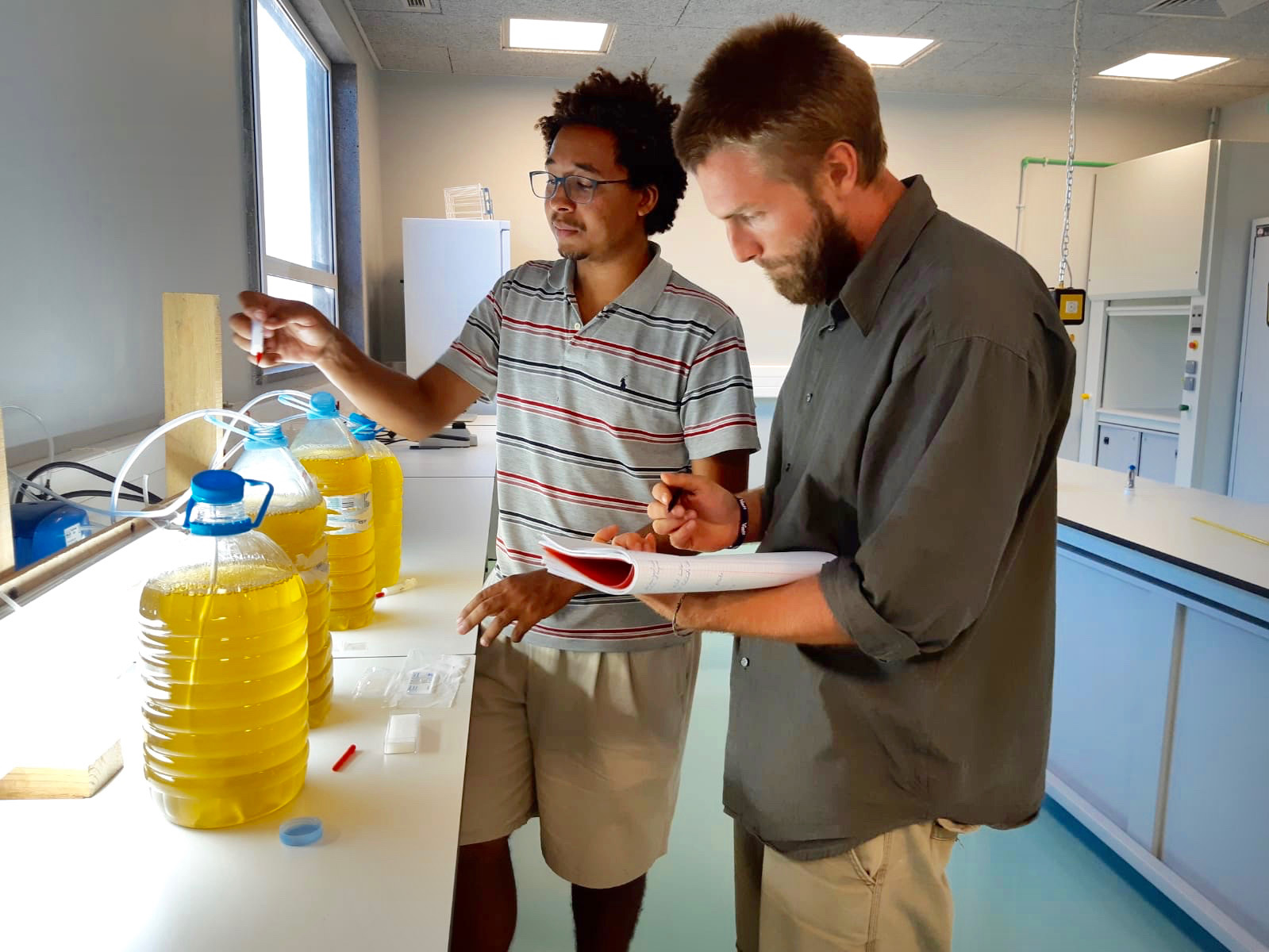
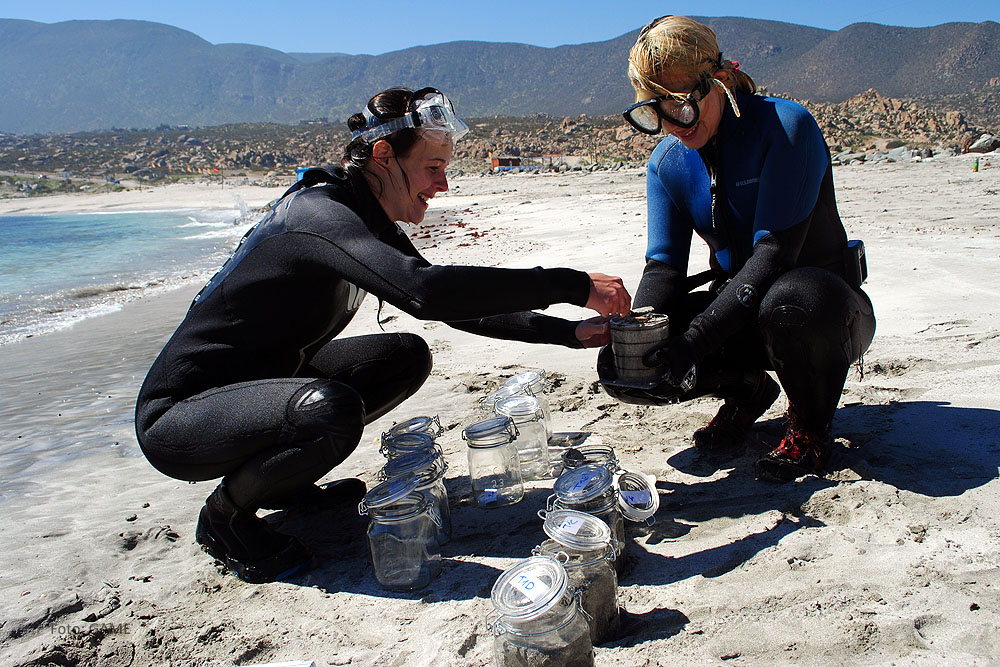
Two GAME participants, local and German, work together at each partner institute. The binational teams carry out their experiments, which were developed in the preparatory phase in Kiel, over several months. The data obtained here form the basis for the master’s theses. In addition, there is the opportunity to plan and carry out their own experiments.
October – December: Follow-up in Kiel
All students in the programme return to Kiel for a joint evaluation phase. Under the intensive supervision of GEOMAR scientists, they consolidate their knowledge of biostatistics during a two-week course. They also analyse and interpret the collected data and practise communicating scientific results. After acquiring the necessary skills, participants prepare a presentation which they deliver at various universities in northern Germany towards the end of the project. Intensive workshops on scientific writing and media literacy conclude the second part of the evaluation course. The phase concludes with presentations and the preparation of manuscripts for scientific journals.
Excursions
Schleswig-Holstein is a state located between two very different seas. This unique feature makes it a fascinating location for marine research. GAME participants learn about both ecosystems: biological and geological excursions take them to the Baltic Sea (Schleimünde/Lotseninsel) and the North Sea (Hallig Hooge).
-
New name – same acronym
For 24 years, GAME has stood for excellent research and practical, research-based training for Master's students in biology and environmental sciences. However, the full name of the programme primarily described GAME's technical approach: Global Approach by Modular Experiments.
At the beginning of 2026, GAME gave itself a new name. GAME now stands for Global Approach in Marine Ecology. This change was initiated by the GAME Board of Trustees, which includes the founder of GAME, Prof. Dr. Martin Wahl. It is intended to reflect both the global character and the content focus of the programme in its name.
-
Scientific Director and Coordinator
Dr. Mark Lenz
GEOMAR Helmholtz Centre for Ocean Research Kiel
Wischhofstraße 1-3
24148 Kiel
Phone.: +49 431 600-4576
Fax: +49 431 600-1671
mlenz(at)geomar.deFundraising
Dipl.-Biol. Annette Tempelmann
Phone: +49 176 76 902 809
atempelmann(at)geomar.de
GAME - a Project of the UN Ocean Decade
GAME is now officially a project endorsed by the United Nations Decade of Ocean Science for Sustainable Development (2021-2030)! In this context we will continue to contribute to the mission and goals of the UN Ocean Decade.