Microbial Responses to Ocean Alkalinity Enhancement at Bülk
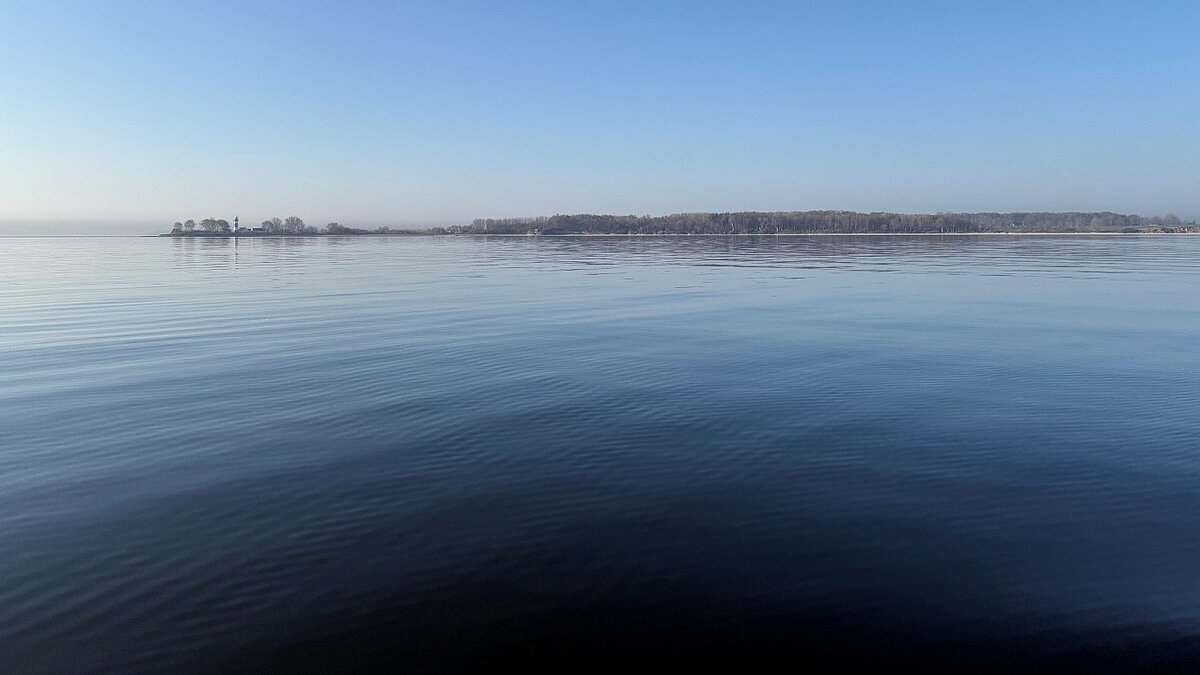
Photo Stefanie Böhnke-Brandt CC BY 4.0
How does increased alkalinity affect life on the seafloor?
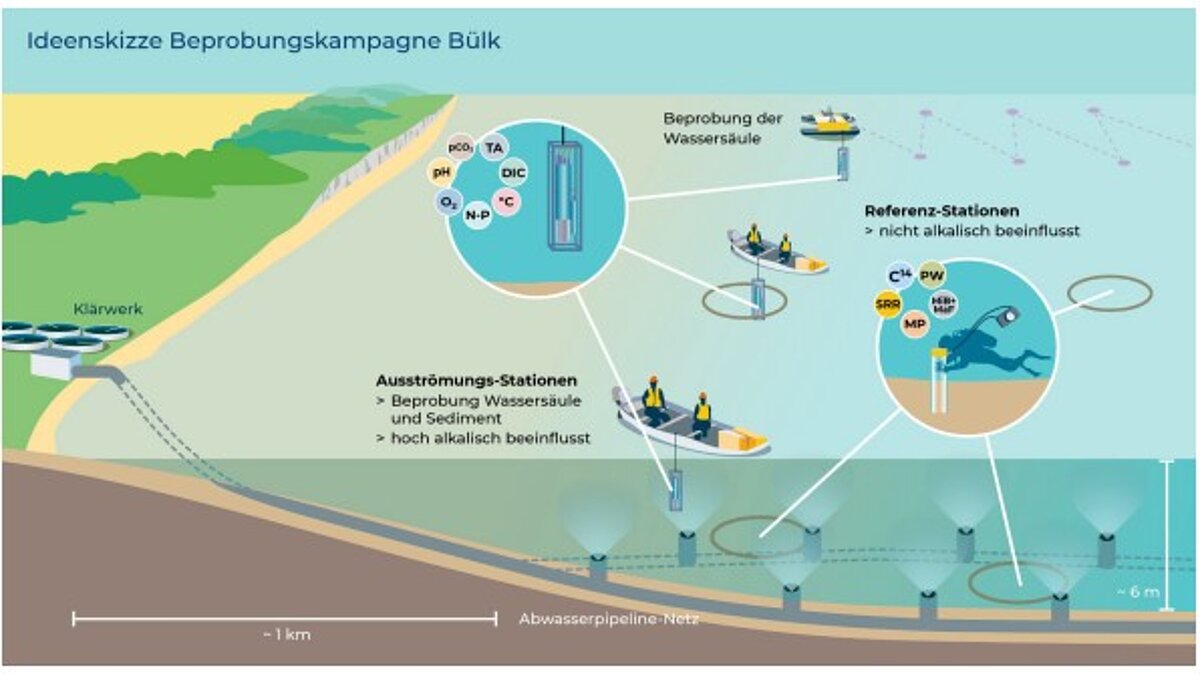
Ocean Alkalinity Enhancement (OAE) is being explored as a way to remove carbon dioxide (CO₂) from the atmosphere and store it in the ocean. At the Bülk wastewater treatment plant in Kiel Bay, Germany, the start-up Planeteers is installing a reactor that uses limestone (calcite) to convert captured CO₂ into dissolved bicarbonate. The treated water is then released into the Baltic Sea, increasing the alkalinity of the surrounding coastal waters.
The outfall at Bülk already releases water with more than twice the alkalinity of the surrounding Baltic Sea. The additional increase resulting from reactor operation provides an opportunity to investigate how sustained alkalinity enhancement affects the marine environment under real-world conditions.
Marine sediments are home to diverse microbial communities that drive essential processes in the carbon, sulfur, nitrogen and iron cycles. These microorganisms break down organic matter, transform nutrients and influence how chemical elements move between the seafloor and the overlying water.
Changes in seawater chemistry may affect these microbial communities and the processes they perform. Our research investigates whether and how increased alkalinity alters microbial community composition, metabolic activity and biogeochemical processes in the upper sediment layer.
How do we investigate these changes?
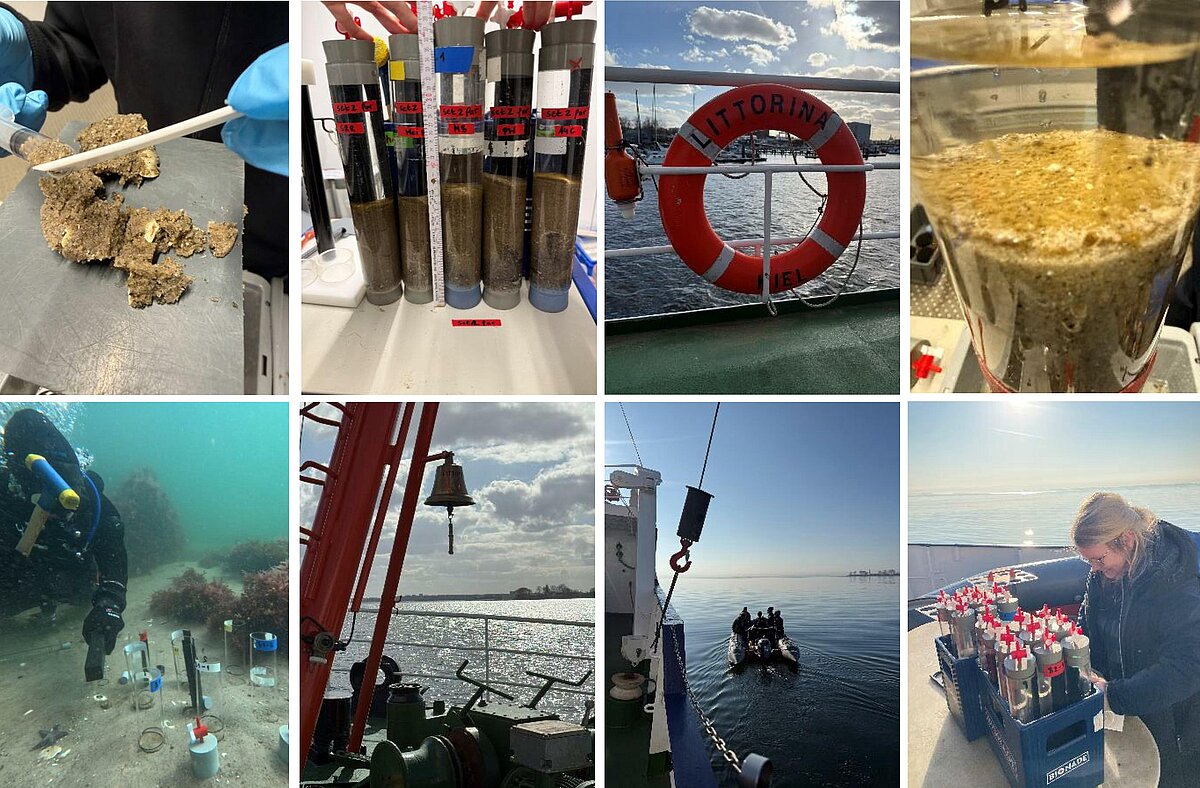
Through independent scientific monitoring, we compare conditions before and after the reactor starts operating and examine locations exposed to the alkalinity increase alongside unaffected reference sites. Seasonal field sampling combines sediment geochemistry with molecular analyses and measurements of microbial activity, allowing us to investigate both which microorganisms are present and what they are doing.
By following these changes over time, we aim to distinguish potential effects of increased alkalinity from natural seasonal variability and other environmental influences. Our findings will contribute to a better understanding of how benthic microbial communities and sediment processes respond to sustained ocean alkalinity enhancement, providing important field-based evidence for assessing its potential environmental impacts.
Photos Stefanie Böhnke-Brandt or Michael Sswat (GEOMAR) CC BY 4.0
Head of the research group "Benthic Geomicrobiology":
Prof. Dr. Mirjam Perner GEOMAR Helmholtz Centre for Ocean Research Kiel Building 12 Wischhofstrasse 1-3 D-24148 Kiel Tel.: +49 (0) 431-600-2837 Fax: +49 (0) 431-600-2941 E-mail: mperner(at)geomar.de
!!! Bachelor and Master Theses !!! There are numerous exciting projects available in our working group raising questions that can also be investigated in the context of bachelor and master theses. Feel free to contact us and find a suitable topic for your thesis together with us!
March 2021 <<< Dr. Katja Laufer published her new paper on the importance of Fe cycling in Arctic fjord sediments and the potential impacts of glacial retreat inNature Communications >>>
March 2021 <<<Our new project Emden FM has been kicked-off. We are looking forward to exciting research in a great consortia (coordinator: Julia Gebert, TUDelft )>>>
We use cookies to give you the best possible experience on our website. Some cookies are technically necessary, others help us to improve our services. You decide which cookies you allow.
Required for the basic functions of the website, e.g. to store your cookie settings. These cannot be switched off.
OffOn
Help us understand how the website is used so that we can improve it. The analysis runs anonymously on our own servers.
Details about Matomo analysisShowHide
If you consent to our analysis using the Matomo program, we will collect, store, and evaluate the following:
Information about the device type, browser type, and version used.
The user’s operating system
Type and Status of HTML Requests to the GEOMAR Website
The IP address of the user’s device. The full IP address is collected, used for analysis, and stored. However, it is displayed only in anonymized form in the analysis.
Date and time of access
Websites from which the user’s device accessed the GEOMAR website.
The addresses (URLs) visited on the GEOMAR website