Ocean Alkalinity Enhancement: The Microbial Perspective
How does increasing ocean alkalinity affect the microorganisms living in marine sediments?
Ocean Alkalinity Enhancement (OAE) is being explored as a way to increase the ocean’s capacity to take up and store carbon dioxide (CO2). By adding alkaline minerals or dissolved alkalinity, the chemistry of seawater changes, potentially allowing the ocean to absorb more CO2 from the atmosphere.
Marine sediments are home to diverse microbial communities that drive essential processes in the carbon, sulfur, nitrogen and iron cycles. These microorganisms influence how organic matter is degraded, how nutrients and elements are transformed, and how carbon is processed at the seafloor. Changes in seawater chemistry and sediment conditions may affect their activity and the biogeochemical processes they control.
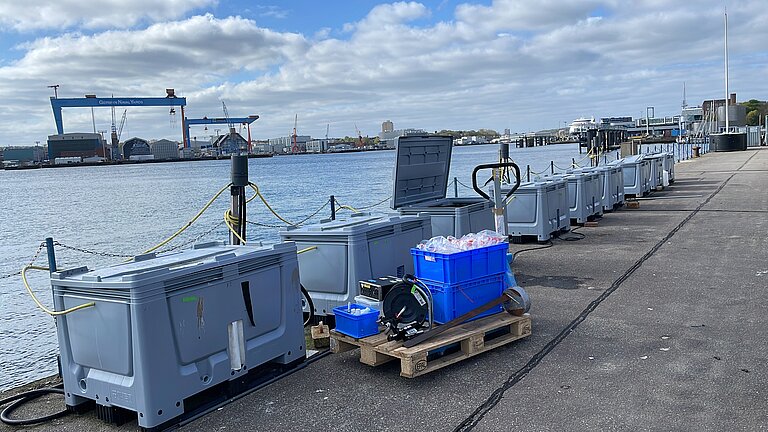
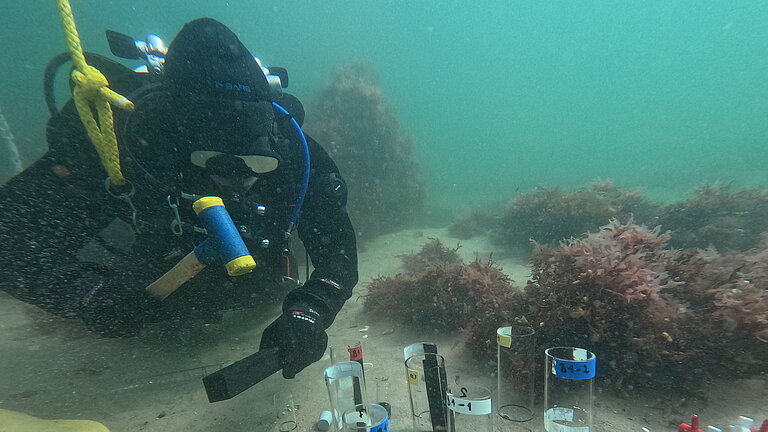
Our research investigates how benthic microorganisms respond to increased ocean alkalinity. By combining molecular approaches, biogeochemical measurements and field studies, we examine changes in microbial communities, their metabolic activity and their role in sediment processes. Our aim is to understand how these responses develop over time and what they mean for the functioning of coastal ecosystems. Understanding microbial responses is an important step towards assessing the environmental implications of OAE and its potential effects on coastal marine ecosystems.
OAE at Bülk – Monitoring research on alkalinity enhancement at the Bülk wastewater treatment plant
How do benthic microorganisms respond to increased alkalinity in coastal waters? Explore our research at Bülk, where we monitor the environmental and microbial effects of a calcite-based CO₂ removal process.