
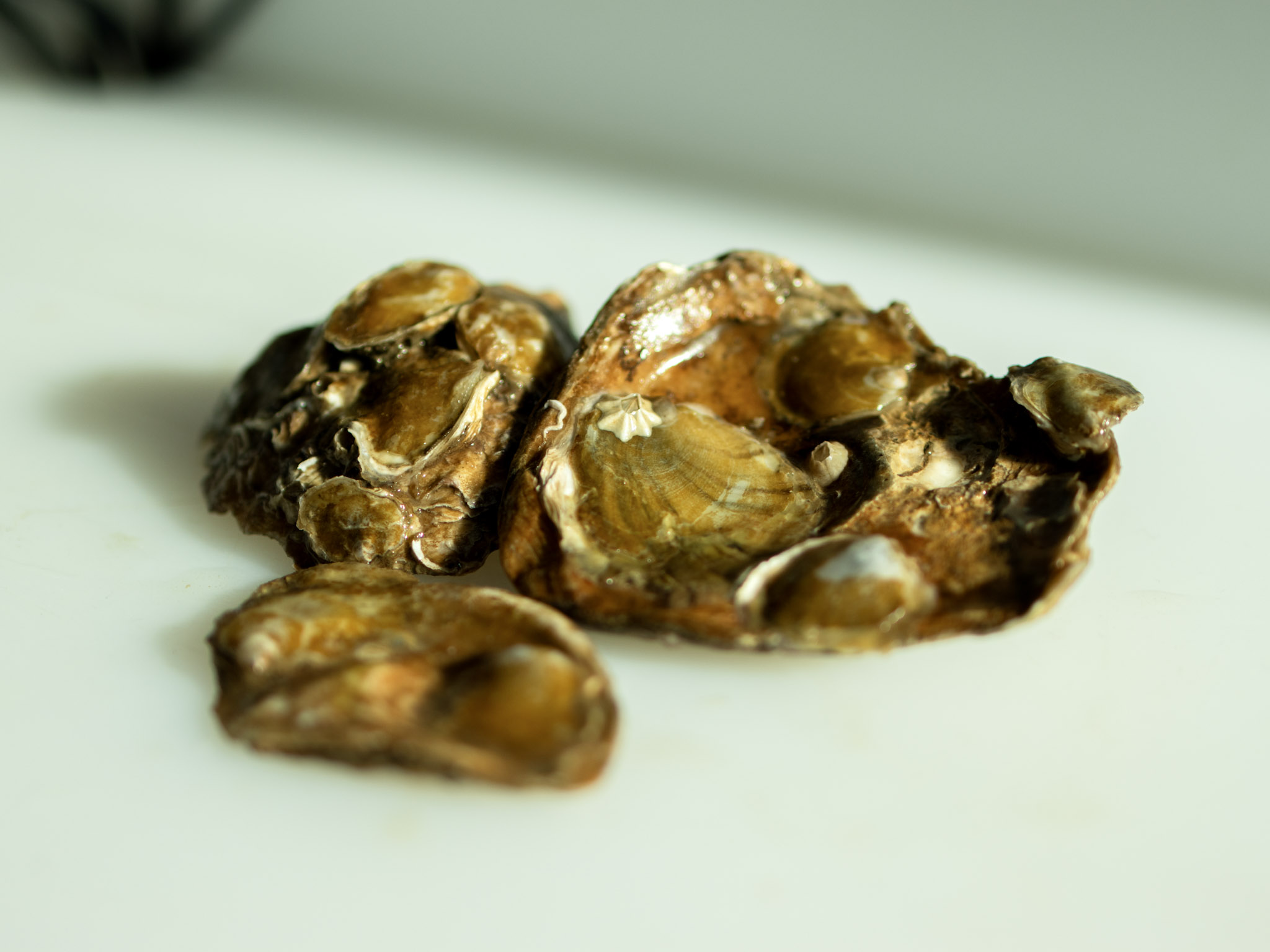
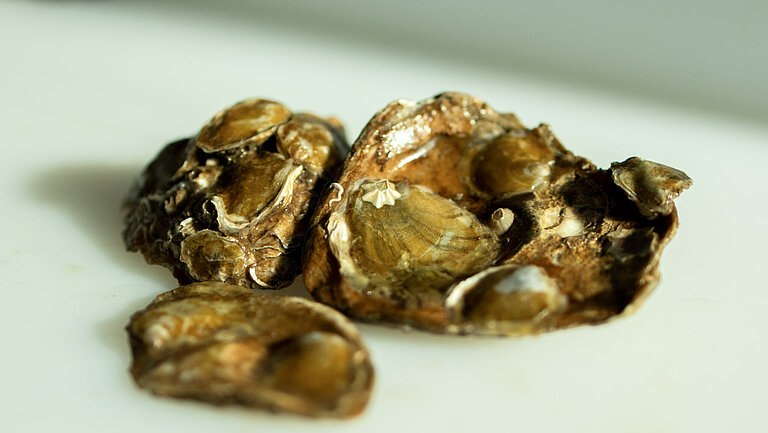
Young oysters for restoration measures: In order to prevent the spread of pathogens, reintroduction programmes are subject to strict biosecurity measures, including disease testing prior to oyster transplantation.
Photo: Alfred Wegener Institute / Emilie Grassl
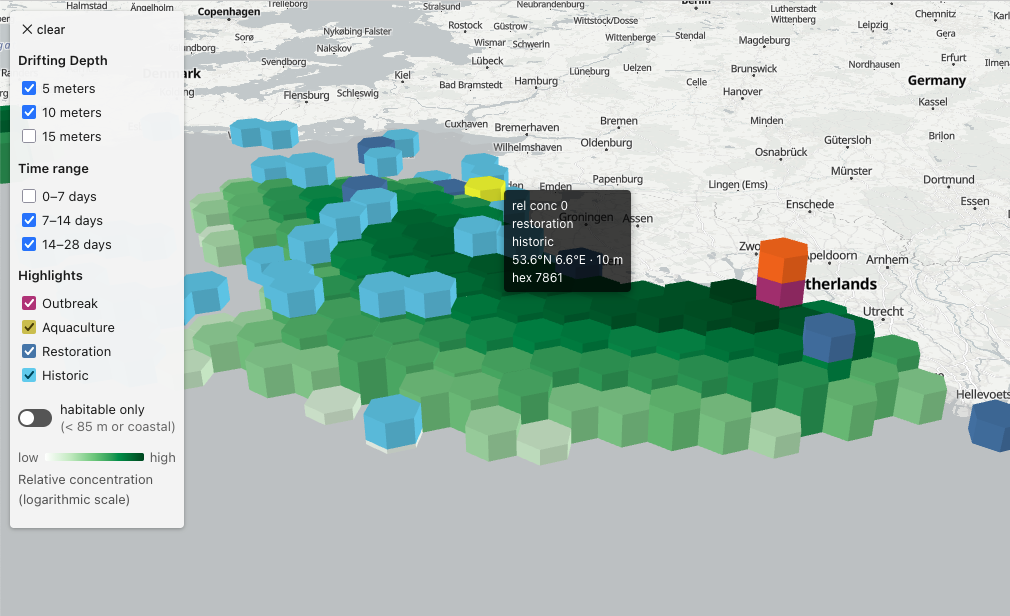
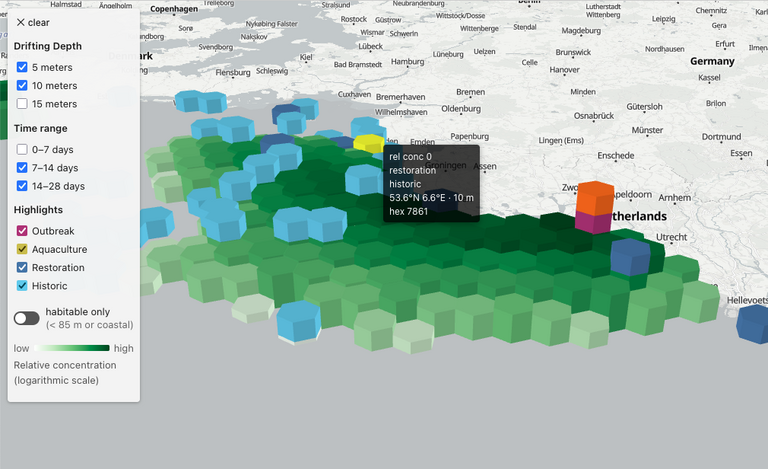
The Oyster Spatio-Temporal Dispersal Atlas (OSTREA) visualises the transport of oyster larvae and the Bonamia ostreae pathogen by ocean currents in the North Sea region, helping to evaluate risk at specific locations.
Screenshot: ostrea.geomar.de
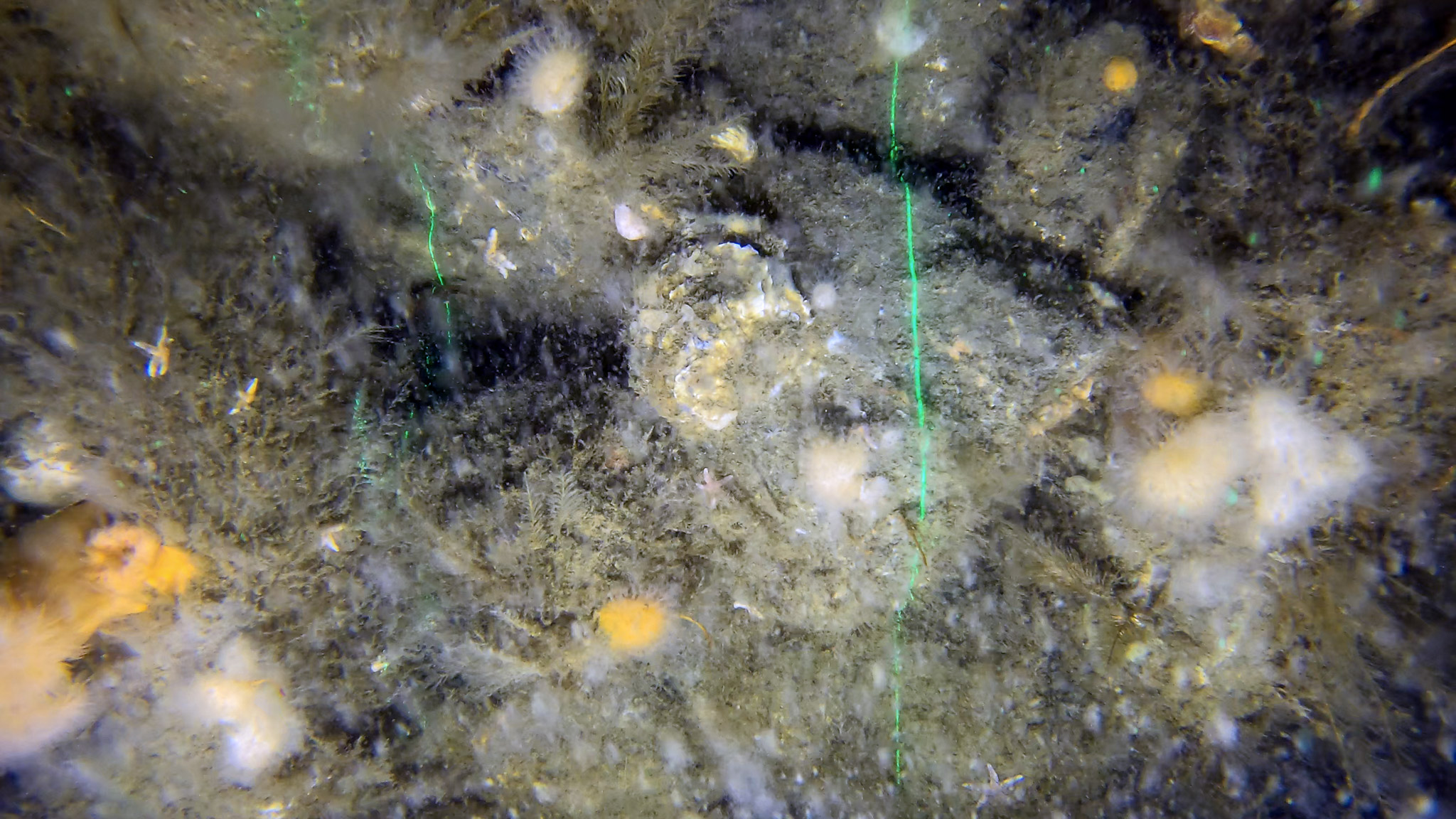
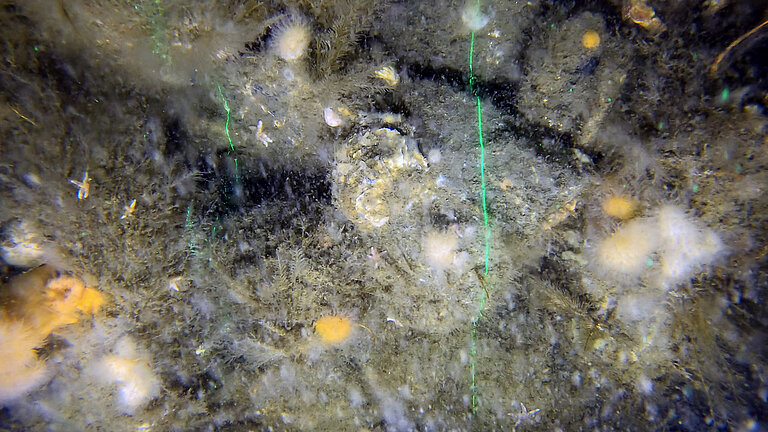
Underwater photograph of oysters on the seabed: Many projects led by scientists are working to reintroduce the European oyster (Ostrea edulis) to the North Sea.
Photo: Alfred Wegener Institute / Santiago Pineda Metz
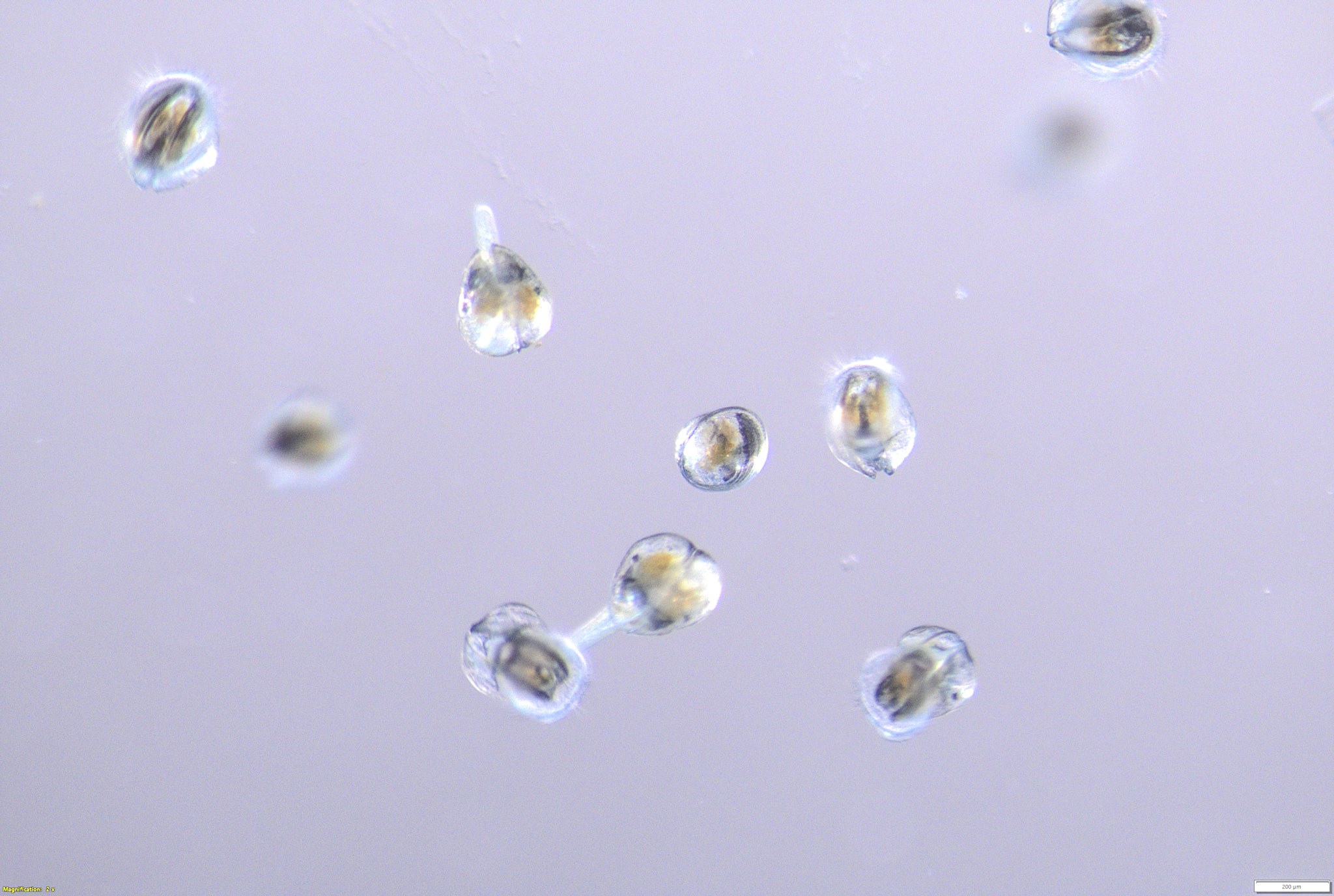
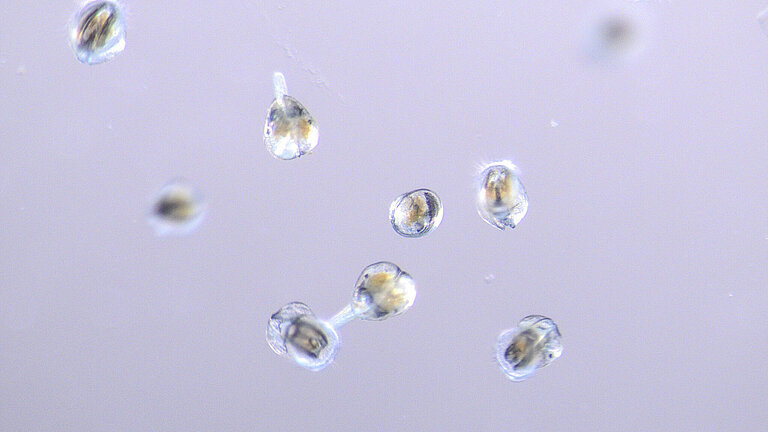
European flat oyster larvae under the microscope: OSTREA modelling shows that infected larvae can disperse 50–60 km. Ocean currents connect some sites while isolating others, leading to a very uneven distribution of disease risk across the region.
Photo: Alfred Wegener Institute / Nicolas Araujo-Pineiro
How diseases spread between oyster reefs
New study reveals which restoration sites are most at risk from pathogens carried by ocean currents
The European flat oyster (Ostrea edulis) was once widespread in the North Sea. However, overfishing, habitat destruction and infectious diseases pushed the species to the brink of extinction in some regions nearly one hundred years ago. In particular, infections with the pathogen Bonamia ostreae have caused repeated major losses since the 1970s. The parasite infects the oysters’ immune cells and initially causes no symptoms, but after several months the infection can become systemic — a condition known as bonamiosis — ultimately leading to the oyster’s death.
“Previous studies showed where bonamiosis occurs in the North Atlantic. What was lacking, however, were assessments of how the pathogen spreads over larger distances,” explains Dr Lara Schmittmann, marine biologist at GEOMAR. Together with an international team, she has now examined the extent to which ocean currents contribute to the dispersal of Bonamia ostreae and which restoration sites are particularly at risk.
Valuable reefs for North Sea ecosystems
Oyster reefs create highly diverse habitats. They provide food and shelter for numerous invertebrates and fish, stabilise sediments and improve water quality through their filtration capacity. Their decline affects entire ecosystems. Within the European restoration network, the Native Oyster Restoration Alliance (NORA), around 40 scientifically led projects are currently underway.
To prevent the spread of pathogens, restoration efforts are subject to strict biosecurity measures, including disease screening prior to oyster translocation.
However, pathogens can also be transported by ocean currents. “Even when human-mediated transfers are controlled, pathogens can spread via infected larvae or as free-living stages in the water. This can significantly influence the success of restoration projects,” says Dr Willi Rath, physical oceanographer and data scientist at GEOMAR.
Ocean currents transport pathogens
To understand these processes, the researchers used biophysical computer simulations. In so-called Lagrangian drift models, they released millions of virtual particles across the North Sea. These ‘particles’ represent either free-living pathogens or infected oyster larvae. By tracking their drift with ocean currents, the team mapped connections between different locations, for example between known infection areas and restoration sites. Based on these maps, the risk of pathogen exposure was calculated for each site across the north-west European shelf.
One third of restoration sites directly at risk
The results show that free-living pathogens typically disperse over distances of around 30 kilometres, while infected larvae can travel 50 to 60 kilometres. The risk, however, is distributed very unevenly. Approximately 30 per cent of restoration sites show a persistently high potential exposure. They are directly reachable by pathogens and/or larvae originating from known infected areas.
Sites in western and southern Brittany and in southern England, for example, are consistently exposed to a higher potential risk from infected regions. Other areas come into contact with pathogens only sporadically or remain completely unconnected in all simulated scenarios. “Particularly well-connected sites that are already infected could facilitate further spread,” says Lara Schmittmann.
Digital twin for selecting low-risk locations
In addition, OSTREA – the Oyster Spatio-Temporal Dispersal Atlas – has been launched as an interactive website. It visualises how European flat oyster larvae and the pathogen Bonamia ostreae disperse across the North Sea region. The platform is based on the computer models used in the study, which simulate real ocean currents.
This “digital twin” makes it possible to assess the strength of connections between any chosen locations and to calculate potential pathogen exposure for a selected starting point. OSTREA therefore provides a practical tool to use the dispersal simulations interactively beyond the scope of the scientific publication.
“We designed the simulations in such a way that they theoretically allow us to assess connections between all locations in the North Sea region that could potentially be colonised by European flat oysters,” explains Lara Schmittmann. “In the scientific paper, we can only present a small selection of results, but through OSTREA, users can explore exposure risks for other locations as well.”
Including disease exposure in site selection
“Our results clearly show that detailed knowledge of ocean currents is crucial for understanding the spread of Bonamia ostreae,” says Dr Willi Rath. “Sites that are several dozen kilometres apart may be closely connected hydrodynamically, while neighbouring locations may show little or no connection at all.”
For restoration efforts, this means that simple rules of thumb, such as fixed safety radii, are not sufficient for site selection. Understanding ocean circulation patterns is a key factor in determining success.
Original Publication:
Schmittmann, L., Rath, W., Bean, T. P., Busch, K., Gottschalk, J., Mock, L.-C., Nascimento-Schulze, J. C., Sas, H., and Biastoch, A. (2026): Pathogen dispersal can lead to high exposure risk at European flat oyster restoration sites. Communications Earth & Environment.
https://doi.org/10.1038/s43247-026-03319-z
Young oysters for restoration measures: In order to prevent the spread of pathogens, reintroduction programmes are subject to strict biosecurity measures, including disease testing prior to oyster transplantation.
Photo: Alfred Wegener Institute / Emilie Grassl
The Oyster Spatio-Temporal Dispersal Atlas (OSTREA) visualises the transport of oyster larvae and the Bonamia ostreae pathogen by ocean currents in the North Sea region, helping to evaluate risk at specific locations.
Screenshot: ostrea.geomar.de
Underwater photograph of oysters on the seabed: Many projects led by scientists are working to reintroduce the European oyster (Ostrea edulis) to the North Sea.
Photo: Alfred Wegener Institute / Santiago Pineda Metz
European flat oyster larvae under the microscope: OSTREA modelling shows that infected larvae can disperse 50–60 km. Ocean currents connect some sites while isolating others, leading to a very uneven distribution of disease risk across the region.
Photo: Alfred Wegener Institute / Nicolas Araujo-Pineiro