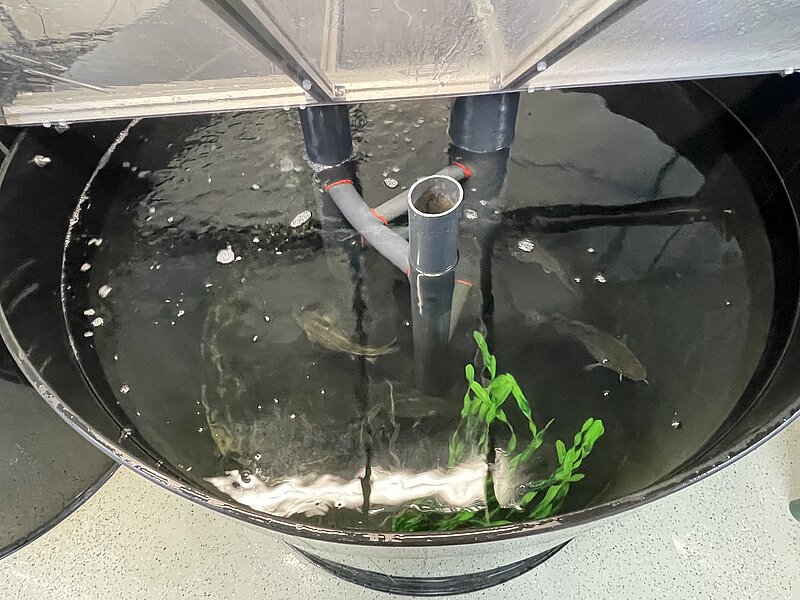
GEOMAR Fischhälterungsanlage
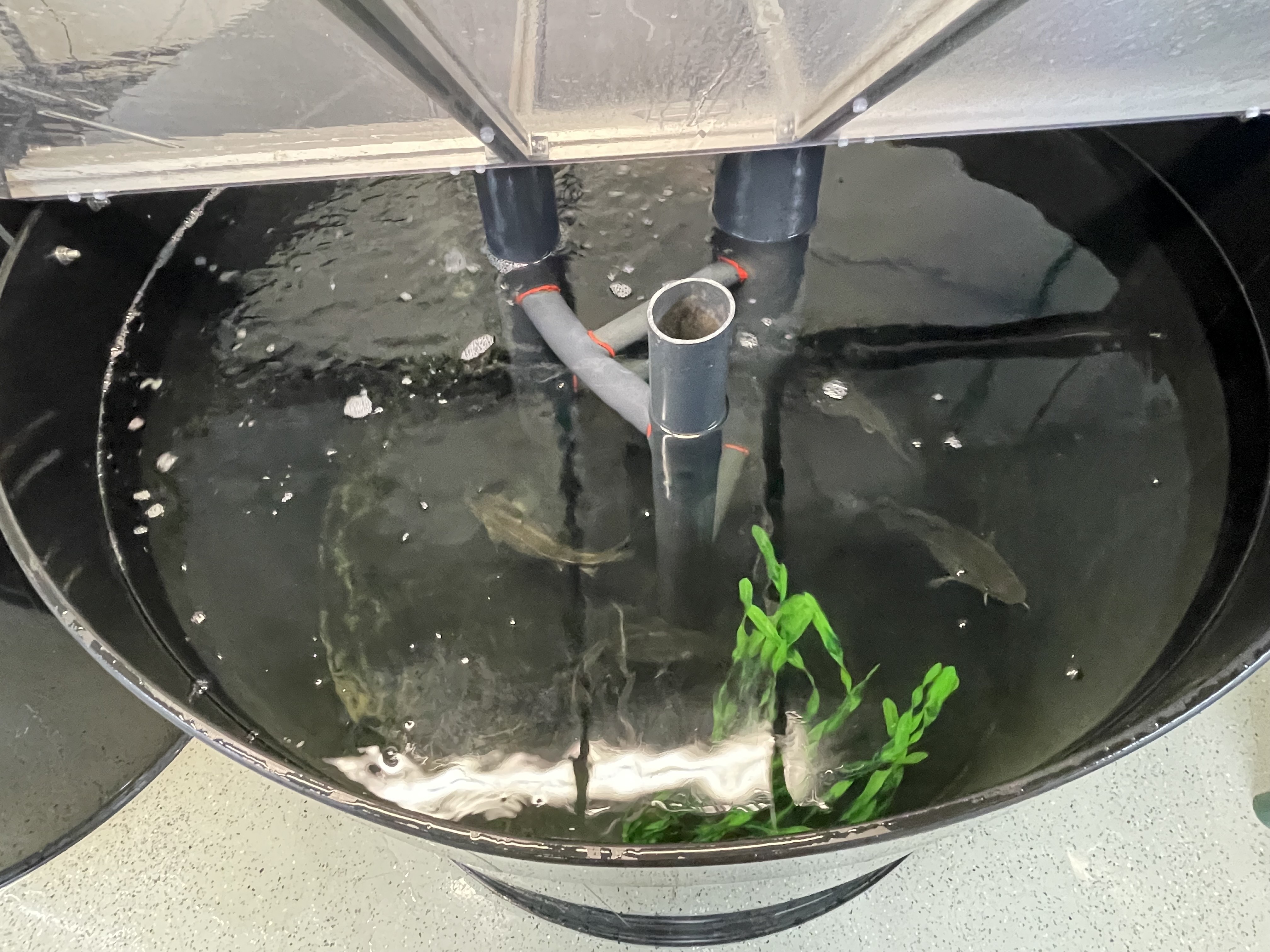
Anfang 2026 hat das GEOMAR eine neue Fischhälterungsanlage für experimentelle Arbeiten an aquatischen Wirbeltieren eingeweiht. Das gesamte System befindet sich in einem Klima-Kulturraum, was eine präzise Steuerung von Temperatur und Lichtverhältnissen ermöglicht, um z.B. saisonale Schwankungen in der Umwelt zu simulieren. Die Hälterungsanlage besteht aus zwei 1000-Liter-Becken für große Fische (wie den Dorsch/Kabeljau, Gadus morhua) und 15 Glasaquarien für kleinere Arten (wie den Stichling). Die Anlagen können sowohl als Durchflusssystem betrieben werden, um eine Scheinreplikation der experimentellen Behandlungen zu vermeiden, als auch als Kreislaufanlage mit biologischen, mechanischen und UV-Filtersystemen. Das hindurch fließende Meerwasser wird über die GEOMAR-Meerwasserpipeline aus der Kieler Förde (Ostseewasser ~15 ppt), einem Nordseewasserspeicher (35 ppt) oder einem künstlichen Meerwasserspeicher zugeführt. Eine zentrale Gasmischanlage versorgt die Klimakammer mit speziell abgestimmten Gasgemischen für Langzeitexpositionsexperimente. Diese Versuche werden in neun 210-Liter-Becken durchgeführt, die individuell gesteuert werden können, um die Erwärmung der Ozeane, Sauerstoffmangel (Hypoxie) und Ozeanversauerung zu simulieren. So werden die wichtigsten Stressfaktoren des Klimawandels abgedeckt, die Fische in freier Wildbahn beeinträchtigen. Diese hochmoderne Einrichtung ermöglicht Spitzenforschung zu den Auswirkungen des Klimawandels auf Meeresfische durch Akklimatisierungs-, Respirometrie-, Schwimmtunnel- und Verhaltensstudien am GEOMAR.
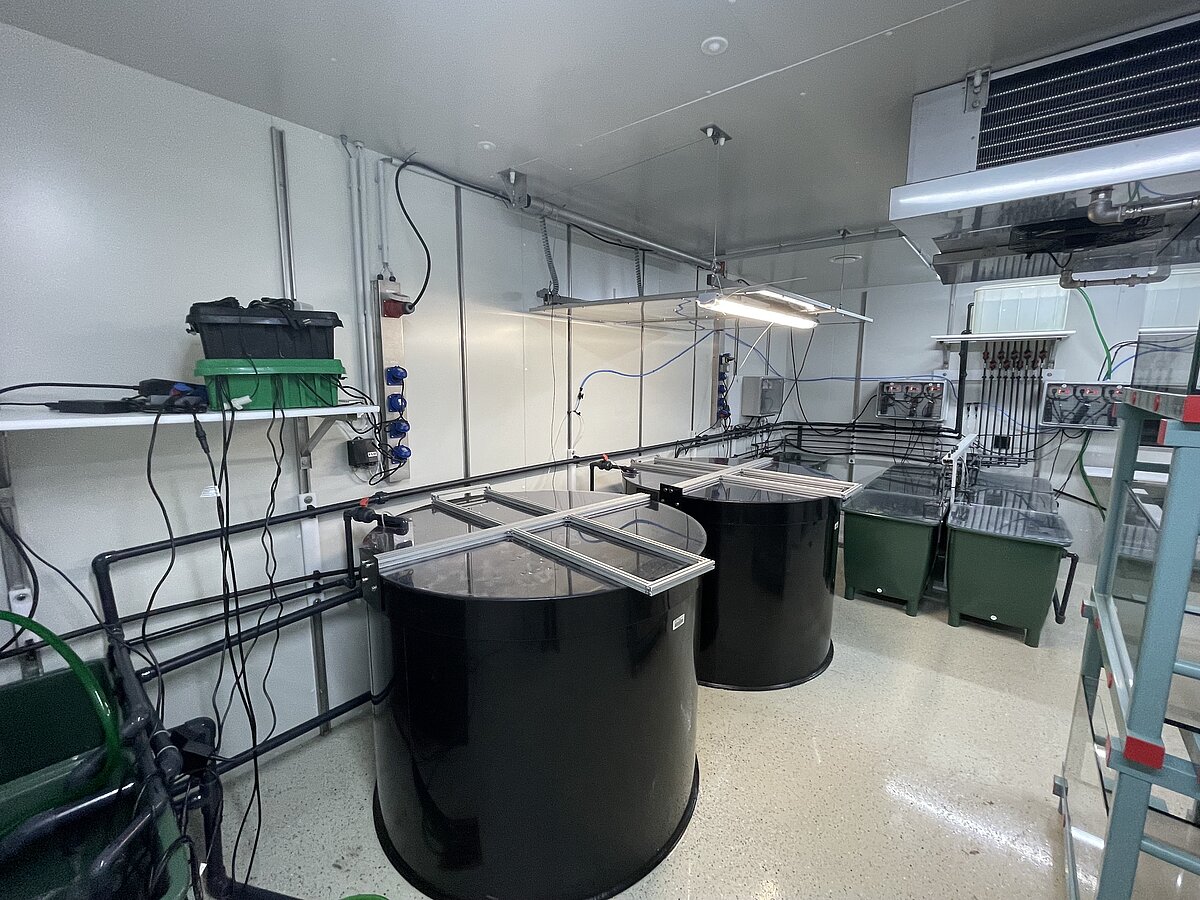
Große 1000-Liter-Becken beherbergen große Fischarten wie Dorsch / Kabeljau und können sowohl als Durchfluss- als auch als Kreislauf-Aquakultursystem betrieben werden.
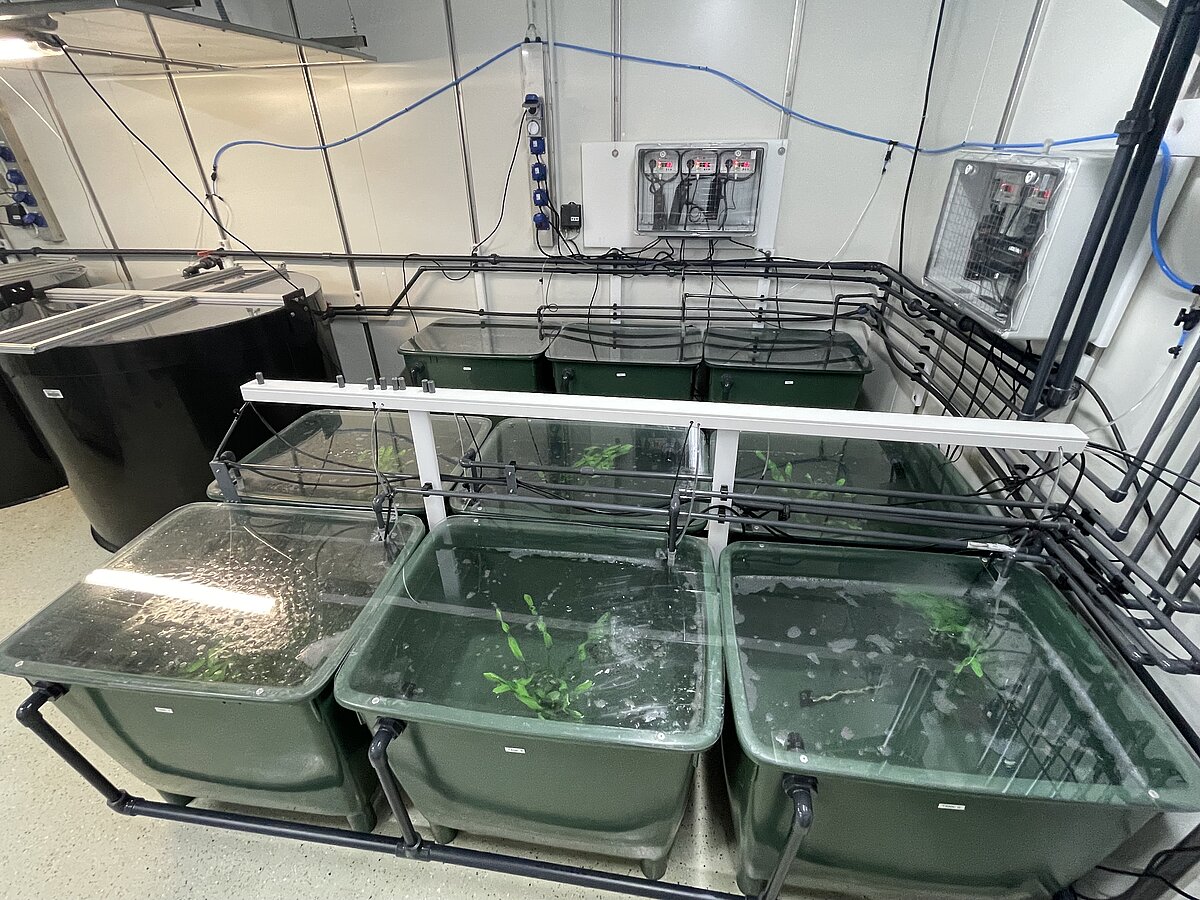
Experimentier-Becken können individuell eingestellt werden, um die Erwärmung der Ozeane, niedrige Sauerstoffsättigung (Hypoxie) oder die Versauerung der Ozeane zu simulieren und so die Auswirkungen des Klimawandels auf Fische zu untersuchen.