Seegrasökologie- und -renaturierungsanlagen
Seegras-Keimungsanlage:
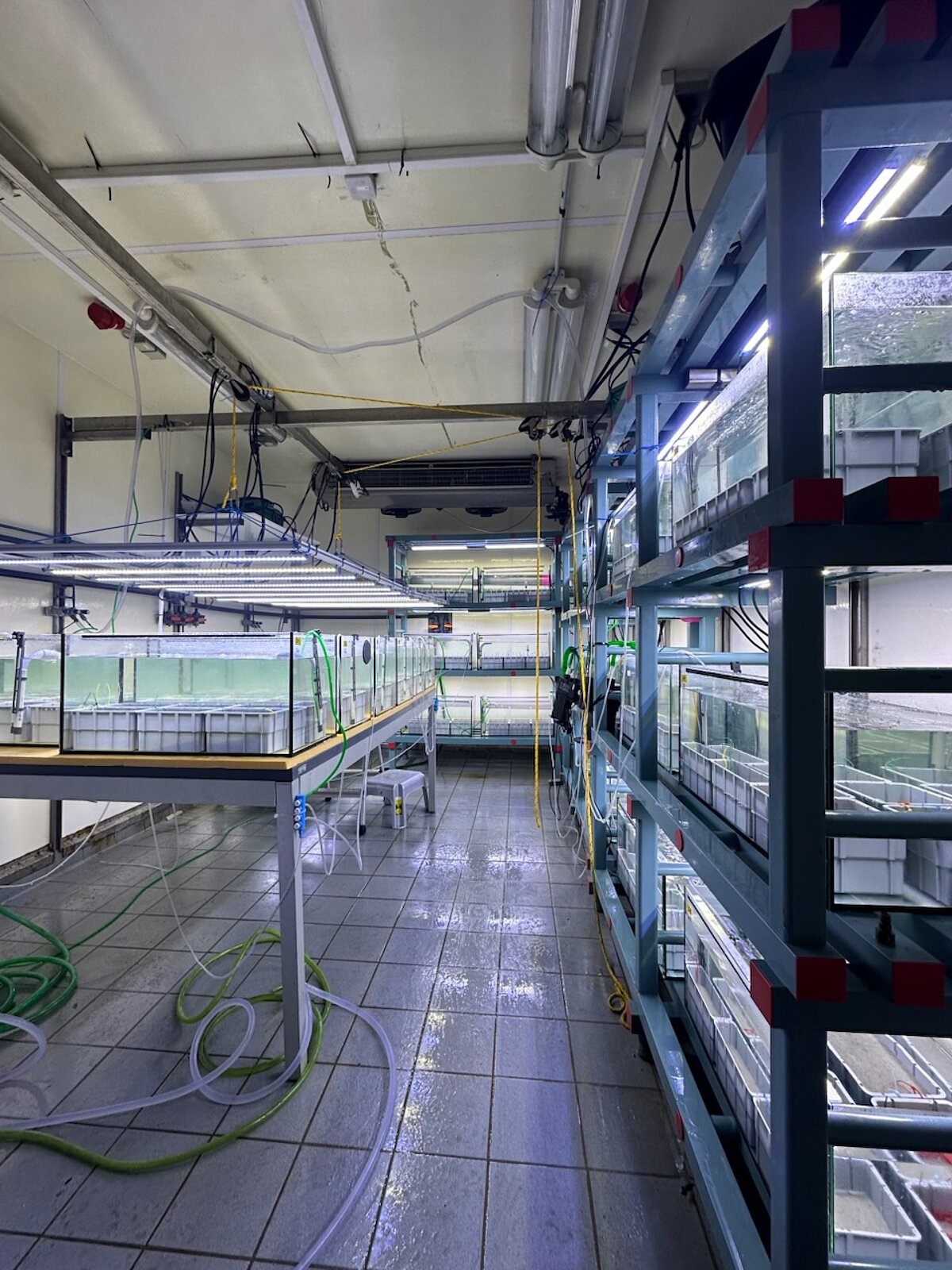
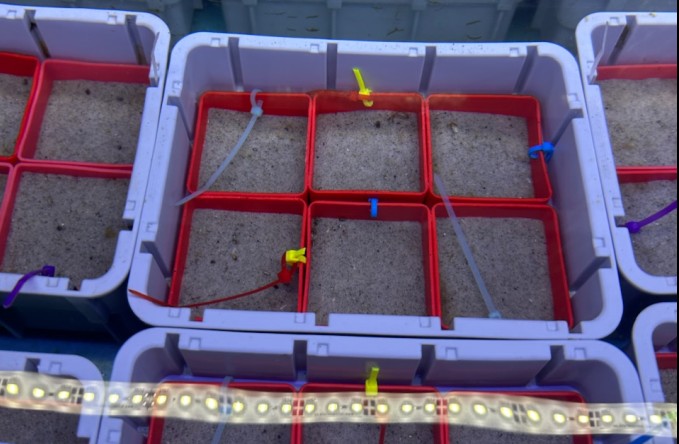
Die Seegras-Keimstation in einer Geomar-Klimakammer.
Die Anlage zur Erforschung der Keimung von Seegrassamen besteht aus bis zu 30 unabhängigen 60-Liter-Aquarien in einer Klimakammer. Jedes Aquarium bietet Platz für sechs Unterbehälter, die optional in sechs kleinere Kammern unterteilt werden können. Dadurch lassen sich mehrere experimentelle Behandlungen gleichzeitig durchführen. Die Konstruktion gewährleistet, dass jedes Aquarium als unabhängige Versuchseinheit mit kontinuierlicher Wasserzirkulation fungiert und Umweltbedingungen wie Temperatur (mittels individueller Heizungen) und Nährstoffkonzentrationen präzise gesteuert werden können.
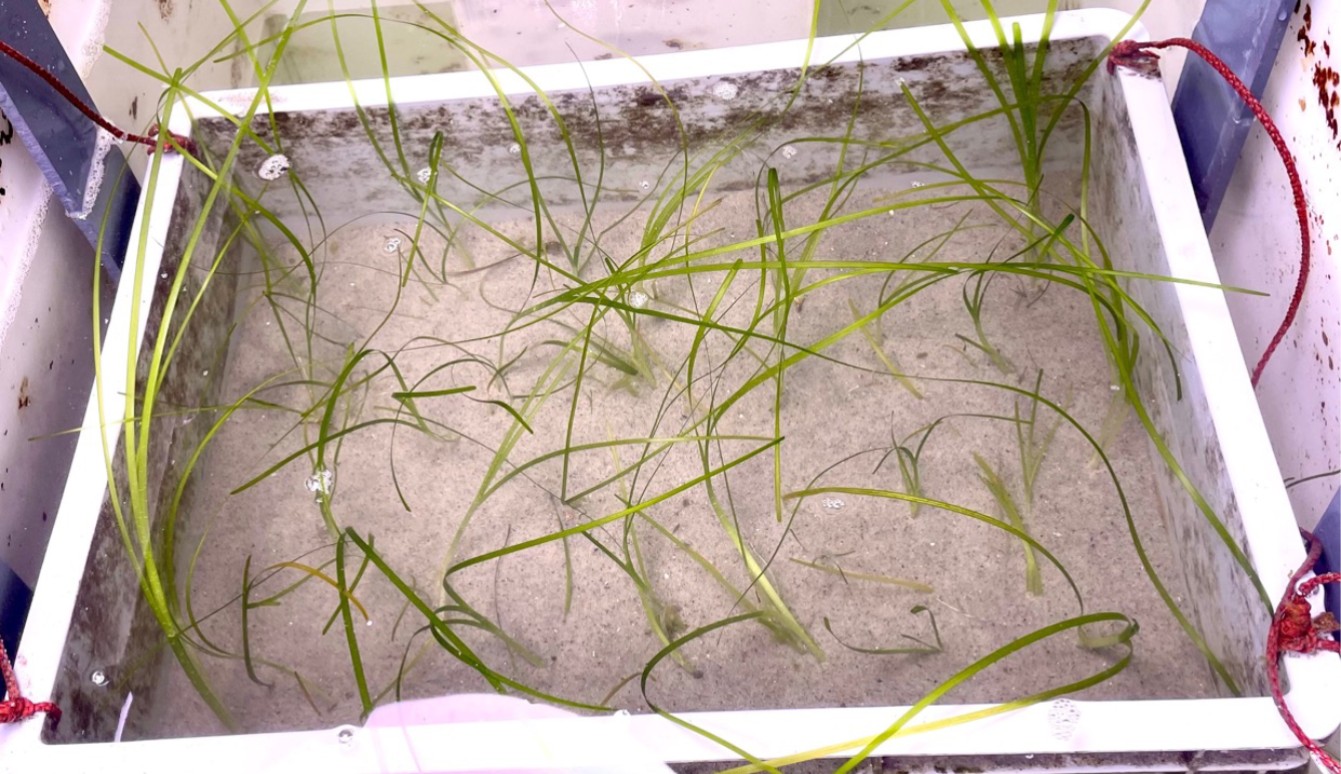
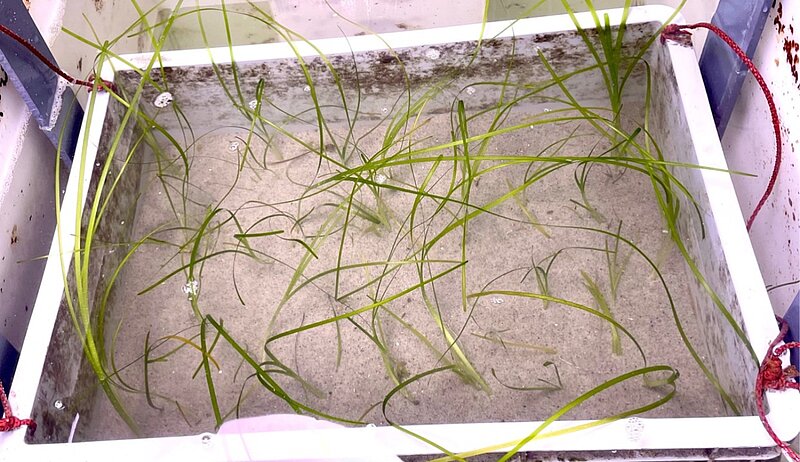
Alle Aquarien sind mit LED-Pflanzenbeleuchtungssystemen mit einstellbarer Photoperiode ausgestattet, um saisonale oder experimentelle Lichtverhältnisse zu simulieren. Die Anlage ermöglicht zudem die flexible Auswahl und Anpassung von Substratart und -zusammensetzung. Dies erlaubt kontrollierte Experimente zu Sedimenteigenschaften und deren Einfluss auf die Keimung und frühe Entwicklung von Seegras-Sämlingen (Zostera marina). Zusammen bieten diese Merkmale stabile und reproduzierbare Bedingungen für experimentelle Arbeiten zur Unterstützung der Seegrasökologie und der Forschung zur Renaturierung von Seegraswiesen.
Seagrass Culture in Wave Tanks:
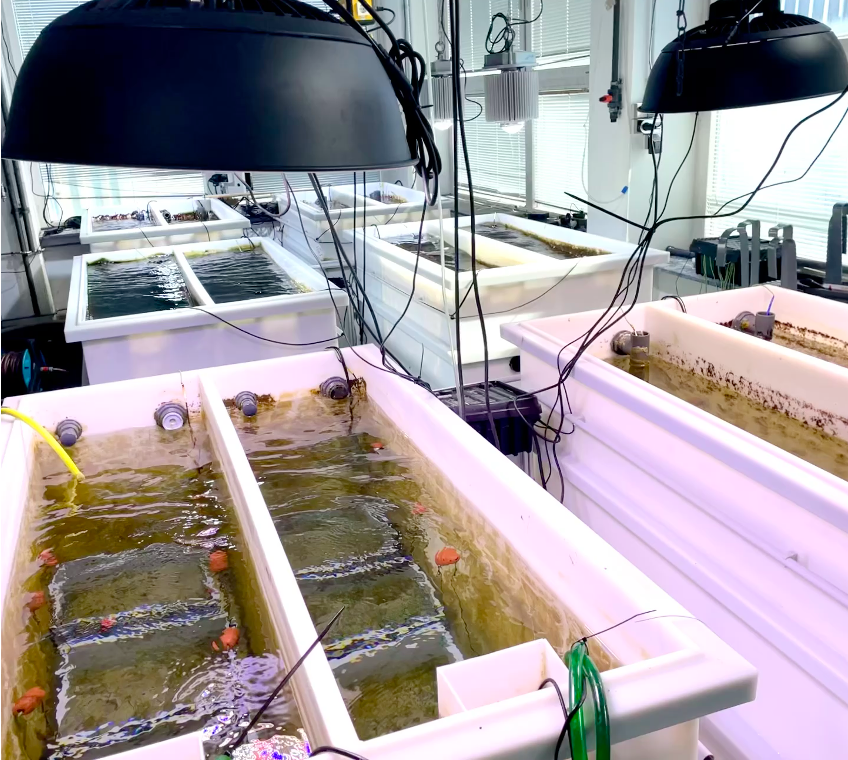
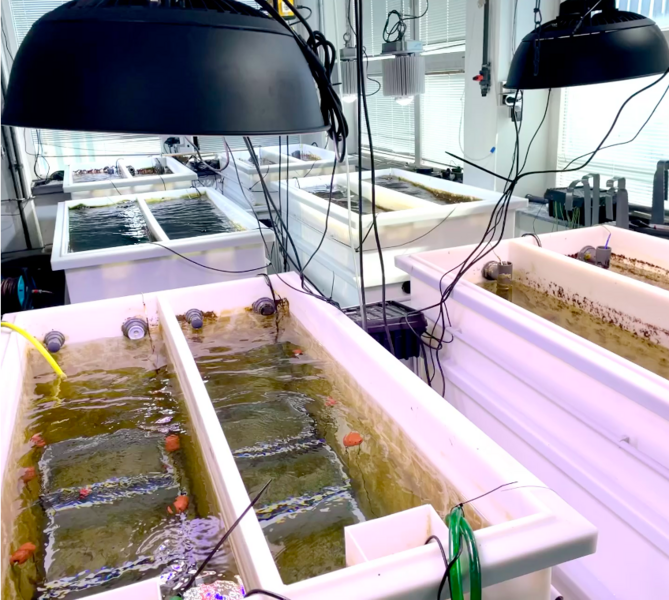
Diese Wellenbecken wurden am Geomar entwickelt, um Seegras (Z. marina) unter kontrollierten Bedingungen zu kultivieren, die die westliche Ostsee möglichst genau simulieren. Zwölf Versuchsbecken enthalten jeweils 500 Liter gefiltertes Meerwasser, das zirkuliert und/oder direkt aus der Kieler Förde zugeführt wird. In ihnen befinden sich mit Natursand gefüllte Behälter, wodurch ein authentischer natürlicher Lebensraum geschaffen wird. Die Tageslichtverhältnisse werden mithilfe programmierbarer Lampen mit einem natürlichen Tagesrhythmus nachgebildet. Ein künstliches Wellensystem erzeugt die für flache Küstengewässer typischen orbitalen Wasserbewegungen.
Die Anlage ermöglicht zudem die präzise Steuerung der Wassertemperaturen und somit die Durchführung von Hitzewellenexperimenten. Ziel ist es, die Hitzestressresistenz von Seegras zu untersuchen und optimale Verfahren für zukünftige Seegraswiesenrenaturierungen zu ermitteln.