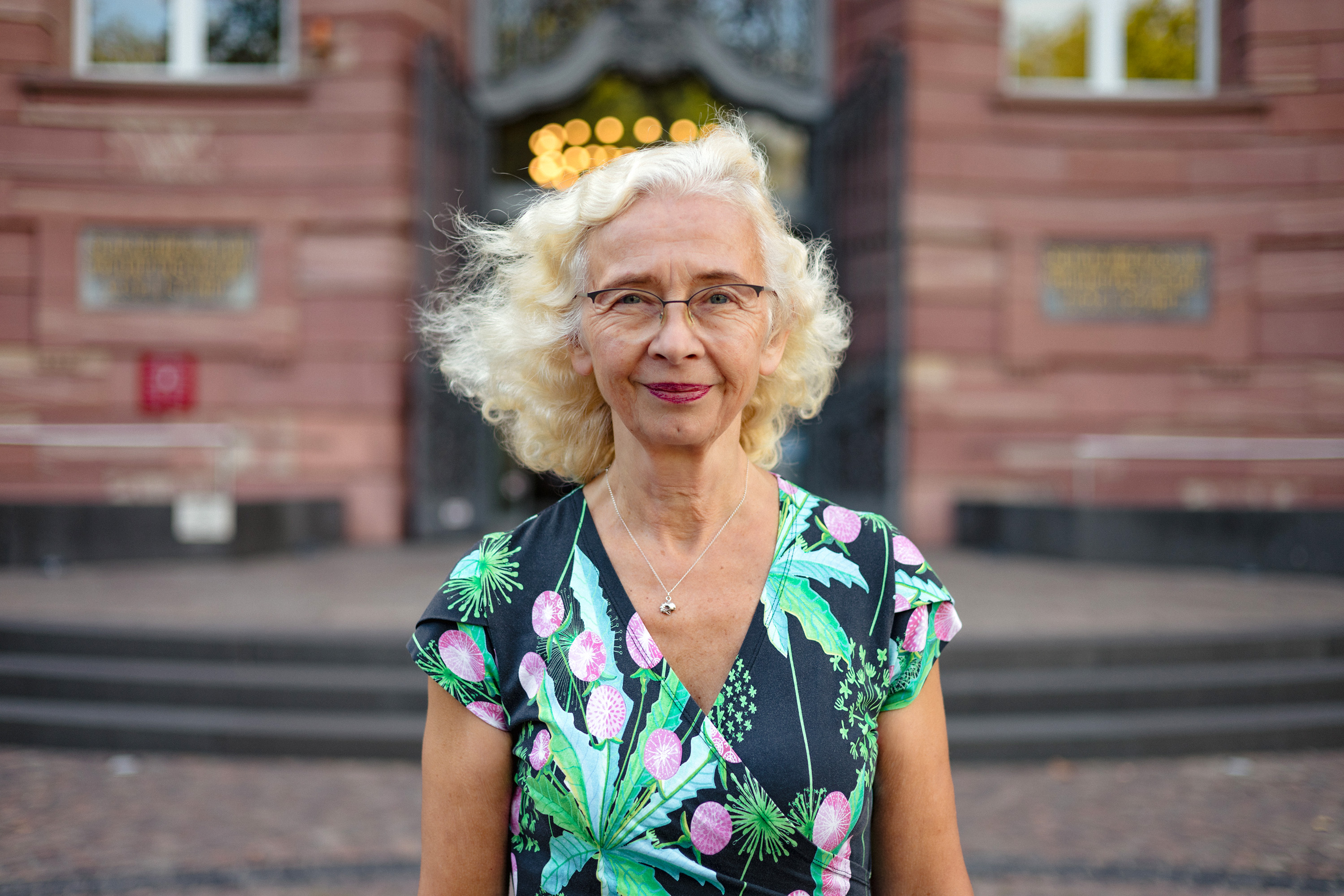
Angelika Brandt was a professor of marine zoology at Goethe University Frankfurt am Main and the Senckenberg Research Institute and Natural History Museum in Frankfurt from 2017 to 2026. She is being awarded the 2026 German Marine Award today in recognition of her outstanding scientific achievements. Photo: Johannes Schmitz/Offtrack Films
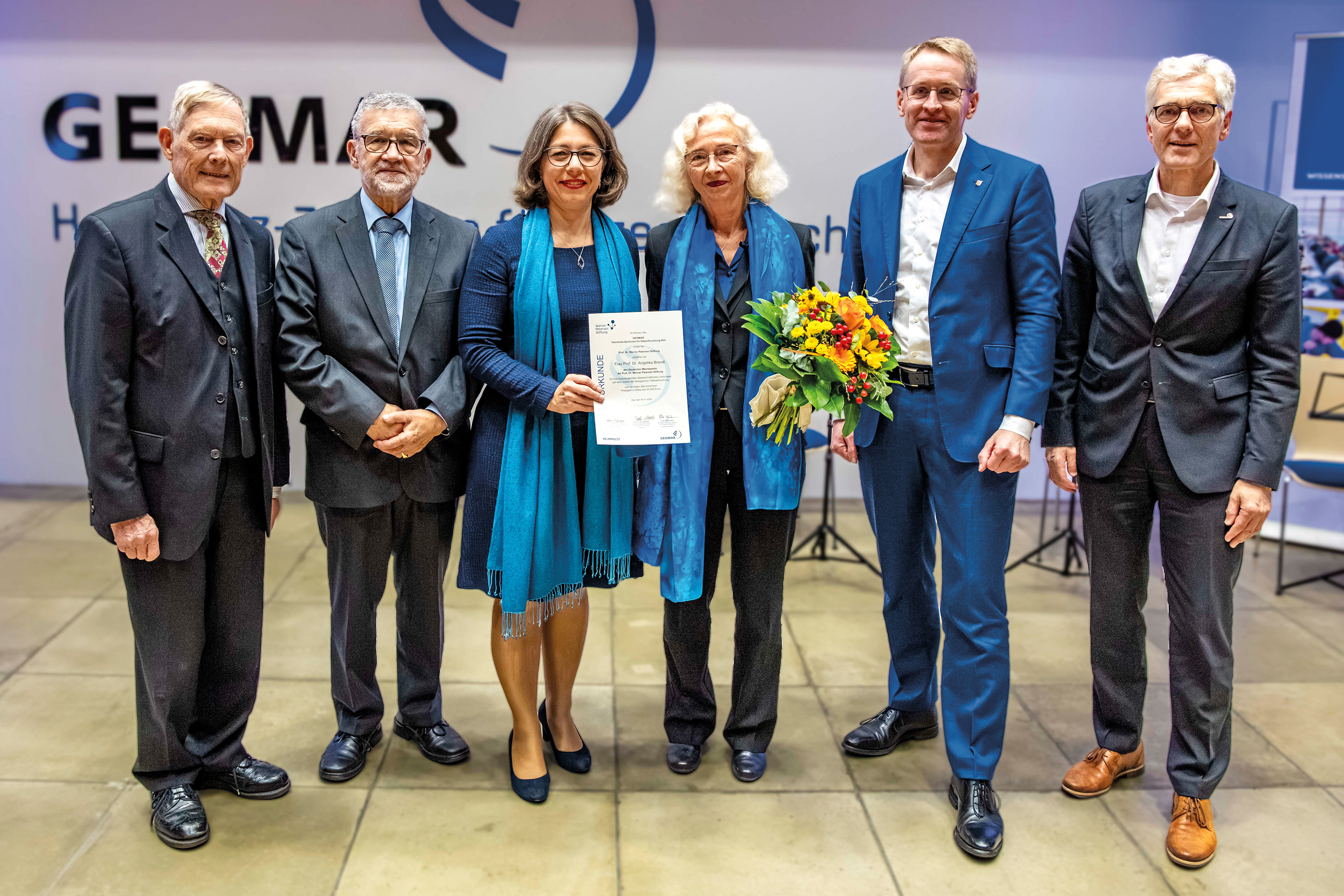
Awards ceremony at GEOMAR: Ocean Award winner Angelika Brandt (3rd from right) with well-wishers Christian Zöllner, Klaus Wichmann, Katja Matthes, Daniel Günther, and Frank Spiekermann (from left to right). Photo: Frank Molter
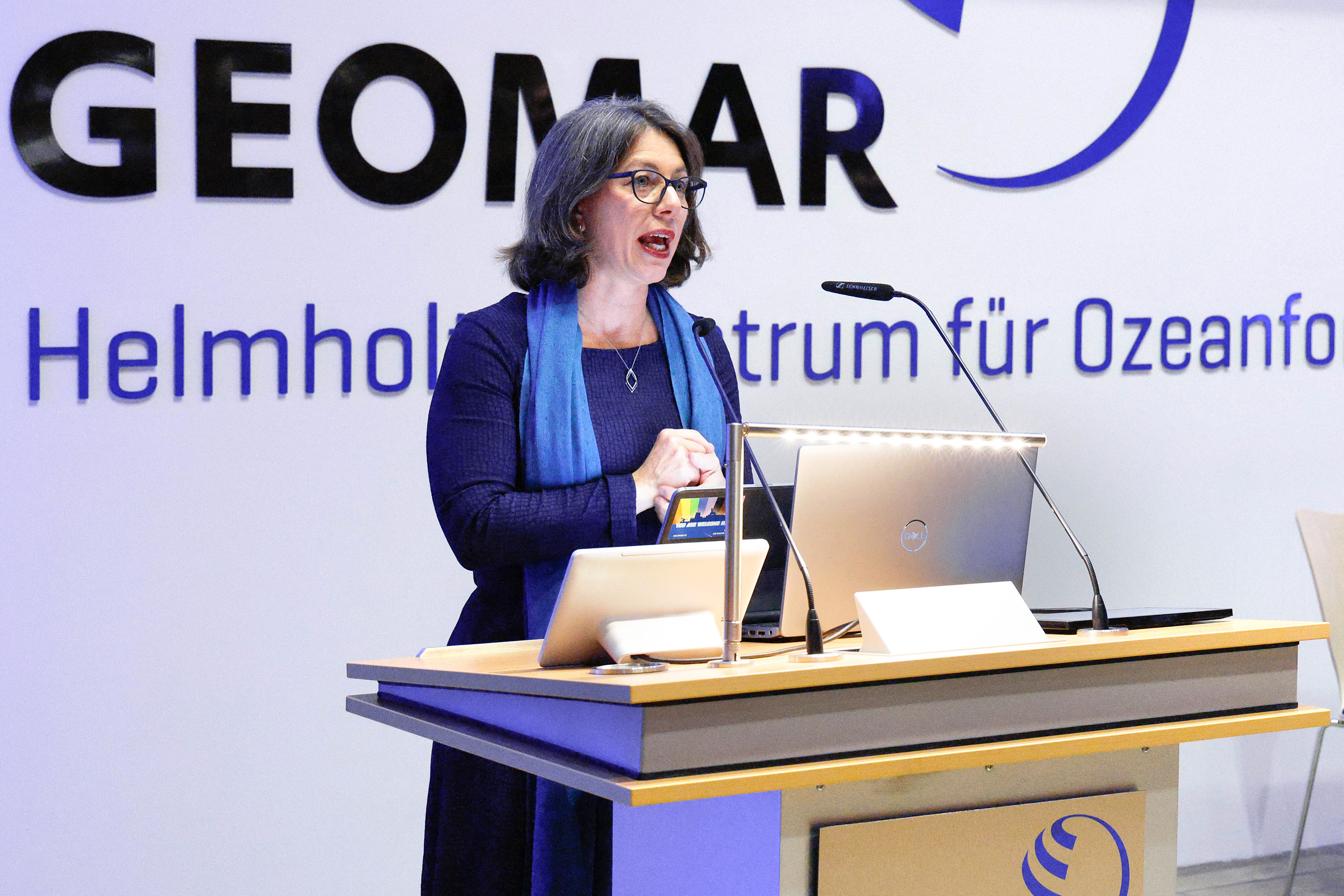
GEOMAR Director Prof. Dr Katja Matthes said: “In honouring Angelika Brandt today, we are recognising a researcher who has, in the truest sense of the word, brought light into the darkness. Her discoveries of hidden deep-sea biodiversity powerfully demonstrate to us that deep-sea research is not only fundamental research but also a safeguard for the future.” Photo: Frank Molter
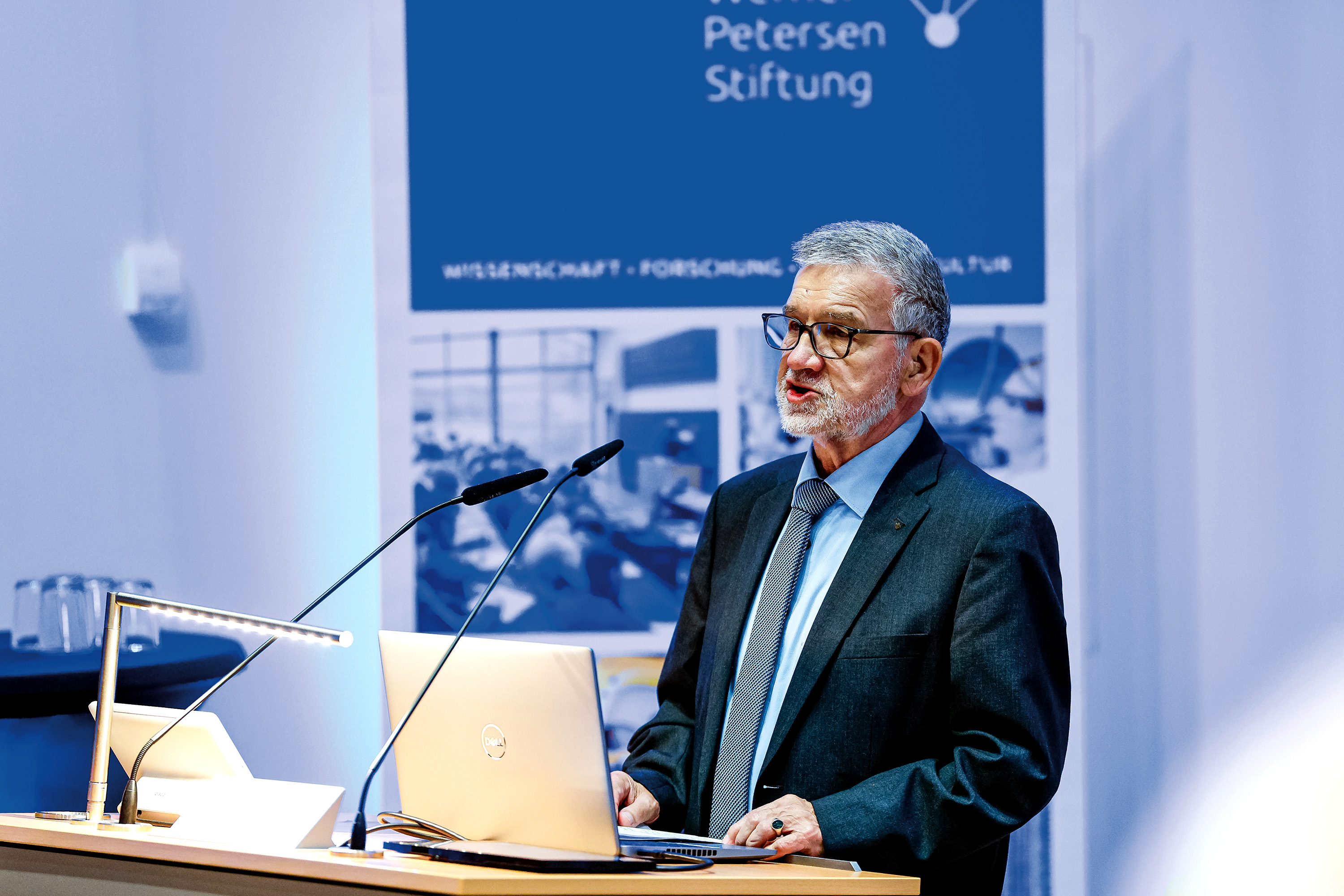
Dr h.c. Klaus Wichmann, Chairman of the Prof. Dr Werner Petersen Foundation, added: “You can only protect what you know. Angelika Brandt has shown us just how much life is hidden in the deep sea, thereby laying the foundations for the responsible use and conservation of the ocean. The Prof. Dr Werner Petersen Foundation is delighted to honour this work with the German Ocean Award.” Photo: Frank Molter
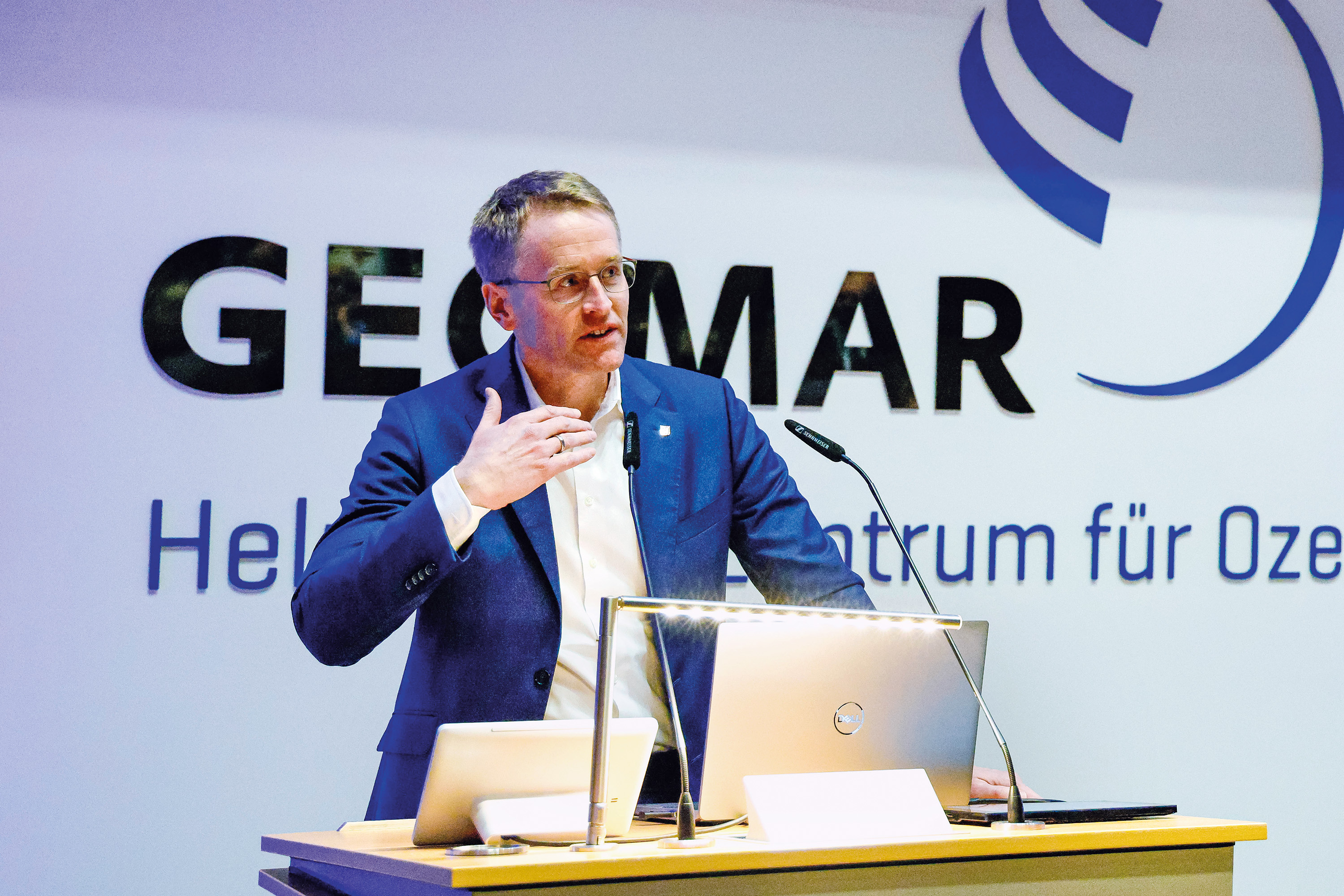
Daniel Günther, Minister-President of the State of Schleswig-Holstein and patron of the German Ocean Prize, said: “It is fascinating how much there is still to discover in our oceans. Angelika Brandt has co-discovered over 100 new deep-sea species and opened up a hidden world for us. Her work helps us to understand how the oceans are changing and what that means for our livelihoods. Photo: Frank Molter
The Hidden Biodiversity of the Deep Sea
Prof. Dr. Angelika Brandt Receives the 2026 German Ocean Award
On November 5, Angelika Brandt received the 2026 German Ocean Award for her outstanding scientific achievements. GEOMAR Helmholtz Center for Ocean Research Kiel and the Prof. Dr. Werner Petersen Foundation are thereby recognizing her scientific achievements in deep-sea biological research and her seminal contribution to our understanding of Antarctic deep-sea biodiversity. The prize is endowed with 20,000 euros and was presented under the patronage of Daniel Günther, Minister President of the State of Schleswig-Holstein, during a festive ceremony at GEOMAR. The laudatory address honoring the awardee was delivered live via video by Prof. Dr. Antje Boetius, President of the Monterey Bay Aquarium Research Institute.
Deep down on the seabed lies one of the largest and, at the same time, least explored habitats on our planet. Darkness, cold and high pressure characterise the deep sea. And yet it is teeming with life: every sample taken from the deep-sea floor can contain numerous organisms, including many species hitherto unknown to science. Prof. Dr Angelika Brandt has made a significant contribution to revealing this hidden diversity.
For decades, she has been researching the biodiversity of deep-sea and polar organisms. Her work focuses, amongst other things, on crustaceans such as marine isopods, but also on fundamental questions of evolutionary biology and biogeography: Which organisms live in the deep sea? How are they related to one another? How do species spread over long distances? And which geological structures, currents or environmental conditions act as barriers or links between habitats?
Brandt’s work in the Southern Ocean was particularly influential. As part of international expeditions, including the pioneering ANDEEP expeditions aboard the research vessel POLARSTERN, she significantly expanded our understanding of the diversity of invertebrate organisms in the Antarctic deep sea. The findings challenged the assumption that deep-sea biodiversity decreases towards the South Pole. Her research showed that the deep sea is neither a uniform, universally connected habitat nor a mosaic of completely isolated areas. Rather, it forms a network of habitats connected to varying degrees, characterised by deep-sea trenches, ridges, basins, fault zones, currents and the lifestyles of the respective species.
► More about the 2026 German Ocean Award
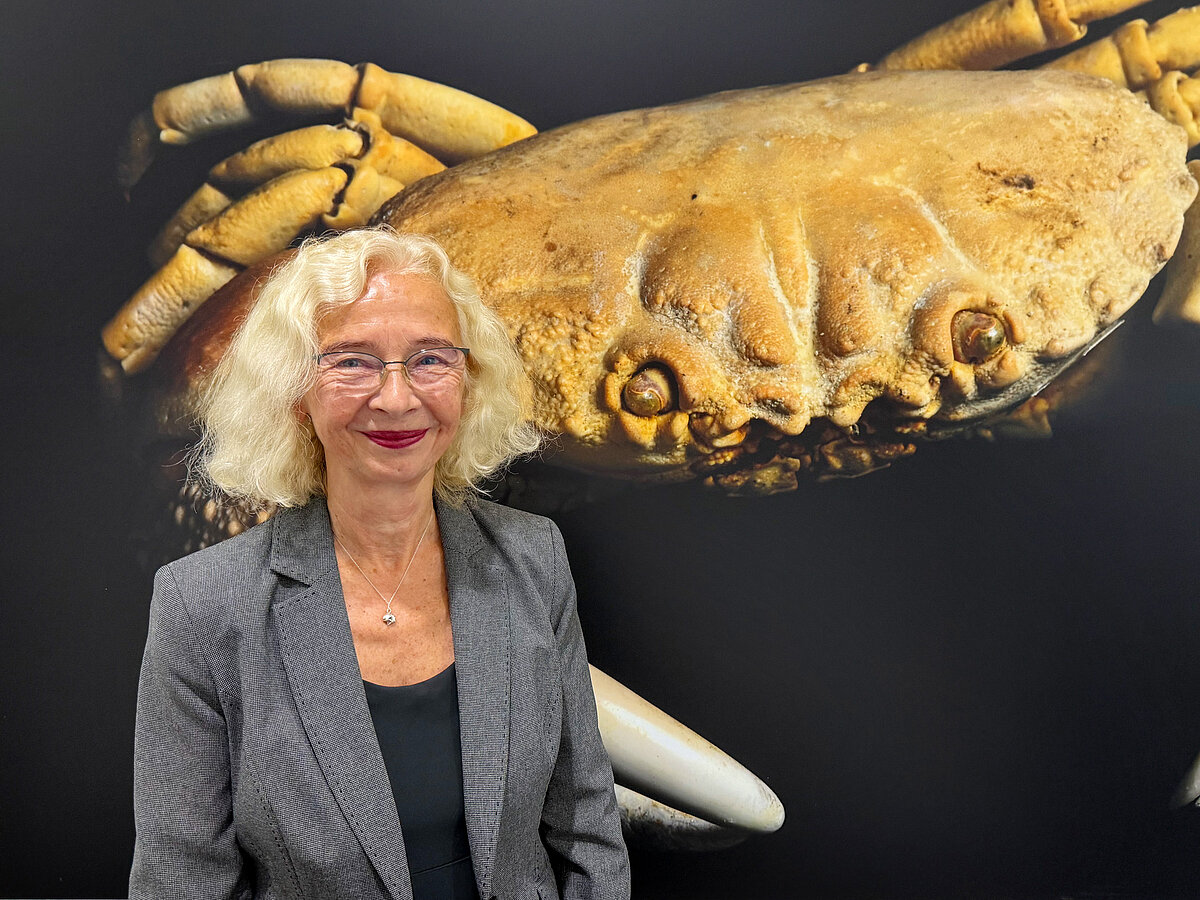
Angelika Brandt was Professor of Marine Zoology at Goethe University Frankfurt am Main and at the Senckenberg Research Institute and Natural History Museum in Frankfurt from 2017 to 2026. There, she headed the Department of Marine Zoology from 2017 until the end of 2025. Prior to that, she spent 22 years as Professor of Zoology at the University of Hamburg, Curator of Crustacea and Polychaeta, and Director and Deputy Director, respectively, of the Zoological Museum in Hamburg. From 2022 to 2025, she served on the Executive Board of the Senckenberg Society for Nature Research. Photo: Thorsten Wenzel, Senckenberg